
Being in a highly competitive restaurant industry, it is essential for restaurants to make decisions using insights that ensure long-term success.
Restaurant Analytics Software helps restaurant owners and managers to convert their business data into insights that helps them to improve operations, increase profits, and customer satisfaction levels.
Whether tracking sales performance, food expenses, managing labor expenses, understanding customer preferences, it is essential for restaurants to use the right analytics platforms that help restaurants to make smarter, quick business decisions.
Modern Restaurant Analytics Software collects data from multiple sources, such as point-of-sale(POS)systems, inventory management tools, online ordering platforms, and customer feedback channels.
This lets restaurants not spend time on reviewing spreadsheets, rather access real-time dashboards and detailed reports that display key performance indicators(KPIs), identify trends of restaurants, and find opportunities for growth.
Such a data-driven approach helps restaurants to reduce food waste, improve inventory, staff scheduling, and raise maximum revenue.
As the restaurant industry keeps evolving, adopting Restaurant Analytics Software is no longer optional, rather has become a competitive advantage.
Whether you are running a single cafe, a full-service restaurant, or a multi-location chain, restaurant analytics software help to understand the strategies that are working, and also identify areas that need improvement, and make informed decisions confidently.
While platforms like Livelytics make restaurant data easier to understand by converting complex data into clear, actionable insights.
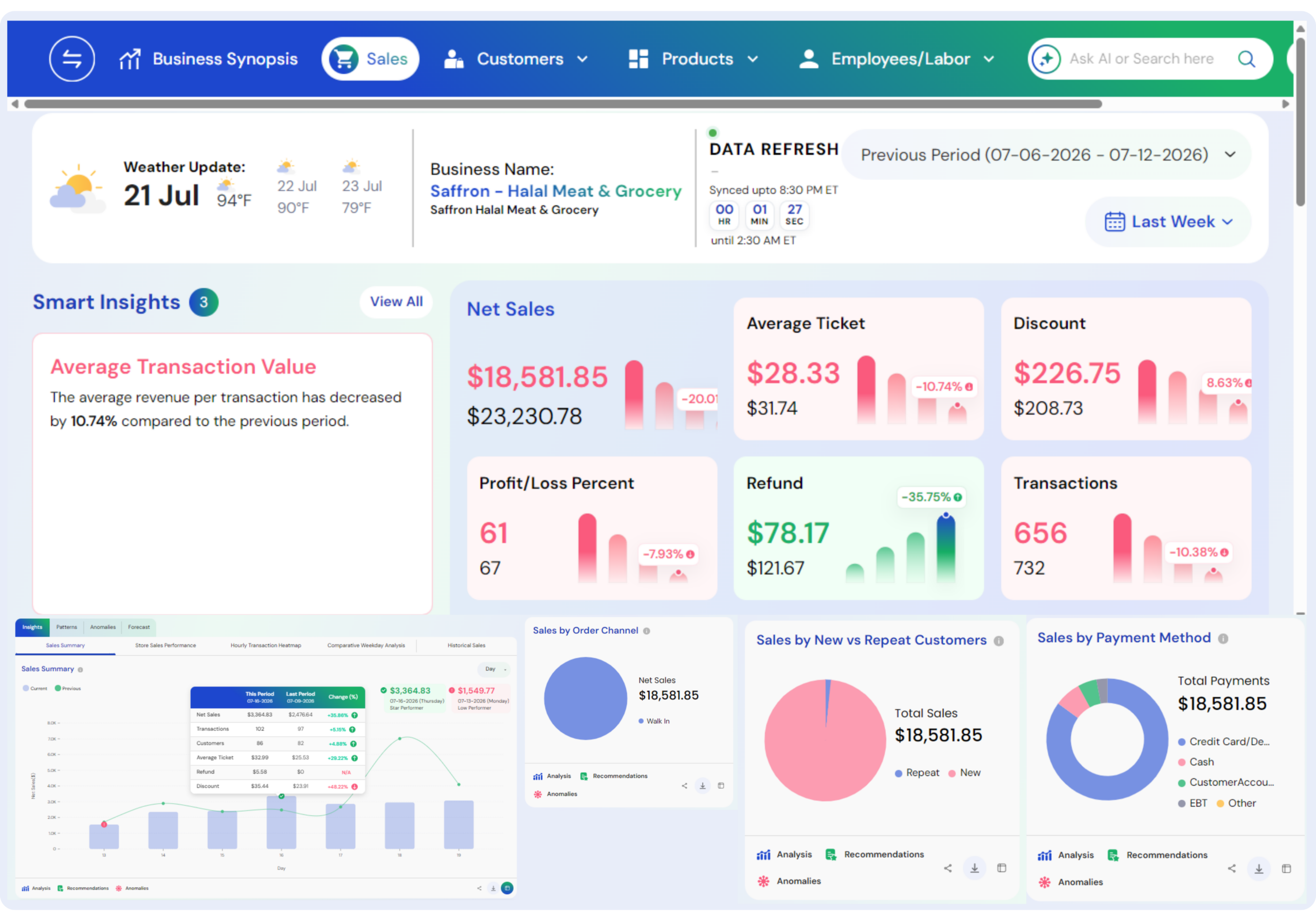
With dashboards and detailed reporting, Livelytics helps restaurants to track sales, menu performance, labor efficiency, customer behavior, and overall business performance from a single centralized platform.
By using Restaurant Analytics Software and solutions like Livelytics, restaurants can make operations smooth, improve guest experiences, and build a stronger, more profitable business for the future.
Also Read: A Complete Guide to Data Analytics for Restaurants
What Is Restaurant Analytics Software?
Restaurant analytics software is an analytics software that helps restaurant owners to collect, organize, analyze, and visualize business data from several systems in one centralized platform.
Instead of manually reviewing reports from different sources, restaurant analytics software converts raw data into actionable insights that support quick, data-driven decisions.
By providing real-time dashboards and detailed reports, this analytics software helps restaurants to improve efficiency of operations, reduce operational expenses, and improve the overall customer experience.
It typically tracks key business metrics, including:
- Daily sales to track revenue performance of restaurants
- Revenue growth to measure business progress.
- Food costs to control food expenses and improve profit margins.
- Labor expenses to improve staffing.
- Inventory levels to prevent shortages and reduce waste.
- Customer behavior to understand customer purchasing patterns.
- Menu performance to identify best-selling and high-profit items.
- Employee productivity, online reviews, and marketing campaign results to improve overall restaurant performance.
Also Read: Customer Analytics for Restaurants
Why Restaurant Analytics Matters More Than Ever
Today the restaurant industry is more competitive unlike before that makes it essential for restaurants to make data-driven decisions.
Because of increasing food prices, labor shortages, changing customer expectations, and increasing operational expenses have made it harder for restaurants to maintain good profits.
But restaurants today cannot depend only on experience or intuition, which usually make it difficult for restaurants to identify the areas which are reducing sales or customer satisfaction.
Restaurant analytics software gives valuable insights by providing answers to important business questions, which includes:
- Which menu items generate the highest profits?
- Which ingredients are frequently wasted?
- What are the busiest hours of the day?
- Which employees perform best during busy hours?
- Which marketing promotions deliver the best results?
- Which restaurant locations perform better than others?
Having accurate, real-time data, helps restaurant owners to identify problems early, improve operations, reduce expenses, and make smarter business decisions.
Also Read: The Complete Guide to Restaurant Business Analytics
How Restaurant Analytics Software Works
The process of analyzing restaurant data begins by collecting data from multiple restaurant management systems and integrating it into a single, easily understandable platform.
By smoothly integrating analytics software into existing systems, the software automatically collects data from different systems into a centralized platform, removing the need for manually entering the data.
After collecting data from multiple sources, analytics software then analyzes the data from different sources and displays it through interactive dashboards, charts, reports, and real-time alerts that helps restaurant owners and managers to make informed business decisions.
Common data sources include:
- Point of Sale (POS) systems
- Inventory management software
- Payroll systems
- Employee scheduling tools
- Reservation platforms
- Online ordering services
- Food delivery apps
- Customer loyalty programs
- Accounting software
- Customer review platforms
The software provides valuable insights such as:
- Daily sales and performance
- Weekly and monthly business trends
- Every year business growth comparisons
- Revenue performance across multiple locations
- Department-specific reports
- Inventory and labor cost analysis
Many cloud-based restaurant analytics software also provide mobile access that allow restaurant owners and managers to track performance of restaurants anytime and from anywhere.
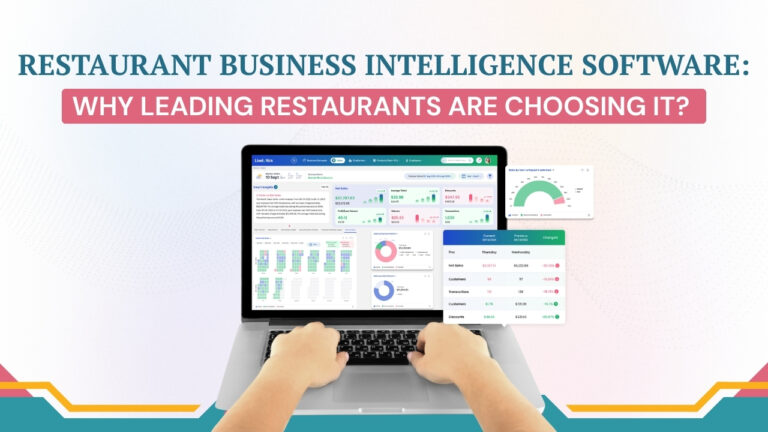
Also Read: Best Restaurant Business Intelligence Software for Growing Business
Benefits of Restaurant Analytics Software
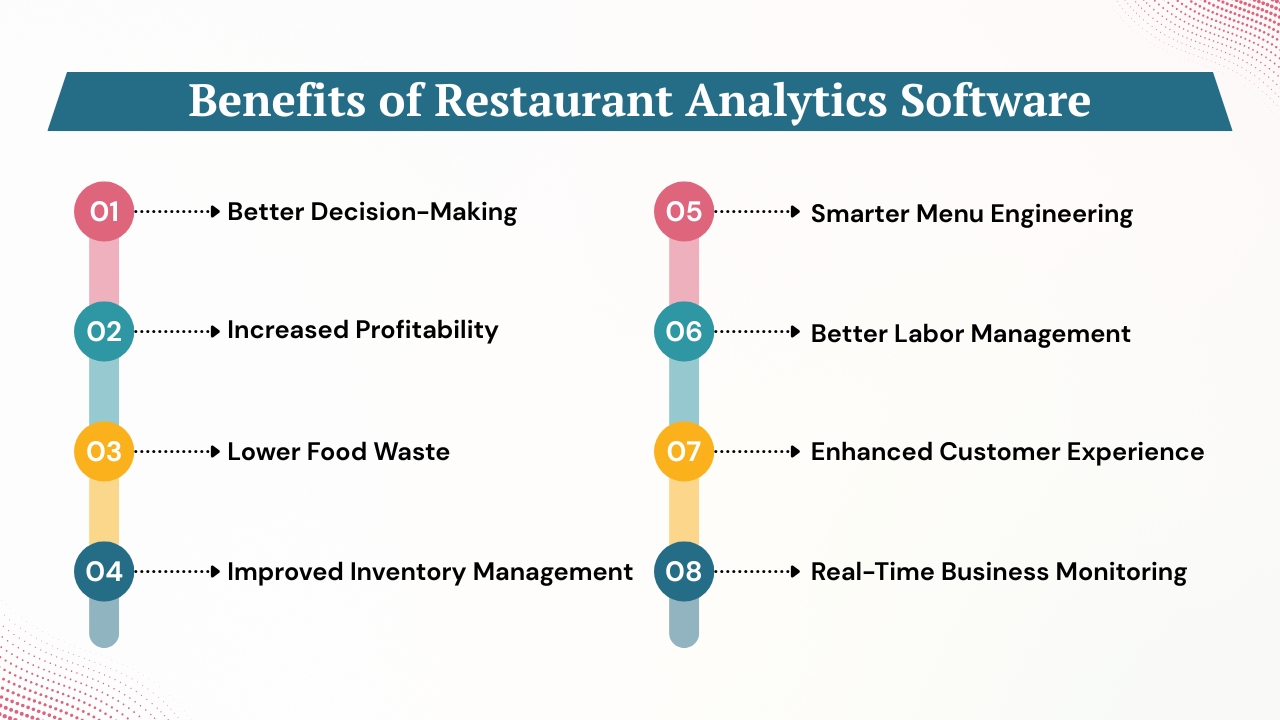
1. Better Decision-Making
Restaurant analytics software helps restaurant owners to make decisions based on accurate, real-time data instead of simply guessing.
By using detailed reports managers can identify restaurant patterns, resolve operational problems, and make informed decisions which improve overall performance of restaurants.
Also Read: Benefits of Data-Driven Decision Making
2. Increased Profitability
Restaurant analytics software helps restaurants to increase profits by identifying top-selling menu items, pricing opportunities, upselling strategies, and underperforming dishes. Even if restaurants make small operational improvements then it can cause high revenue growth for the long-term.
Also Read: How AI Helps in Boosting Restaurant Revenue and Profits
3. Lower Food Waste
Analytics software helps restaurants to know usage of restaurants, expired inventory, overstocked items, and food portion sizes. Such insights help restaurants to reduce food waste, food expenses, and improve purchasing decisions.
Also Read: 10 Proven Solutions to Food Waste in Restaurants
4. Improved Inventory Management
Restaurant analytics provide complete visibility into inventory levels, stock levels, supplier performance, purchase history, and inventory turnover, helping to maintain optimal stock while avoiding stock shortages and unnecessary expenses.
Also Read: AI for Restaurant Inventory
5. Smarter Menu Engineering
Analyzing menu performance helps restaurants to identify the best-selling, most profitable, and least popular dishes. This data helps restaurants to improve the food menu and implement better pricing strategies.
Also Read: Optimizing a Restaurant Menu With AI Powered Data Analytics
6. Better Labor Management
This software tracks employee productivity, labor expenses, staff overtime, staffing efficiency, and peak business hours. This helps managers to create better staff schedules that improve services while also controlling payroll expenses.
Also Read: How Data Analytics Improve the Measurement of Employee Performance
7. Enhanced Customer Experience
Customer analytics tracks customer loyalty, their order preferences, repeat visits, feedback, and online reviews. These insights help restaurants to provide personalized promotions and deliver better dining experiences.
Also Read: How AI Revolutionizes Customer Experience in the Restaurant Industry
8. Real-Time Business Monitoring
With real-time dashboards, restaurant owners can instantly track sales, revenue, inventory, and staff performance, which helps restaurants to address their problems instantly and make proactive business decisions.
Also Read: Real-Time Analytics Why Does Your Business Needs it
Essential Features of Restaurant Analytics Software
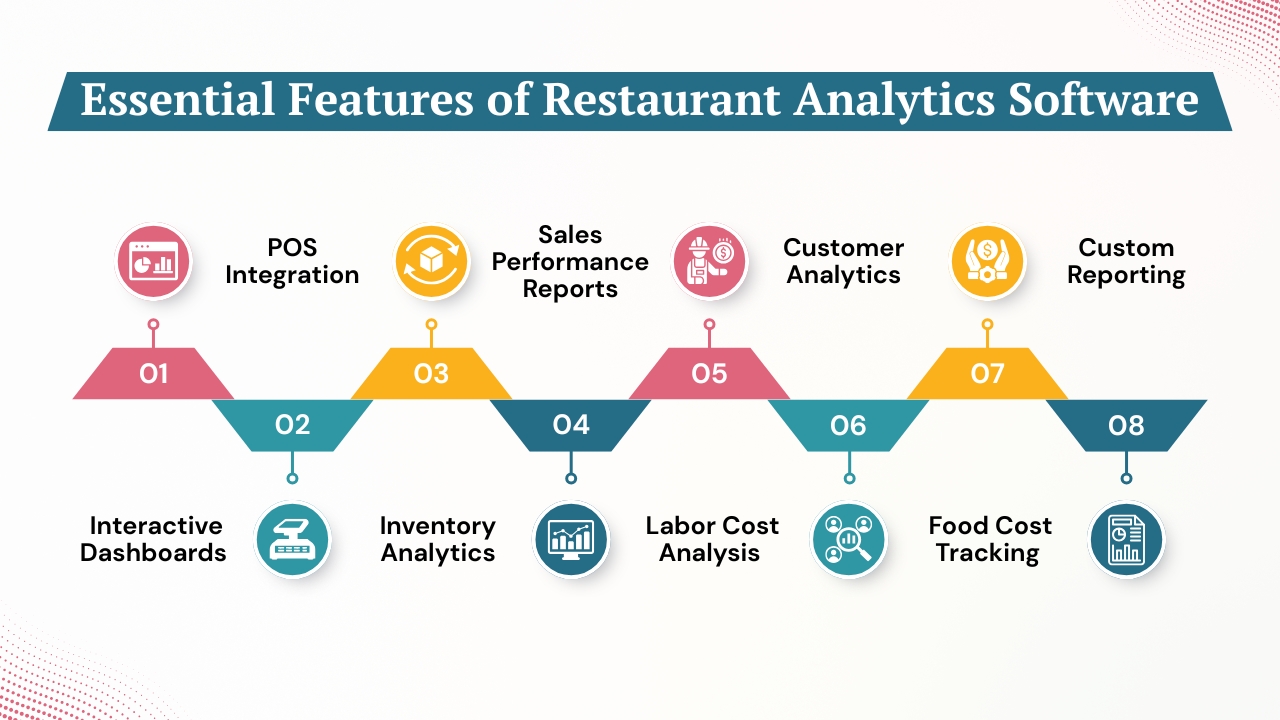
1. Interactive Dashboards
Interactive dashboards display all important restaurant metrics on a centralized dashboards that makes it easier for managers to track business performance instantly.
Instead of reviewing only spreadsheets, it allows restaurant owners to view visual charts and graphs displaying their revenue, sales performance, food expenses, labor expenses, inventory alerts, and customer metrics.
Such dashboards simplify decisions by providing real-time data about restaurant performance in an easily understandable format.
Also Read: Business Intelligence Dashboard for Data Collection
2. POS Integration
A reliable Restaurant Analytics Software should integrate smoothly with existing POS systems of restaurants. This integration automatically imports transaction data of restaurants and removes the need for manually entering data and reducing mistakes.
It provides valuable insights such as automatic sales reports, product performance, revenue analysis, payment trends, and customer purchase history, that helps restaurant managers to make rapid and more accurate decisions.
Also Read: Restaurant POS Analytics How Data Improve Restaurant Performance
3. Inventory Analytics
Inventory analytics helps restaurants to manage one of their operational expenses efficiently. Such analytics help restaurants to monitor inventory usage levels, waste levels, stock forecasting, and vendor performance.
Tracking inventory in real time helps restaurants to avoid stock shortages, reduce overstocking, reduce food waste, and improve purchasing decisions that ultimately increases restaurant profits.
Also Read: AI for Restaurant Inventory
4. Sales Performance Reports
Detailed sales reports help restaurant owners to evaluate business performance across different areas of operation. Such analytics tracks hourly sales, daily revenue, weekly sales growth, seasonal patterns, popularity of each food item, and revenue by location.
These reports help managers to identify sales patterns, measure business growth, and make strategic decisions which helps to improve overall performance of operations.
Also Read: Restaurant Sales Forecasting How to Predict Future Revenue
5. Labor Cost Analysis
One of the highest expenses for restaurants is Labor cost. Analytics software tracks working hours of staff, payroll expenses, staff overtime, staff productivity, and sales generated per employee.
These insights help managers to improve staff schedules, reduce labor expenses, and ensure that the restaurant remains adequately staffed during busy hours.
Also Read: How Data Analytics Improve the Measurement of Employee Performance
6. Customer Analytics
Customer analytics helps restaurants to understand behavior of customers and their preferences. This software tracks customer retention, visit frequency, average amount spent by customers, loyalty program participation, favorite menu items, and customer lifetime value.
Using these insights, restaurants can deliver personalized marketing campaigns, targeted promotions, and improved customer service that helps restaurants to build stronger relationships with customers and increase repeat business.
Also Read: How to Choose the Right Data Analytics Solution
7. Food Cost Tracking
Food costs keep changing due to supplier pricing, seasonal availability, and ingredient usage. This software tracks recipe expenses, ingredient prices, profit margins, food portion consistency, and supplier charges.
Using this data, managers can quickly adjust food prices, improve food recipes, negotiate with suppliers, and maintain healthy profit margins without compromising food quality.
Also Read: How Inventory Software for Restaurants Reduce Food Costs
8. Custom Reporting
Every restaurant has their own business goals, due to which customizable reporting is an important feature. While restaurant analytics software helps users to create reports customized for specific key performance indicators(KPIs), departments.
Managers can easily generate reports for owners, investors, finance teams, or department heads, thereby saving time while giving insights which support better planning of operations, performance evaluation, and long-term business growth.
Also Read: How Restaurant Analytics and Reporting Drive Better Business Decision
How Restaurant Analytics Software Improves Daily Operations
Restaurant analytics software improves every area of daily operations of restaurants by integrating data from multiple systems into a single centralized dashboard.
Instead of reviewing separate reports for sales, inventory, employees, and customers, such analytics software allows managers to access real-time insights that help restaurants to improve operational efficiency, reduce operational expenses, and improve the dining experience.
Also Read: How to Choose the Right Restaurant Data Analytics Solution
1. Sales Management
Sales analytics helps restaurant owners to understand the sales performance of restaurants on a daily, weekly, monthly, and yearly basis.
Restaurant analytics software measures important sales metrics like daily revenue, sales by hour, sales by location , revenue generated by employees and menu category, average order value, and busy business hours.
Using these insights restaurant owners can identify busy hours, predict customer demand, improve pricing strategies, and schedule staff more effectively.
Knowing these sales patterns helps restaurants to improve customer services and achieve maximum revenue.
Also Read: Restaurant Sales Forecasting How to Predict Future Revenue
2. Inventory Control
It is essential for restaurants to manage inventory effectively because it helps restaurant owners to manage food expenses and reduce food waste.
Restaurant analytics software gives visibility into different inventory metrics such as current inventory levels, mostly used ingredients, slow-selling menu items, expiring stock, supplier performance, customer purchase history, and inventory turnover.
Using these insights managers can make informed purchasing decisions based on actual use of inventory rather than just estimates. These insights help restaurants to implement strategies that ultimately reduce food waste levels, avoid ingredient shortages, avoid overstocking, and ensure that available ingredients are fresh.
Also Read: AI for Restaurant Inventory
3. Employee Performance
It is essential for restaurants to have good employees to provide good services to customers and maintain revenue profits. Restaurant analytics software measures key performance indicators like sales per employee, order processes, average ticket size, labor cost percentage, employee attendance records, staff overtime hours, and productivity trends.
With these insights managers can recognize top-performing employees, identify areas where staff require more training, and develop balanced work schedules. Managing staff well helps restaurants to improve their productivity while controlling labor expenses.
Also Read: How Data Analytics Help Restaurants Grow
4. Customer Insights
Understanding customer behavior helps restaurants to provide them personalized experiences, and build stronger customer loyalty.
Restaurant analytics software collects important details like repeat customers, loyalty program participation, favorite menu items, average amount spent by customers, customer ordering habits, and their visit frequency.
These insights help restaurants to identify the promotions which encourage customers for repeat visits and the customer groups which generate the highest revenue.
It helps restaurant owners to deliver targeted marketing campaigns, improve loyalty programs, provide personalized offers, and improve overall customer satisfaction that drive repeat business and long-term growth.
Also Read: Leveraging AI to Collect Customer Insights
Key Metrics Every Restaurant Should Track
Tracking the important restaurant metrics helps restaurants to find opportunities, improve operations, and make informed business decisions.
Reviewing all these crucial restaurant metrics restaurant owners to address these issues early and drive long-term restaurant business growth.
1. Revenue Growth
Revenue growth tracks whether restaurant sales are increasing with time. Tracking revenue on a daily, weekly, monthly, and annually helps restaurant managers to analyze business performance, find seasonal patterns, and measure the success of marketing campaigns and improve operations.
Also Read: How Livelytics can Help Restaurants Boost Revenue
2. Average Order Value (AOV)
Average Order Value(AOV) measures the amount spent by customers during each visit. Restaurants can improve Average Order Value by providing meal combos, recommending desserts, and introducing new premium menu items. Having a higher average order value directly contributes to increased revenue.
3. Food Cost Percentage
Food cost percentage compares expenses of ingredients with food waste which helps restaurants to find profits. With analytics software, restaurants can track changes in food expenses that help managers to control expenses, reduce food waste, maintain right food portions consistently, and protect healthy profits.
Also Read: How to Calculate Food Cost Percentage
4. Labor Cost Percentage
For restaurants labor expenses should align well with restaurant revenue to maintain profits. With analytics software, restaurants can track staffing levels, payroll expenses, staff overtime, and staff productivity that help restaurant owners to improve staff schedules while preventing overstaffing and understaffing.
Also Read: How Restaurant can Use BI Dashboards to Track Sales Labor and Inventory
5. Table Turnover Rate
Table turnover rate measures how quickly tables of restaurants are cleared or prepared for new guests. When restaurants improve table turnover by maintaining good customer service helps restaurants to serve more customers and raise maximum daily revenue during busy hours.
Also Read: How AI is Improving Table-Turnover Rate in Restaurants
6. Customer Retention Rate
For restaurants, retaining existing customers is more cost-effective than acquiring new customers. With analytics software, restaurants can track repeat visits, loyalty program participation from customers, customer lifetime value, and returning customer percentages which helps restaurants to increase customer loyalty and encourage repeat business.
Also Read: How Livelytics Can Help Restaurant Boosts Revenue
7. Menu Profitability
Menu profitability evaluates the dishes that provide the highest profits. Analytics software identifies top-selling items, seasonal favorite dishes, and underperforming menu options. These insights help restaurants to redesign menus, adjust pricing strategies, and promote food items that generate maximum profits.
Also Read: How Data Analytics Help Restaurants Optimize Menu
How to Choose the Best Restaurant Analytics Software
Restaurants must choose the right restaurant analytics software which is essential for improving operations and making data-driven decisions.
Before investing in a restaurant analytics software, it is essential for restaurant owners to evaluate the important key features to ensure that the platform meets their business needs.
1. Easy-to-Use Interface
Restaurant analytics software must have a simple and intuitive interface with user-friendly dashboards, charts, and reports. Restaurant managers require managers to be able to understand performance of restaurants instantly without requiring any technical expertise that allows them to make rapid and more informed decisions.
Also Read: How AI Unlocks Business Insights that Drive Required Results
2. Integration with Existing Systems
Restaurants must select an analytics software that integrates smoothly with your existing tools, which includes POS systems, accounting software, inventory management systems, payroll, reservation platforms, online ordering apps, and delivery services. Smooth integration with existing systems removes the need for manual data entry and improves reporting accuracy.
Also Read: Artificial Intelligence in Restaurants
3. Real-Time Reporting
Real-time reporting helps managers to track performance of restaurants as it happens. It is essential for restaurants to have instant access to sales data, inventory levels, staff performance, and customer feedback that helps restaurants to respond quickly to operational challenges, and changing business conditions.
4. Cloud Accessibility
Cloud-based analytics software helps restaurant owners and managers to access reports from anywhere through smartphones, tablets, or laptops. It is highly beneficial because it helps restaurant owners to manage multiple locations or for restaurant owners who travel frequently.
5. Custom Dashboards
Every restaurant has different priorities. Using customizable dashboards helps restaurants to display the most relevant key performance indicators(KPIs) like customer retention, labor expenses, sales performance, or table turnover on the basis of their business goals.
Also Read: How Real-time Dashboards Drive Smart Business Decisions
6. Security
Restaurant analytics software should provide strong security features which includes secure cloud storage, user access controls, data encryption, regular backups, and multi-factor authentication to secure sensitive business and customer data.
7. Scalability
Restaurants must select a platform that can grow with your business. Scalable software supports multiple locations, franchise operations, additional users, larger datasets, and advanced reporting capabilities which ensures that restaurants meet your needs as your restaurant grows.
Implementing Restaurant Analytics Software Successfully
For implementing restaurant analytics software successfully, restaurants have to plan carefully and consistently manage operations. Simply installing the software is not just enough as restaurants must have a structured approach to ensure that they gain accurate insights and achieve higher business goals.
1. Define Clear Business Goals
The initial step for restaurants while implementing restaurant analytics software is to identify the specific objectives that you want the software to help achieve.
It includes reducing food waste, increasing food revenue, improving customer retention, reducing labor costs,or increasing the average order value.
Because by setting clear goals managers can focus on the most relevant reports and key performance indicators(KPIs) that makes it easier for restaurant managers to measure restaurant success over time.
2. Integrate All Business Systems
To achieve a complete view of restaurant operations, it is essential for restaurants to integrate the analytics software with your existing business systems.
Analytics software has to be integrated with Point of Sale(POS) systems, inventory management, payroll, reservation platforms, online ordering services, and accounting software.
Connecting all these systems removes the need for manual data entry, improves accuracy of data, and creates a single source of reliable business data.
3. Clean and Organize Existing Data
For generating accurate reports, it is essential for analytics software to collect high-quality data. Before implementation of analytics software it is essential for restaurants to remove duplicate records, update food menu items, verify inventory counts, correct pricing mistakes, and standardize employee details.
With clean and organized data, the analytics software generates reliable insights which supports them to make better decisions.
4. Train Employees Effectively
Restaurants must train employees effectively to use the analytics software. Staff must be able to instantly understand dashboards, generate reports, understand KPIs, manage alerts, and use analytics to support daily decisions.
As well-trained employees are more likely to adopt the system and use it effectively in their daily operations.
5. Review Reports Regularly
Analytics should become an essential part of restaurants to manage restaurants. A successful restaurant reviews daily sales, weekly labor expenses, monthly inventory reports, and quarterly business performance trends to track progress.
When restaurant owners analyze reports regularly, it helps them to find opportunities, address challenges early, and continuously improve efficiency, profits, and customer satisfaction.
Conclusion
Restaurant Analytics Software has become an essential tool for restaurants who want to improve efficiency, increase profits, and deliver exceptional customer experiences.
By gathering and analyzing data from POS systems, inventory management, payroll, customer feedback, and other business platforms, it gives valuable insights which support smarter, data-driven decisions.
Rather than depending on assumptions, restaurant owners and managers monitor key performance indicators, identify restaurant patterns, reduce food waste, improve labor expenses, and improve menu performance confidently.
As the restaurant industry keeps evolving, adopting analytics software is no longer optional; rather it is a strategic investment for achieving long-term success.
Whether you are running a small cafe, a full-service restaurant, or a multi-location chain, the right analytics software solutions can help to smooth daily operations, reveal growth opportunities, and improve overall business performance.
Platforms like Livelytics make restaurant data easier for restaurant owners and managers to understand by displaying complex data through dashboards and actionable reports.
Having real-time insights into sales, inventory, labor, and customer behavior, enables restaurants to respond quickly to changing business conditions and make informed decisions.
By investing in Restaurant Analytics Software, restaurants can build a more efficient, customer-focused, and profitable business while staying competitive in an increasingly data-driven industry.
If you still have any query about Restaurant Analytics Software Guide, then you may book a free demo at Livelytics and we are more than happy to assist you.