Introduction
In the always changing and fast digital world, business leaders have to make quicker and more accurate decisions than before.Traditional reporting tools often depend on outdated spreadsheets and delayed data collection which are no longer sufficient.
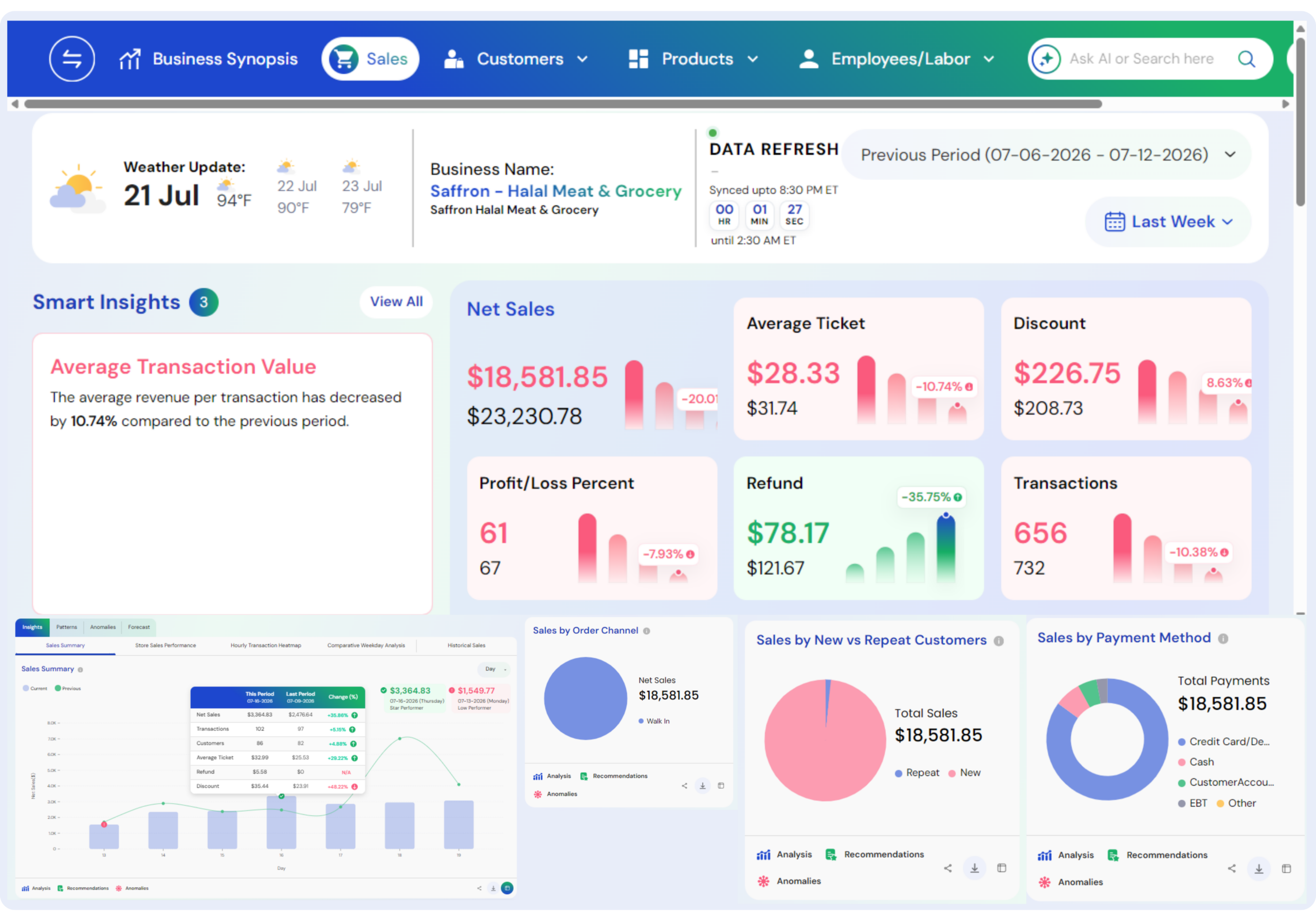
With the emergence of real-time dashboards, the organization has completely transformed the way they visualize, interpret, and act on data.
Business leaders get powerful interfaces which provide them with live, and real-time updates on important metrics and key performance indicators which helps them to act quickly and confidently on the basis of most current data.
Today you can integrate both real-time dashboards with business intelligence which helps to combine live data visualization with interactive designs which gives clear, impactful insights.
It helps to have a real-time data view regarding sales numbers, customer engagement, or operational performance which enables you for faster responses, better resource allocation, and improved forecasting.
With most of the companies adopting business intelligence dashboards, a culture of data-driven decision making is developed which helps every team to access the insights which they require or whenever they require them.
While with a real-time analytics platform like Livelytics, your businesses get to analyze data quickly which eventually helps them to make quick decisions, improve operational efficiency and quickly adapt to changing market conditions and trends.
Also predictive analytics in real-time dashboards helps your businesses to predict trends quickly by combining live data with historical insights to take proactive decisions, optimize operations, and stay ahead of market changes in real-time.
Through this blog, we will explore how real-time dashboards work, their benefits across industries, and how to implement them effectively using popular business intelligence platforms.
Also Read: Real Time Analytics Why Does Your Business Needs it
What are Real-time dashboards?
A recent Gartner BI and Analytics survey suggests that companies using real-time analytics and dashboards experience a 20% improvement in time taken for decision making.
It is an interactive visualization tool which regularly displays updates with the latest data which eventually helps businesses to monitor their performances and make timely and data-driven decisions.
It helps businesses to track their important metrics and key performance indicators regularly without any manual updates or end-of-day reports. Real-time dashboards are developed using business intelligence platforms like Tableau, Power BI, and Google Data Studio.
Firstly data is collected from various data sources like ERPs, IoT devices, APIs, and cloud databases. Then the combined data is compiled into a single centralized interface. Then the users can customize visualizations like line graphs, bar charts, gauges, tables, and geographical maps.
The main features of real-time dashboards are:
- Live data streaming
- Custom alerts and notifications
- Cross-device accessibility
- Cross-device accessibility whether it is desktop, tablet, mobile.
- Data filtering and segmentation
With such features businesses adopt proactive strategies which help them to take real-time, data-driven decisions instead of depending on historical insights.
Also Read: Business Intelligence Dashboard For Data Collection
Types of Real-Time Dashboards:

1. Operational Dashboards:
Livelytics emphasizes that operational dashboards track processes such as logistics, customer service or inventory which is helpful for frontline teams requiring instant updates.
Also Read: Predictive Analytics in Restaurants
2. Strategic Dashboards:
Such dashboards are usually used by executives to monitor key performance indicators such as revenue, growth, and market performance which are aligned with long-term goals.
Also Read: Best Marketing Strategies for Restaurants
3. Analytical Dashboards:
These dashboards help to explore deep data with trends, comparisons, and filtering which is used by analytics for performance reviews and forecasts.
Also Read: Automating Data Analysis Using Artificial Intelligence
4. Tactical Dashboards:
These dashboards help to focus on department-level operations like team productivity or project timelines which helps managers to make informed decisions.
Also Read: How AI Unlocks Business Insights that Drive Required Results
5. Financial Dashboards:
It provides real-time financial data like revenue, cash flow, and profit margins which is essential for both finance and accounting teams.
Also Read: How AI Helps in Boosting Restaurant Revenue and Profits
6. Sales Dashboards:
It shows metrics like deals closed, sales targets, which helps sales teams to track progress.
Also Read: How Livelytics Helps Restaurant Can Help Restaurant Boost Revenue
7. IT and Infrastructure Dashboards:
It helps to track server uptime, errors, and alerts in real time which is important for DevOps and IT support teams for maintaining system health.
Also Read: Key-Metrics Restaurant Owner Should be Tracking
Why Real-Time Insights Matter?
Real-time data insights are not just a luxury, rather it’s a necessity for organizations who aim to stay competitive. Below are several ways in which real-time dashboards make an impact:
1. Faster Decision-Making:
Business environments keep changing frequently. So businesses are empowered to make decisions quickly with the help of real-time insights, minimizing delays. Real-time dashboards help businesses to make smarter data-driven decisions at the right time.
Also Read: Benefits of Data-Driven Decision Making
2. Increased Operational Efficiency:
These dashboards provide details regarding your business workflows, resource usage, and performance metrics through which you can improve operational efficiency.
With such insights, your teams get to determine issues quickly, reduce delays which results in faster execution, reduced costs, and good co-ordination across business operations.
Also Read: How Livelytics Help Retailers Reduce Operational Costs
3. Enhanced Customer Experience:
Such dashboards providing insights helps to monitor interactions, actively respond to issues, and personalize services which improve your customer experience.
It leads to faster support, better customer satisfaction, and stronger relationships built on timely, data-driven customer engagement.
Also Read: How AI Revolutionizes Customer Experience in the Restaurant Industry
4. Data-driven culture:
Making real-time accessible for different departments helps to create a culture where decisions are not just guesswork rather backed by metrics.
Due to such insights, different teams associate effectively with a shared understanding of performance.
Also Read: Data-Driven Social Media Strategies for Businesses
Applications of Real-Time Dashboards across Business Functions:

Livelytics emphasizes that real-time dashboards support different business functions like sales tracking, inventory management, customer support monitoring, marketing campaign performance, and financial oversight.
Below are some powerful examples:
1. Retail and E-Commerce:
- Sales Dashboards: It helps to monitor hourly, daily, and weekly sales of your Retail and E-commerce Business.
- Inventory Dashboards: It helps to track stock levels and also receive alerts if there is low stock or low inventory.
- Customer Behavior: helps to analyze browsing patterns, cart abandonment, and purchase funnels to uncover insights.
Also Read: Business Intelligence in Retail
2. Finance and Accounting:
- Cash Flow Management: It helps to track cash inflows and outflows in real-time which ensure you have better financial control, quick decision-making and enhanced forecasting.
- Expense Monitoring: It helps to track your business expenses in real time against your set budget which help you to control costs and prevent overexpenses.
- Risk Management: It helps businesses to determine unusual patterns or anomalies which may indicate fraud, operational errors, due to which businesses can respond quickly and minimize potential losses.
Also Read: Customer Sentiment Analysis Vs Traditional Surveys
3. Marketing:
- Campaign Performance: It helps businesses to monitor ad clicks, conversions, and return on investment across different platforms, eventually helping businesses to make quick adjustments in order to maximize the effectiveness of your marketing expenses.
- Website Analytics: It gives insights about live visit count, bounce rate, session duration which eventually help businesses to know their user engagement which help businesses to improve site performance which help them to retain their customers and client conversions.
- Social Media Dashboards: It helps to track engagement, reach, and brand mentions across multiple channels in real-time which enable timely responses, performance evaluation, and effective content strategy optimization.
Also Read: Mobile Marketing for Restaurants
4. Logistics and Operations:
- Fleet Tracking: Being able to monitor vehicle locations and provide statuses in real time, helps to improve route efficiency which ensures timely deliveries, reduces fuel costs, and improves overall fleet management.
- Warehouse Management: It helps to monitor real-time inventory movement, which helps to ensure stock levels, reduce manual errors, improve order processing efficiency with automated inventory tracking.
- Production Dashboards: It provides real time visibility regarding machine performance and output which helps manufacturers to find inefficiencies, track equipment health, reduce downtime and optimize production processes for improved productivity.
Also Read: Two Way Data-Analytics in Shaping Retail Business
5. Human Resources:
- Recruitment Dashboards: By having insights about candidate applications, interviews, and hiring data which help HR teams to improve their efficiency in hiring and overall recruitment strategies.
- Employee Engagement: By tracking employee attendance, track performance, and gathering feedback helps companies to identify issues early, improve productivity and develop a positive and motivated workplace.
Also Read: What is Business Analytics As a Service
6. Healthcare:
- Patient Monitoring: By keeping track of patient vitals and providing any emergency alerts helps healthcare providers to act quickly by ensuring continuous care to their patients which will improve overall patient safety.
- Operational Dashboards: By providing insights about their staff allocation, room availability, hospitals will be able to optimize their resources which will significantly reduce wait times and improve overall healthcare efficiency.
Visualization and Smarter Decision-Making:
Visualization helps to simplify complex data by converting them into intuitive dashboards and charts which will help teams to quickly understand insights, identify trends, and allow them to take smarter, real-time decisions which will improve efficiency, accuracy, and profitable business outcomes.
Real-time dashboards improve decision-making through:
- Clarity: Visual formats help users to understand the trends faster than raw numbers.
- Focus: highlighting key metrics helps leaders to prioritize what matters most.
- Predictive Insights: some dashboards incorporate AI to forecast trends and suggest actions.
Interactive visuals like heatmaps, funnel charts, and goal meters help teams to act on insights rather than just observing them.
Also Read: How Predictive Intelligence Transforms Retail
How to Select a Real-Time Dashboard?
Choosing the right real-time dashboard is important for making informed decisions, improving operational efficiency, so that business goals perfectly align across different teams.
A well-chosen dashboard not just provides visibility about live data but also provides actionable insights which helps to empower your organization.
Below are 8 important factors to consider while selecting a real-time dashboard solution:
1. Define Your Business Goals and KPIs:
Begin by clearly defining your objectives, like whether you want to monitor sales, operations, marketing, finance, or IT systems in real time. Each team will have unique Key Performance Indicators.
For instance, a sales team might track client conversions per hour, while operations may focus on order fulfillment time. Your dashboard should completely align with the goals and visual KPIs which are important to your specific department.
Also Read: How to Setup Key Performance Indicators for Your Business
2. Understand your Audience:
Identify the audience who will be using the dashboard whether executives, team leaders, analysts, or customer support agents. Make sure that the dashboard layout, complexity, and features must match with the technical skills and job role of the user.
Most of the executives prefer simple visuals and high-level summaries whereas data analysts may require detailed insights with filters in order to explore trends.
Also Read: AI For Expanding Restaurant Customer Base
3. Ensure Real-Time Data Integration
A real-time dashboard must integrate effortlessly with your existing systems like CRM, ERP, marketing platforms, databases which will help to reflect data changes within seconds.
Also check whether the tool supports live data sources like APIs, webhooks, or direct database connections. Because delayed updates can mislead the team and lead to slow decision making.
Also Read: POS Reports Vs Real-Time Analytics
4. Look for Customization and Flexibility:
Make sure that your dashboard is customizable as per your requirement as every business is unique.
Select a platform which allows you to create custom charts, widgets, and layouts on the basis of your key performance indicators.
It should offer flexibility in how data is visualized like bar charts, heat maps, tables, which helps to improve usability and interpretation.
Also Read: Food Menus Ideas for Restaurants
5. Evaluate User Interface and Ease of Use:
Users can easily adopt only if they are provided with an intuitive interface. You must avoid complex dashboards which require steep learning curves.
There must be drag-and-drop interfaces, easy filters, and clear visual hierarchy and if there is mobile responsiveness then it will let your team who need access on phones or tablets.
Also Read: How Small Business Can Get the Most Out of Data Analysis
6. Check Scalability and Performance:
Your dashboard must be able to expand as your business grows. So that if your plan is to expand data sources or add more users, the tools must scale without performance lags.
Cloud-based solutions also provide better scalability which provides global access, faster load times, and automated updates.
Also Read: Choosing the Right AI Data Platform for Business
7. Security and Data Access Control:
Real-time dashboard can access sensitive business data. Ensure that your platform has strong security features like user authentication, role-based access control, and encrypted data transfers.
You must be able to restrict who can view or edit certain reports in order to protect confidential information.
Also Read: The Main Reason of Using Data Analysis in Revenue Analysis
8. Integration with Notification and Automation Tools:
The best dashboards often go beyond visualization but also enable action. Select a dashboard which can send alerts, trigger workflows, and then integrate it with tools like Slack, Teams, or email.
For instance, if there is a drop in sales below a certain threshold then the dashboard must notify the manager instantly.
Measuring the Return on Investment on Real-Time Dashboards
Though real-time dashboards provide good returns, it is equally important to measure return on investment. It eventually helps to make sure that the time, money, and effort is being invested rightly which is helping to deliver meaningful business results.
Below are four key ways to evaluate their impact:
1.Improved Decision-Making Speed:
With dashboards giving you live data, your teams get to act quickly upon changing situations, reduce downtime, and prevent missed opportunities.
2.Operational Efficiency Gains:
Because these dashboards automate data tracking and reduce manual reporting, which simplifies your work, saves much of your employee time and improves overall productivity across different departments.
Also Read: Cost-Effective AI Solution for Restaurants
3.Cost Savings and Risk Reduction:
Real-time alerts help to determine any inconsistencies like production issues or financial discrepancies early, due to which there will be less potential losses and avoid costly errors.
4.Enhanced Performance Visibility:
Due to its centralized and visual access to key performance indicators, it becomes easier for teams to identify weak areas, optimize strategies, and track their progress towards their business goals.
Use ROI metrics such as:
- Decision turnaround time
- Reduction in operational costs
- Increase in sales or productivity post-dashboard implementation
Future Trends in Real-Time Dashboards:
1. AI-Powered Predictive Insights:
Future dashboards will integrate effortlessly with AI and machine learning which will not just give real-time data but also predict future outcomes through which businesses will respond quickly to trends and inconsistencies before they impact operations.
Also Read: Business Intelligence Vs Machine Learning
2. Natural Language Interfaces:
You may find conversational dashboards in future by using Natural Language Processing(NLP) which will help users to interact with data through voice or text queries which will deliver insights even to non-technical users.
3. Hyper-Personalization:
In future, dashboards will become more personalized, giving access to the most relevant data assigned on the basis of role, behavior, and preferences which will improve decision-making across various teams.
4. Seamless IoT Integration:
With the IoT technology gaining popularity, real-time dashboards will integrate with connected devices which will eventually help to track physical environments, machinery, and logistics in real time, through which you get deeper operational visibility and smarter automation.
The Power of Embedded Analytics in Business Dashboards:
Embedded analytics will let businesses integrate both data visualizations and insights into existing applications and dashboards due to which data-driven decision making is more accessible and efficient.
By completely eliminating the need to switch between separate analytics tools, it makes workflows smooth and improves productivity across different teams.
1. Seamless Integration:
Embedded analysis blends with business tools like CRM or ERP platforms smoothly which provides them with instant access to insights without leaving the application.
2. Real-Time Insights:
Teams will get live data updates which helps for quick responses if there are any performance changes or operational issues.
3. Improved User Experience:
As you get intuitive visuals and dashboards built into familiar interfaces helps users to engage effectively with data.
Also Read: How AI Revolutionizes Customer-Experience in Restaurant Industry
4. Operational Efficiency:
It reduces delays caused by report generation and tool-switching which allows for faster execution.
5. Scalable Decision-Making:
It provides self-service insights which empowers all departments and not just analysts in order to support timely, informed decisions.
Conclusion:
In today’s fast-evolving digital landscape, real-time dashboards have become one of the most important tools which helps them to make data-driven decisions in order to achieve their business goals.
With these real-time dashboards businesses get insights about important key performance areas such as sales, operations, customer engagement, and financial performance which will help businesses to act quickly to both challenges and opportunities.
So instead of depending on outdated reports or manual data gathering, decision-makers can monitor live metrics and take immediate action with shifting trends.Real-time dashboards also develop cross-departmental collaboration, aligning teams around shared key performance indicators and goals.
With powerful features like AI-powered insights, interactive visualization, and custom alerts, such dashboards not just display data but also tell a story and suggest next steps.
Meanwhile, as markets become more unpredictable, businesses equipped with real-time analytics gain a competitive edge by proactive and staying agile.
Ultimately real-time dashboards transform raw data into actionable intelligence which help organizations to make smarter, faster, and more strategic decisions that lead to measurable growth and long-term success.