Restaurant success used to be built on instinct, experience, and relentless hustle. Though those factors still matter, in 2026 and beyond, the restaurants that consistently win are the ones that can see the truth in their numbers, identify patterns early, and act faster than their competitors. That’s exactly why data analytics is the new secret weapon for successful restaurants.
Today’s restaurant operators have to work under rising ingredient prices, tighter margins, wage pressure, staffing shortages, and unpredictable demand due to weather, events, seasonality, and delivery apps. In such an environment, just functioning with one’s own instincts alone becomes risky. Restaurant data analytics provides you a clearer and more reliable way to run the business converting daily activity insights which you can actually use.
At its core, restaurant analytics is the process of collecting data from your POS, online ordering, delivery platforms, labor scheduling, and marketing channels and then transforming that data into answers or insights. Such insights let them know about the menu items that drive profits, whether you are losing money through waste, discounts, or whether your staffing levels match your actual traffic patterns. When you start tracking the right restaurant KPIs ( key performance indicators) then you stop reacting late and start making decisions confidently.
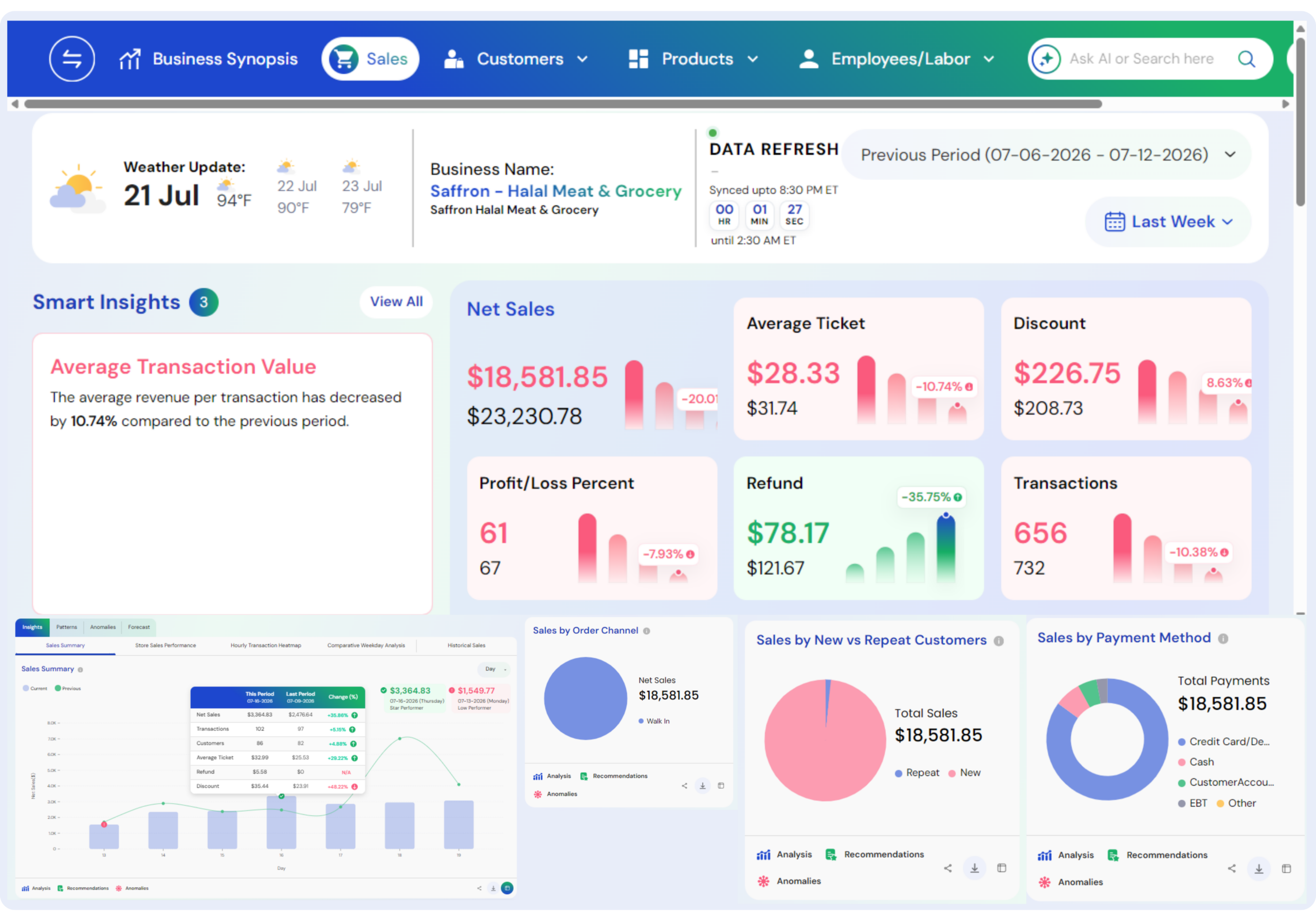
The real power of restaurant analytics is speed and clarity. With the right restaurant performance dashboard, you can monitor food cost percentage, labor cost percentage, prime cost, sales trends, average ticket size, table turn time, customer retention, and location-by-location performance without struggling with spreadsheets.
That is where Livelytics became a game-changer. As an all-in-one restaurant analytics platform, Livelytics helps you bring your key data into one place, visualize performance in real time and turn raw numbers into actionable insights which your team can execute. Through this blog, you will learn what analytics really means for modern restaurants, why it matters right now, the metrics that drive profitability, and how Livelytics turns insights into practical action.
Also Read: Two Way Data Analytics in Shaping Retail Business
Why Yesterday’s Restaurant Strategies Fail in 2026?
Restaurants have always been tough businesses but today there is a constant pace of changes in restaurant businesses. A few years ago, you could maintain stable margins with predictable traffic and familiar seasonal patterns. Now you are operating in a reality shaped by:
- Volatile costs (ingredients, packaging, utilities)
- Labor challenges (wage pressure, turnover, overtime, training costs)
- Fragmented ordering channels (dine-in, pickup, delivery, third-party apps)
- Shifting guest expectations (speed, accuracy, personalization)
- Intense competition (social media visibility + app marketplaces)
The biggest risk is that everything can look fine like the sales are steady, tables are turning, orders are coming in while profitability quietly reduces behind. A small change like menu mix shift can push guests lower-margin items while the increasing amount of waste can also go unnoticed.
Overstaffing during slow hours or overtime spikes during rushes can increase labor cost. And dependency on discounts can force customers to only buy when you promote, reducing long-term value. The problem is not that restaurant teams don’t work hard. Rather, it’s that hard work without visibility can cause small losses that compound daily.
That is exactly where data analytics become a weapon. It helps you identify issues early, understand what is driving them, and fix them with precision before they become permanent problems.
Also Read: Automating Data Analysis Using Artificial Intelligence
What restaurant data analytics really is!
Restaurant data analytics is simply the practice of using your day-to-day business data to make smarter decisions faster and with more confidence. It’s about turning everyday numbers into clear, practical answers that your team can act on. It’s about answering three practical questions that every restaurant operator cares about:
1. What’s happening (visibility)
You need a clear picture of performance right now like sales trends, labor percentage, food cost movement, ticket times, item performance, channel mix, and guest feedback. Rather than guessing, you can see what is working and what is slipping.
Also Read: How to Calculate Food Cost Percentage
2. Why it’s happening (diagnosis)
This is where data analytics becomes powerful. As it does not just show that your labor cost has increased but it also helps you understand whether it happened because of overstaffing, overtime, low traffic, slow preparation times, or a schedule that does not match demand. It does not just show that margins are reduced but it also helps you to trace it to menu mix shifts, increasing ingredient costs, increased waste, or discount-heavy orders.
Also Read: POS Reports Vs Real-Time Analytics
3. What you should do next (action)
The goal is not more reporting. Rather the goal is clearer decisions. Analytics should guide you toward practical next steps like adjust preparation levels, tighten portion control, update pricing, improve add-ons, fix scheduling, or shift marketing expenses to higher-value channels.
A simple way to think about it is this: your tools already have valuable information or data but they are available in different places.
- Your POS shows you sales and item performance
- Your labor system shows staffing, hours, and wage cost
- Your inventory shows usage, waste, and purchase trends
- Your reviews show sentiment, complaints, and service gaps.
- Your marketing platforms show clicks, conversions, and ROI
Though these tools produce data on their own, they don’t automatically produce insight. Analytics connects your numbers so you can see cause and effect and what is driving outcomes.
That’s how you get insights like:
- “Friday dinner sales are up, but margin is down because your most popular items have a reduced contribution margin.”
- “You’re consistently overstaffed from 3–5 PM, and that’s where your labor percentage spikes.”
These are the types of insights that change how you operate, because they are specific, measurable, and fixable. Livelytics is designed to make restaurant analytics simple and visual, so you can identify patterns, detect issues, and take action without struggling with spreadsheets. It turns raw data into clear answers so that you can run the business with clarity and not guesswork.
Also Read: How Can Data Analytics Improve the Employee Performance
Why analytics is the “secret weapon” (not just a nice-to-have)
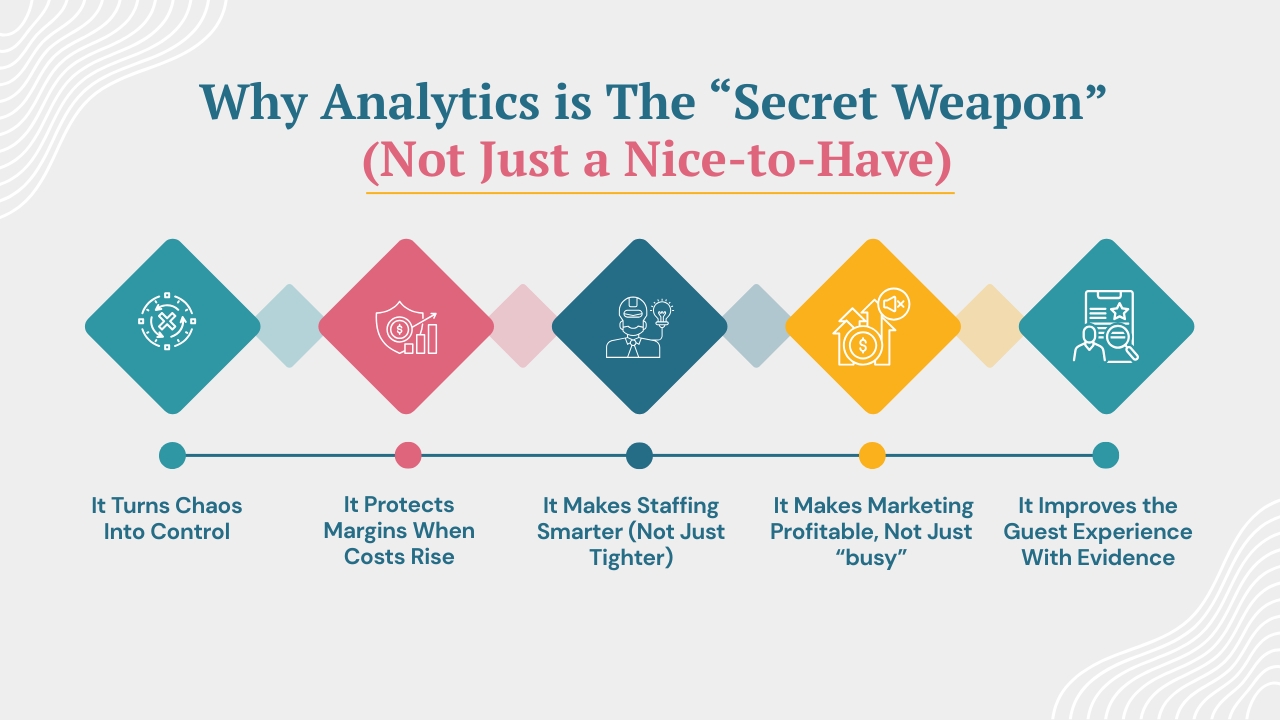
Many restaurants already have data, but most owners still feel like they are guessing. That’s because data is in silos, updates slowly, and often lacks context. When analytics is done right especially with a restaurant focused analytics platforms like Livelytics it becomes a competitive advantage in five major ways:
1. It turns chaos into control
Data analytics turns chaos into control by giving you visibility before problems become expensive. Most restaurants don’t fail because they are not busy, rather they struggle because small issues compound quietly like increasing food costs, overtime, guest sentiment slipping, and reduced repeat visits. Without analytics you often notice these issues only after they show up in your bank balance or month-end Profit and Loss.
With the right restaurant analytics system, you get early warning signals that help you to act in time. You can spot food cost variance as soon as it starts trending higher, so you can investigate portioning, waste, vendor price changes, or menu mix shifts.
You can also detect overtime risk before payroll closes, adjust schedules, and prevent labor percentage spikes. And you can see repeat-visit decline early so you can fix experience issues and retention before traffic collapses.
Also Read: AI Solution for Reducing Restaurant Waste
2. It protects margins when costs rise
Analytics protects margins when costs increase by helping you respond with precision rather than guessing. In 2026, food, packaging, and utility costs can increase quickly, sometimes by 8-15% in a single quarter and if you don’t adjust, your profit can vanish even when sales remain steady. The danger is that cost increases often hide inside your most popular items, quietly reducing contribution margin order by order.
With restaurant analytics, you can identify exactly which items are losing margin, whether it’s from vendor price increases, or a menu mix shift. You can test changes like portioning adjustments or supplier swaps based on real numbers and not assumptions.
You can fine-tune pricing in a way that protects demand by focusing on the right categories and price points. Analytics also reveal losses from waste, comps,and theft/shrink, and guides a smarter menu structure by repositioning and redesigning categories so high-margin items get more visibility and weaker performers stop reducing profits.
Also Read: Cost Effective AI Solution for Restaurants
3. It makes staffing smarter (not just tighter)
Analytics makes staffing smarter by helping you match labor to actual demand without damaging service. In many restaurants, the goal should not be to reduce working hours but the goal is productive labor with the right people, in the right roles, at the right times. When you reduce labor blindly, you often pay for it through slower service, more mistakes, stressed teams, and worse reviews.
With restaurant analytics, you can identify overstaffed dayparts where labor percentage increases because traffic is lighter than expected. You can also spot understaffed rush periods where ticket times stretch, order accuracy drops, and guests feel the friction.
Analytics reveals productivity by role like sales per server, order per cook-hour, or tickets per bartender so coaching and scheduling become more targeted. It also highlights overtime patterns before they repeat and improves scheduling accuracy over time by comparing forecasted traffic to actual sales. The result is a better guest experience and healthier margins together.
Also Read: How Restaurant Can Regain Confidence in Their Numbers
4. It makes marketing profitable, not just “busy”
Analytics makes marketing profitable by measuring what matters beyond “more orders.” In 2026, it’s easy to launch promotions that increase volume but volume can be misleading if it comes from low-margin channels, high delivery fees, or discount-heavy buyers who never return. A campaign that looks successful can quietly reduce profit.
With restaurant analytics, you can track cost per acquisition and compare it to the actual profit per order and not just sales. You can monitor repeat rate to see whether a campaign brings loyal guests or one-time deal hunters.
Analytics also shows order profitability by channel, so you know whether dine-in, pickup, or third-party delivery is driving healthy margin. You can spot offer dependency when customers only buy with discounts and reduce discount fatigue over time. Ultimately, you can measure ROI by campaign type, allowing your business to scale what truly grows profit.
Also Read: Restaurant profit margin analytics tool to boost profit
5. It improves the guest experience with evidence
Analytics improves guest experience by turning feedback into clear, repeatable patterns your team can act on. Reviews often feel emotional because they are written as stories like one guest’s frustration, one guest’s praise, but analytics help you step back and see what is happening consistently. Instead of reacting to the loudest comment, you can identify the issues that happen repeatedly.
With the right system, you can track recurring complaints like long wait times, cleanliness issues, staff attitude, or order accuracy and see when and where they happen most. You can track sentiment trends over time, so you know whether service is improving or slipping before ratings drop. Analytics can also connect feedback to root causes, such as being understaffed during specific dayparts, training gaps on certain stations, or delivery workflow problems.
Most importantly, it helps measure service recovery effectiveness whether your fixes like staffing changes, process updates, and coaching actually reduce complaints and improve satisfaction. That’s how guest experience becomes manageable. That’s why analytics is a weapon as it improves profit, consistency, and experience at the same time.
Also Read: How AI Revolutionizes Customer Experience in the Restaurant Industry
The six types of restaurant analytics that drive real results
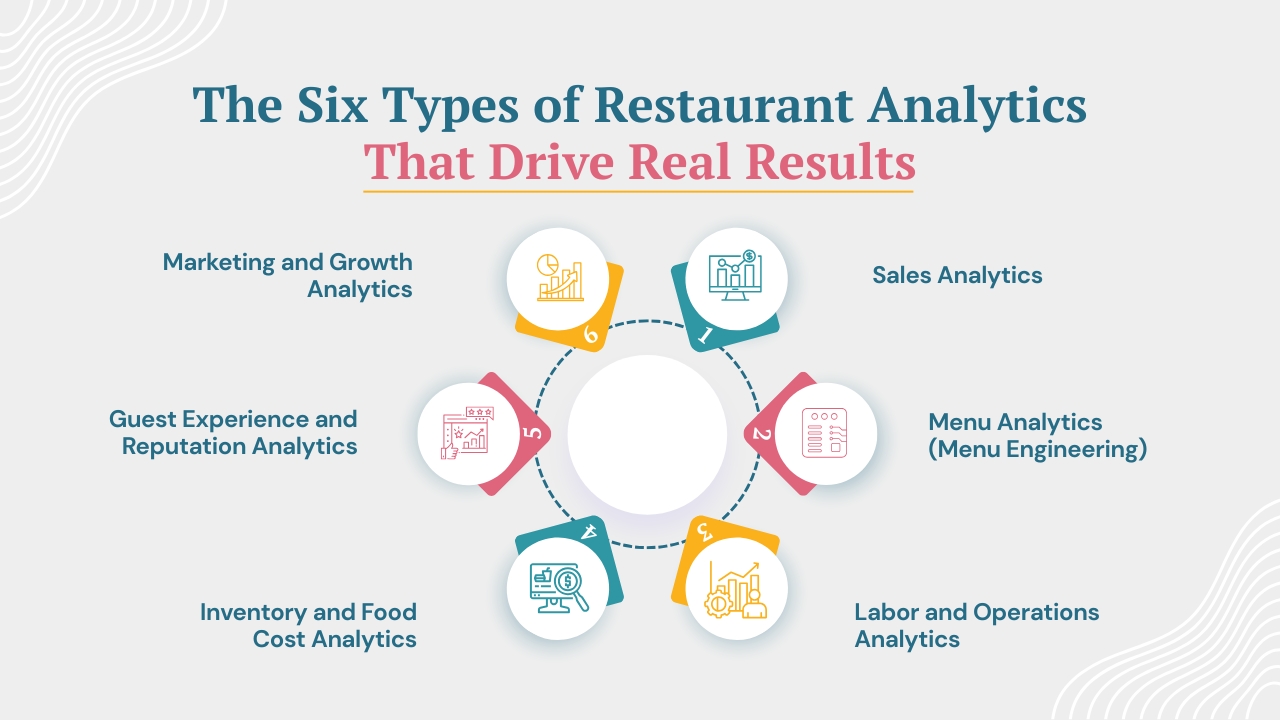
Restaurants often get stuck tracking vanity metrics. The best approach is to focus on analytics categories that directly affect profits and operational performance.
1. Sales analytics
Sales analytics answers one core question which is where is revenue coming from, and how is it trending. It is the foundation because everything else like labor, inventory, marketing, and even guest experience ultimately connects back to sales patterns. Instead of only looking at daily totals, sales analytics breaks performance into usable insights such as sales by hour or day or week, which reveals your true peak hours, slow periods, and seasonality.
It also highlights your channel mix such as dine-in versus pickup versus delivery which matters because revenue from different channels often carries very different margins. You can track average order value and ticket frequency to understand whether growth is coming from more guests or bigger orders, and you measure discount impact, comps, and voids to expose issues that quietly reduce profits.
The actual value is how quickly you can identify changes like a dip in weekday lunch traffic, a sudden shift toward delivery, or a rise in discounts that makes sales “look good” while profit reduces. Here, Livelytics helps to turn raw sales data into clear trends and visuals so you can instantly see demand shifts and channel performance and respond before small changes become major problems.
2. Menu analytics (menu engineering)
Your menu is not just a list of food items rather it’s your profit engine. Menu analytics helps you see how your menu is actually impacting financially, and not what you think it’s doing. It identifies high-margin winners that deserve more visibility and popular items with weak margins that sell a lot but quietly drain profits. It also reveals slow-selling items that create waste and complicated prep and it can highlight items that slow kitchen throughput creating longer ticket times and weaker guest experience.
One of the most useful approaches is classic menu engineering, which groups items into four types: Stars(high profit, high profitability), Plowhorses(low profit, high popularity), Puzzles(high profit, low popularity), and Dogs(low profit, low popularity).
This classification makes decisions clearer like Stars should be protected and promoted, Plowhorses should be optimized with portioning, small price adjustments, Puzzles need better placement and descriptions, while Dogs often need removal or reinvention. Here Livelytics helps as it shows you which items deserve promotion, repositioning, repricing, or removal based on performance data and not opinions so your menu evolves into a stronger profit system.
Also Read: Optimizing Restaurant Menu With AI Powered Data Analytics
3. Labor and operations analytics
Labor is one of the biggest controllable expenses in a restaurant, but the goal is not “lower labor” rather it is productive labor. Labor and operations analytics connects staffing to performance, helping you schedule smarter without damaging service.
Core metrics include labor cost percentage by shift, sales per labor hour, sales per server, orders per cook-hour, and overtime hours and causes. This is where you stop making staffing decisions based on habit and start aligning labor to real demand patterns. Analytics helps you identify overstaffed dayparts where labor percentage spikes because traffic is not there, and understaffed rush periods where speed reduces, mistakes increases and reviews suffer.
Operations analytics can go deeper by tracking ticket time trends, revealing peak bottlenecks, measuring order accuracy and remake cost, and evaluating kitchen station performance. These insights matter because labor efficiency is not only about payroll rather it affects guest satisfaction, repeat visits, and overall brand perceptions. Livelytics helps by revealing exactly where productivity drops and why, so you can improve schedules, coaching, and workflows while protecting service quality.
4. Inventory and food cost analytics
Food cost is not just a percentage rather it’s an entire system of purchasing, prep, portioning, waste control, and variance management. Inventory and food cost analytics helps you track theoretical versus actual usage, variance by category or item, waste patterns, vendor price trends, and portioning inconsistencies.
This category is crucial because restaurants can lose thousands every month through small repeated issues that are easy to miss without visibility like poor prep forecasting, over-ordering perishables, inconsistent portioning, untracked waste, and theft or shrink.
Instead of arguing over “who messed up,” you identify the real driver behind the numbers and take targeted action before higher food cost becomes permanent margin drains. Livelytics helps to make food cost variance visible and understandable, so you can fix the true cause faster, reduce waste, tighten controls, and stabilize margins even when price increases.
Also Read: AI for Restaurant Inventory
5. Guest experience and reputation analytics
Customer experience has become measurable. Guest experience analytics helps you turn feedback into operational intelligence instead of emotional noise. You can track review trends over time, identify sentiment themes, measure repeat guest behavior, and spot complaints by daypart of channel
The point is not to obsess over every review, rather it’s to detect patterns early and improve the system. If complaints about wait time increases every Friday, that is a staffing and throughput issue. If accuracy complaints increase on delivery orders then it may be packaging workflow or expo process and not front-of-house attitude.
Analytics also helps evaluate service recovery effectiveness by adjusting staffing or retraining a station, and do reviews and sentiment improve within weeks.When you measure experience trends, then you can build consistency and prevent small issues from becoming brand damage. Livelytics helps to turn guest feedback into clear, readable patterns so improvements become systematic, measurable, and repeatable.
Also Read: How Can Data Analytics Help Restaurant Growth
6. Marketing and growth analytics
Most restaurant marketing fails for one reason as it measures attention, and not profit. Marketing and growth analytics focuses on what actually grows a restaurant sustainably like profitable orders and repeat customers.
Rather than celebrating impressions or “busy” nights, you measure acquisition cost versus profit per order, repeat rate, lifetime value by segment, ROAS by campaign type, and offer dependency or discount fatigue. This matters because a campaign that drives orders is not automatically a win rather if it attracts discount-only buyers who don’t return, you may be buying revenue at a loss.
Analytics helps you see which channels generate the best customers, which promotions create dependency, and which campaigns actually improve retention. It also helps connect marketing to operations if delivery campaigns increase volume but reduce profitability due to fees and discounts and you can adjust strategy instead of guessing. Livelytics helps to link marketing performance to real outcomes, profitability and retention so you can scale what works and reduce what does not and grow with control rather than any chaos.
The metrics that actually matter (and why)
You can track hundreds of restaurant metrics, but the best operators focus on the few that consistently drive smarter decisions.These metrics don’t just describe what happened but they also reveal where profit is being created or lost and what to fix next.
Profit and performance metrics are your financial truth. Prime cost(labor+COGS) is one of the most important restaurant health indicators because it shows how efficiently you are turning revenue into profit.
Tracking contribution margin by item helps you identify winners, volume traps, and menu changes that protect margin. You also want the net sales trend and not just gross sales, because discounts and comps can make top-line numbers look healthy while profit reduces.
Revenue by channel mix matters too because delivery can improve volume but reduce margin. Average order value and attach rate reveal upsell strength and whether guests are adding high-marketing sides, drinks, or extras. Tracking discounts or comps or void rate helps to control any major problems.
Operational metrics show how efficiently you execute such as sales per labor hour(SPLH), labor cost percentage by daypart, overtime hours, ticket time, and order accuracy or remakes.
Guest and marketing metrics protect growth like repeat rate, frequency, LTV, acquisition cost, and review sentiment drivers. Livelytics makes these metrics actionable and not just visible so you spend less time calculating and more time improving.
How analytics improves everyday restaurant decisions
Analytics improves everyday restaurant decisions by turning daily activity into clear, actionable answers. It helps you increase prices strategically, diagnose why labor percentage is increasing, and identify which menu items to promote for higher profit.
It also reveals which marketing drives repeat guests and not just one-time discount orders and uncovers patterns behind slipping reviews. Rather than guessing, you make faster, smarter decisions that protect margins and improve guest experience.
- Turns guesswork into clarity: Through data analytics you get to know what is happening across sales, labor, food cost, and guest experience in one connected view or dashboard so the story is clear, and not scattered across tools.
- Speeds up better decisions: Rather than waiting for month-end reports or depending on “how it feels,” you detect trends early and act while problems are still small and fixable.
- Supports smarter pricing: Analytics identifies price-sensitive items versus strong-demand items so you can raise prices where guests won’t stay back and avoid price increases that damage trust.
- Protects margins during cost spikes: Through analytics you can spot contribution margin shrink, vendor inflation impact, and waste patterns before profit disappears even when sales look stable.
- Explains why labor % changes: Analytics helps to separate true labor efficiency from sales dips that make labor percentage look worse, so you don’t reduce labor blindly and hurt service.
- Improves scheduling accuracy: Analytics shows overstaffed dayparts and understaffed rush windows, helping you match coverage to demand for better speed and lower labor waste.
- Reduces overtime and burnout: Data analytics reveal overtime patterns and root causes like scheduling habits, slow onboarding, training gaps which helps business to prevent payroll spikes and protect team morale.
- Guides menu strategy: Analytics highlights high-margin winners, low popularity and high profit items, and volume traps that need adjustments so your menu becomes a profit system and not just a product list.
- Improves kitchen throughput: Analytics identifies items, stations, and dayparts that create challenges, long ticket times helping you improve flow without sacrificing quality.
Conclusion
Restaurant success will always require great food, strong leadership, and a team that cares but in 2026, the restaurants that consistently win are the ones that can see the truth in their numbers and act faster than everyone else.
Data analytics is no longer a “nice-to-have.” It’s the difference between reacting late and staying in control, between being busy and being profitable and between guessing and making confident decisions.
With increasing costs, labor pressure, fragmented ordering channels, and rapidly shifting guest expectations, small issues can quietly compound like waste, overtime spikes, discount dependency, slow ticket times, and slipping reviews.
Analytics helps you catch these issues early, understand the root cause, and fix them with precision. It turns your POS, inventory, labor, reviews, and marketing data into a single story so you can protect margins, improve efficiency, and deliver a more consistent guest experience.
Most importantly, analytics does not replace experience rather it strengthens it. When your instincts are backed by evidence, you make better decisions on pricing, staffing, menu engineering, and marketing.
With a restaurant-focused platform like Livelytics, you spend less time calculating and more time improving building a business that is resilient, scalable, and consistently profitable.
If you still have any query regarding why data analytics is the new secret weapon for successful restaurants then feel free to book a free demo at livelytics and we are more than happy to assist you.