In today’s highly competitive restaurant industry, success is not achieved just by serving great food and offering excellent customer service.
It has become essential for restaurant owners and managers to make informed, data-driven decisions to improve efficiency, maximize profits, and meet changing customer expectations.
This is where Restaurant POS analytics plays a crucial role. As modern point of sale(POS) systems generate large amounts of data providing insights about sales patterns, customer behavior, employee performance, use of inventory, and overall restaurant operations.
With restaurant data analytics, restaurants can convert their raw data into actionable intelligence which drives growth.
Rather than simply guessing, restaurant operators can use POS data analytics to identify top-selling food items, track labor expenses, improve inventory management, and find new revenue opportunities.
Having access to the right restaurant reporting enables management teams to make strategic decisions which improve both short-term performance and long-term business success.
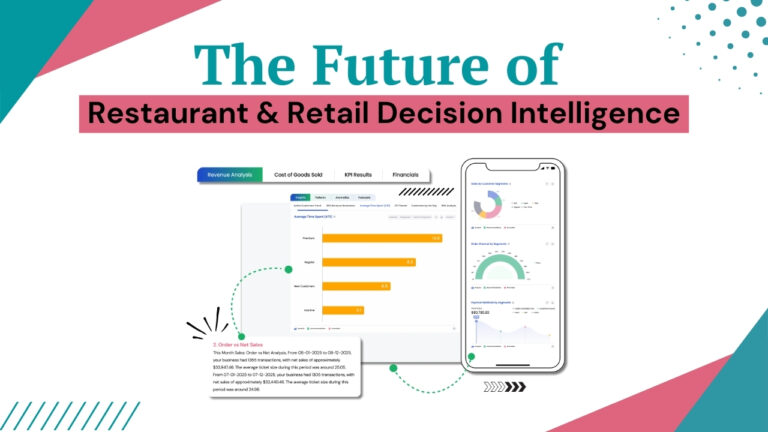
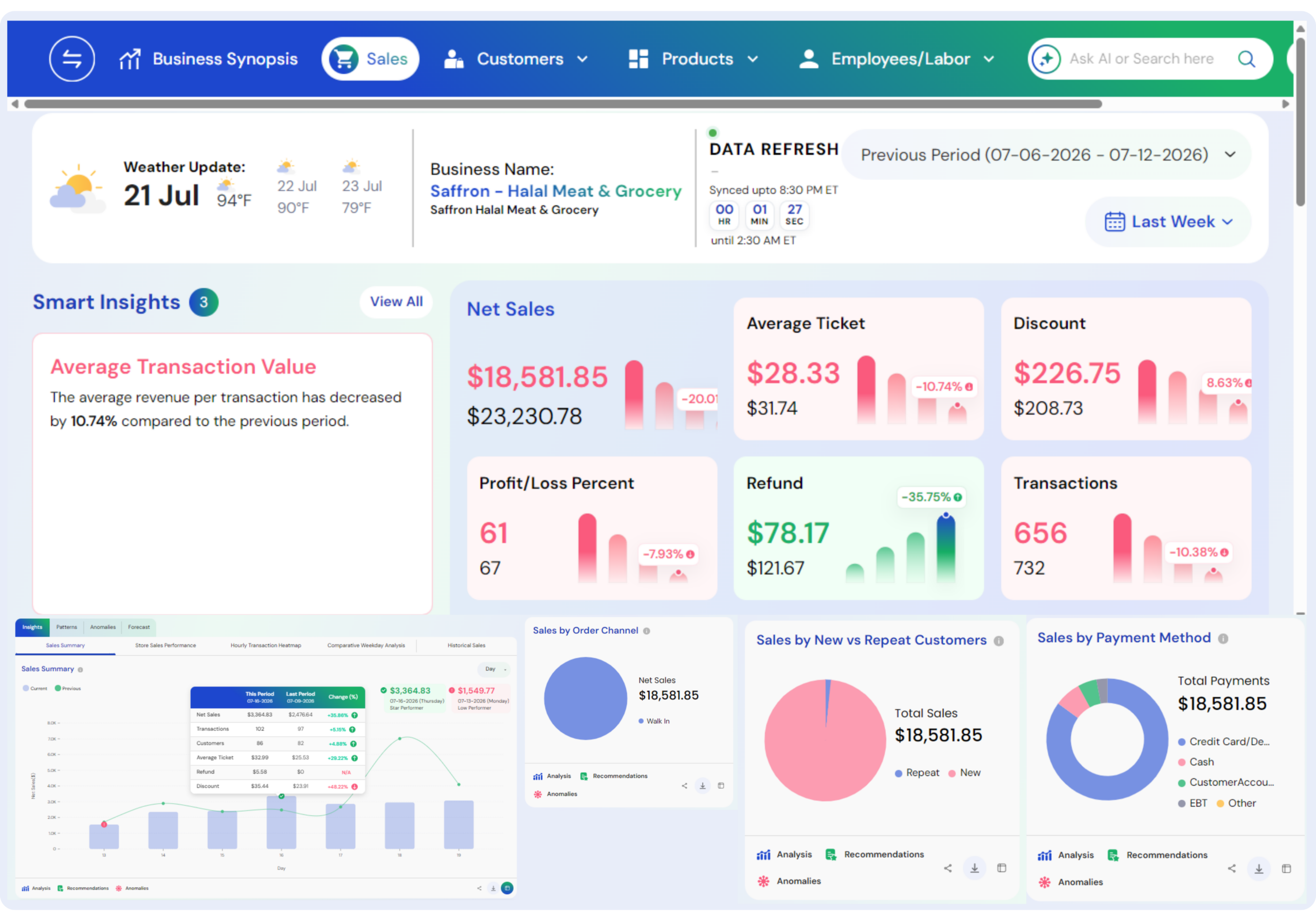
Advanced analytics platforms like Livelytics converts operational data into easily understood dashboards and real-time reports which takes restaurant business intelligence to the next level.
Through detailed visibility into crucial restaurant KPIs, restaurants can track performance metrics, track sales patterns, and quickly respond to changing market conditions.
Livelytics empowers restaurant operators with impactful customer insights, predictive analytics, and operational intelligence which support smarter decision-making.
As restaurants continuously adopt these analytics tools, data has become one of their crucial valuable assets.
Through this blog, we will walk you through how Restaurant POS analytics helps improve restaurant performance, improve operational efficiency, increase profits, and create exceptional customer experiences through data-driven management.
Also Read: POS Reports Vs Real-Time Analytics
What Is Restaurant POS Analytics?
Restaurant POS analytics involves the process of collecting, analyzing, and interpreting data generated by POS systems of restaurants.
Every transaction in the restaurant like customer orders, payments, discounts, refunds, and loyalty rewards provides valuable data that can help restaurant operators to understand the performance of their business.
Instead of manually reviewing receipts or spreadsheets, these restaurant POS analytics lets managers access real-time reports, dashboards, and visualizations that convert raw data into actionable insights.
Using POS analytics, restaurants can identify patterns, improve operational efficiency, optimize expenses, and make data-driven decisions that support growth.
These insights help restaurant managers to find opportunities, resolve performance issues, and improve the overall customer experience.
Also Read: Real-Time Analytics Why Does Your Business Needs It
Important Areas Covered by Restaurant POS Analytics
- Sales Performance – track revenue patterns and busy business hours.
- Menu Analysis – these tools track best-selling and most profitable menu items.
- Customer Behavior – By tracking purchasing habits and preferences, these tools help restaurants to understand purchasing habits and preferences.
- Employee Productivity – Track staff performance and efficiency.
- Inventory Management – Track stock levels and reduce waste.
- Revenue Forecasting – Predict future sales trends.
- Profitability Tracking – Measure profit margins and cost performance.
- Location Performance – Compare results across multiple outlets.
- Marketing Effectiveness – By evaluating promotions and campaigns, restaurants can find the effectiveness of their marketing campaigns.
- Operational Efficiency – Improve workflows and resource allocation.
Also Read: Optimizing a Restaurant Menu With AI Powered Data Analytics
Why Restaurant Data Analytics Matters
Many restaurant owners use their own experience and intuition while making business decisions. Though it is only essential to have industry knowledge, only relying on instincts can cause missed opportunities, operational inefficiencies, and costly mistakes.
While restaurant data analytics provide accurate, real-time data that helps managers to make informed decisions on the basis of facts instead of just assumptions.
These tools analyze operational and customer data and provide insights which helps restaurants to identify patterns, improve operational performance, and respond more effectively to changing market conditions.
And when restaurants have access to detailed insights, managers can quickly identify problems, find growth opportunities, and implement strategies which support long-term success.
Also Read: Two Way Data Analytics in Shaping a Retail Business
Key Benefits of Restaurant Data Analytics
- Better Operational Visibility – It gives a complete view of restaurant performance.
- Increased Revenue Opportunities – These tools help to identify profitable products and sales patterns.
- Reduced Food Waste – Such tools improve planning of inventory purchase and stock control.
- Improved Labor Management – Improves labor management by optimizing staffing based on demand.
- Enhanced Customer Experiences – Improves customer experiences by understanding preferences of menu items and behaviors.
- Stronger Inventory Control – These tools give stronger control over inventory and prevent inventory shortages and overstocking.
- Faster Problem Identification – By quickly identifying problem restaurants can detect operational issues quickly.
- More Accurate Forecasting – Predict future sales and demand trends.
Also Read: Restaurant Demand Forecasting Reduce Restaurant Waste and Increase Profits
Key Types of Restaurant POS Analytics

1. Sales Analytics
Sales analytics is an essential component of restaurant POS analytics. It helps restaurant owners and managers to track revenue performance across different time periods, locations, menu categories, and customer segments.
It analyzes sales data, businesses can identify patterns, understand customer purchasing patterns, and make informed decisions that improve profits and operational efficiency.
When restaurants get access to detailed sales reports, restaurants can determine when demand is highest, identify locations that perform best, and how revenue changes throughout the year.
These insights let management teams allocate staff, inventory, and marketing resources effectively.
For instance, if sales data consistently shows higher customer traffic on Friday evenings, managers can schedule more employees and prepare more stock to meet customer demand and maintain service quality.
Key Metrics Tracked in Sales Analytics
- Daily Sales – It tracks daily sales to understand revenue performance
- Weekly Revenue Trends – Identify recurring sales patterns
- Monthly Growth – Measure business growth over time.
- Peak Business Hours – Understand when customer traffic is highest.
- Seasonal Fluctuations – Track changes during holidays and seasons.
- Average Transaction Value – Measure customer spending per order.
- Revenue by Location – Compare performance across multiple outlets.
Also Read: How to Increase Restaurant Sales WithOut Advertising
2. Menu Performance Analytics
It is one of the most valuable uses of restaurant POS analytics. Menu performance analytics helps restaurant managers to understand how individual menu items are contributing to overall business success.
By analyzing sales and profitability data, restaurants can find the dishes which attract customers, give them the highest profits, or know about the menu items that require improvement.
This information helps restaurants to make data-driven decisions that support menu optimization, pricing strategies, and promotional campaigns.
Many restaurant owners assume that their top-selling menu items are the most profitable. However POS analytics often reveals that some popular dishes generate lower profits, while less frequently ordered items may cause more profits.
Understanding these patterns allow restaurants to maximize both sales and profits.
Key Areas Analyzed in Menu Performance Analytics
- Best-Selling Dishes – Such analytics identify the most frequently ordered items.
- Least Popular Menu Items – These analytics tools identify least popular menu items or underperforming products.
- Most Profitable Products – Track items which are most profitable.
- Category Performance – Compare appetizers, entrees, desserts, and beverages.
- Item Contribution Margins – Measure profitability per dish.
- Add-On Purchase Rates – Analyze upselling and cross-selling success.
Menu Engineering Categories
- Stars – High popularity and high profitability.
- Puzzles – High profitability but low popularity.
- Plow Horses – Popular but lower profitability.
- Dogs – Low popularity and low profitability.
Also Read: Optimizing a Restaurant Menu With AI Powered Data Analytics
3. Customer Analytics
Customer analytics enables restaurants to gain a deeper understanding of customer behavior, their preferences, and purchasing habits.
As customer satisfaction and loyalty directly affect long-term business success, analyzing customer data is essential for creating effective marketing and retention strategies.
Modern POS systems gather valuable data from every transaction that allows restaurants to identify customer patterns and make more informed business decisions.
Understanding customer insights, helps restaurants to develop personalized experiences that encourage repeat visits and improve relationships with customers.
Instead of simply assuming, it lets restaurant operators use real data to know about the customers’ wants, when they visit, and the amount they spend on each visit.
This information helps businesses to improve engagement with customers, increase loyalty, and increase revenue growth.
Key Customer Metrics Tracked Through POS Analytics
- Visit Frequency – These tools track how frequently customers exist.
- Spending Patterns – It analyzes average spend by customers on each visit.
- Favorite Menu Items – Tracks preferred food and beverage choices of the customers.
- Loyalty Program Participation – Track customer engagement with rewards programs.
- Ordering Preferences – It tracks purchasing habits and patterns of customers to understand their ordering preferences.
- Customer Lifetime Value (CLV) – It involves measuring the total value which a customer brings over time to restaurants.
These insights help restaurants to develop targeted promotions, personalized offers, and customer-focused marketing campaigns that increase customer retention and long-term profits.
Also Read: Customer Analytics for Restaurants
4. Employee Performance Analytics
Employee performance analytics helps restaurants to evaluate productivity of the workforce and improve overall operational efficiency.
Labor expenses being one of the largest expenses in restaurant operations, it is essential for restaurants to understand performance of each employee for controlling expenses and to maintain excellent customer service.
POS analytics helps managers with insights about staff productivity, staff performance, service quality, which enables restaurants to make more informed decisions around workforce management.
By tracking metrics around employees, restaurants can identify the top-performing team members, understand the need for staff training, and create more effective staffing schedules.
While data-driven employee performance analysis helps restaurants to ensure that employees are working efficiently and contributing well to business goals. It allows restaurants to improve customer experiences, increase sales, and reduce unwanted labor expenses.
Key Metrics Tracked in Employee Performance Analytics
- Sales per Employee – measures individual sales per employee.
- Order Accuracy – Track the accuracy of customer orders.
- Upselling Performance – Track success in promoting additional items.
- Average Check Size – Evaluate customer spending influenced by staff.
- Customer Service Efficiency – Assess service speed and quality.
- Shift Productivity – Compare employee performance across different shifts.
Using these insights, managers can optimize staffing, improve training programs, service standards, and achieve better labor cost management.
Also Read: How Can Data Analytics Improve the Measurement of Employee Performance
5. Inventory Analytics
Inventory analytics is also essential for restaurant profits. It provides visibility into the ingredients and supplies which are used throughout the every day operations.
Effective inventory management helps restaurants to maintain right stock levels, reduce food waste, and control food expenses. As this inventory directly affects both operations and profits, it is essential to have accurate data for making informed purchasing and planned decisions.
Modern POS systems track inventory based data in real time that allows restaurant managers to track use of ingredients and identify the problems before they start affecting operations.
By analyzing inventory patterns, restaurants can avoid overstocking, stock shortages, and improve supply chain management. These insights help businesses to reduce food waste, maintain consistent availability of stock and increase overall profits.
Key Areas Tracked in Inventory Analytics
- Ingredient Consumption – Tracks how ingredients are consumed over time.
- Stock Levels – It tracks current stock levels and quantities.
- Waste Patterns – It tracks food spoilage, overproduction, and food losses that helps them to understand waste patterns.
- Supplier Performance – Evaluate the performance of suppliers by verifying the reliability and quality of suppliers.
- Purchase Trends – Tracks purchase trends by analyzing ordering patterns of customers and customer demand.
- Food Cost Percentages – Measure food expenses as compared to sales.
With the help of inventory analytics, restaurants gain better control over stock management, reduce unwanted expenses, and make purchasing decisions confidently and accurately.
Also Read: How Inventory Software for Restaurants Reduces Food Costs
How POS Analytics Improves Restaurant Performance

1. Better Decision-Making
Restaurant POS analytics removes the need of any guessing. These tools offer accurate, real-time data that supports smarter decision-making.
Hence, restaurant managers and operators instead of simply using their experience or instincts can get detailed insights into sales patterns, customer preferences, menu performance, labor expenses, and operational efficiency.
This data is essential for restaurants to analyze their pricing strategies, promotional campaigns, staffing requirements, inventory purchases, and menu updates confidently.
Data-driven decisions reduce risk, improve planning, and enable restaurants to respond quickly to changing business conditions. As a result, management teams can make strategic choices that contribute to long-term growth, profits, and operational success.
Also Read: Benefits of Data-Driven Decision Making
2. Increased Profitability
One of the most crucial benefits of POS analytics is its ability to identify opportunities for increased profitability. By analyzing transaction and operational data, restaurants can determine which menu items generate the highest profit margins, which products underperform, and where unnecessary costs happen.
Analytics help to reduce food waste, improve utilization of resources, improve upselling and cross-selling efforts that increase average order value.
Even small improvements in several operational areas can produce financial gains. By focusing resources on activities which give the maximum return, restaurants can maximize revenue while maintaining efficient cost control.
Also Read: How AI Helps In Boosting Restaurant Revenue Profits
3. Enhanced Customer Experience
Customer satisfaction is an essential factor for restaurant success. While POS analytics offers valuable insights that help to improve the dining experience for customers.
It enables restaurants to track customer preferences, their ordering habits, visit frequency, spending patterns, and responses to promotions. These insights help restaurant operators to develop personalized marketing campaigns, targeted discounts, loyalty rewards, and customized offers which are attractive to specific customer groups.
When restaurants understand customer behavior effectively, then they can deliver more valid experiences that encourage repeat visits and make stronger relationships with customers.
Improved customer engagement often causes higher retention rates, increased spending, and stronger brand loyalty.
Also Read: How AI Revolutionizes Customer Experience in Restaurant Industry
4. Improved Inventory Management
Inventory management directly impacts restaurant profits and operational efficiency. POS analytics helps managers to track consumption of ingredients, track stock levels, predict customer demand, and plan purchases more accurately.
By analyzing stock levels, restaurants can reduce food waste, prevent stock shortages, and avoid overstocking of expensive ingredients.
Having more visibility into inventory levels allows businesses to maintain optimal stock level while controlling food expenses and reducing food spoilage.
Managing inventory effectively not just secures profits but also ensures that customers consistently receive the menu items which they are expecting.
Also Read: AI For Restaurant Inventory
5. Optimized Labor Scheduling
Labor expenses are one of the highest operational expenses for most restaurants. POS analytics helps restaurant managers to predict customer traffic patterns and schedule staff as per the actual demand.
It allows restaurants to prevent overstaffing during slow business hours and understaffing during busy hours. When staffing is optimized, it reduces staff overtime expenses, increases productivity of staff, and improves service quality of the staff.
Real-Time Analytics: The New Competitive Advantage
Traditional restaurant reporting mainly prioritizes past data which means managers mostly identify problems only once they have already affected performance.
Modern POS analytics systems overcome this limitation by providing visibility in real-time into restaurant operations.
Having quick access to crucial business metrics, enables restaurants to track restaurant performance when the events happen and respond immediately to changing conditions.
Real-time analytics enables managers to make proactive decisions instead of reactive decisions. Then the managers do not have to wait till the end of the day to review reports, they can address operational challenges, optimize resources, and improve customer service in the moment.
Also Read: How Real-time DashBoard Drive Smart Business Decisions
Key Benefits of Real-Time Analytics
- Immediate Issue Detection – Real-time analytics identify problems before they further escalate.
- Faster Decision-Making – Real-time analytics gives access to up-to-date details instantly.
- Live Sales Monitoring – Real-time analytics does sales monitoring in real time which helps to track revenue performance.
- Dynamic Staffing Adjustments – These systems allow them to respond quickly to changing customer demand.
- Real-Time Inventory Alerts – Such inventory alerts help to prevent stock shortages and overstocking in real time.
By using real-time insights, restaurants can improve efficiency, reduce operational risks, improve customer experiences, and gain a significant competitive advantage in a fast-paced industry.
Also Read: Improved Decisions Through Decision Intelligence
Key Benefits of Real-Time Analytics
- Immediate Issue Detection – Real-time analytics identify problems before they further escalate.
- Faster Decision-Making – Real-time analytics gives access to up-to-date details instantly.
- Live Sales Monitoring – Real-time analytics does sales monitoring in real time which helps to track revenue performance.
- Dynamic Staffing Adjustments – These systems allow them to respond quickly to changing customer demand.
- Real-Time Inventory Alerts – Such inventory alerts help to prevent stock shortages and overstocking in real time.
By using real-time insights, restaurants can improve efficiency, reduce operational risks, improve customer experiences, and gain a significant competitive advantage in a fast-paced industry.
Also Read: Improved Decisions Through Decision Intelligence
Key Areas Compared Through Multi-Location Analytics
- Revenue Across Locations – It tracks sales performance by each outlet.
- Menu Performance – It identifies top-performing items at each location.
- Employee Productivity – Compare efficiency of the staff and effectiveness of their performances.
- Customer Trends – Analyze customer preferences across different outlets.
- Operational Efficiency – Measure performance of each operation and identify areas of improvement.
Multi-location analytics helps restaurant organizations improve consistency, optimize operations, and drive growth across the entire business.
Also Read: Multi-location Business Use BI Tools to Improve Performance
Predictive Analytics in Restaurants
Predictive analytics is transforming the way restaurants operate by using past data, statistical models, and machine learning algorithms to predict future outcomes.
Instead of simply reviewing past performance, predictive analytics helps restaurant operators anticipate trends, prepare for changes in demand, and make proactive business decisions.
Such a forward-looking approach enables restaurants to improve efficiency, reduce expenses, and improve customer satisfaction.
By analyzing sales patterns, customer behavior, and operational data, predictive analytics offers valuable insights which support strategic planning and resource allocation.
This allows restaurants to better prepare for future challenges and opportunities while reducing uncertainty.
Key Applications of Predictive Analytics
- Sales Forecasting – These tools predict future revenue and expected customer demand.
- Inventory Planning – Improve stock purchasing and stock management.
- Labor Demand Prediction – These tools help to predict staff demand and schedule employees based on expected number of customers.
- Customer Churn Analysis – Identify customers who are at risk of not returning.
- Promotional Effectiveness Forecasting – Estimate the impact of marketing campaigns on your revenue.
With predictive insights, restaurants can shift from reactive management to proactive management, and make smarter, data-driven decisions which support long-term growth and operational success.
Conclusion
Restaurant POS analytics has evolved from being a single reporting tool into a powerful tool which helps in business growth and operational excellence.
In today’s highly competitive restaurant industry, depending only on intuitions is no longer enough. By using data generated from POS systems, restaurants gain insights into sales performance, customer behavior, menu profits, inventory management, labor efficiency, and overall business operations.
Whether tracking important performance metrics, analyzing customer preferences, forecasting demand, and optimizing staff schedules, POS analytics enables restaurants to make smarter, data-driven decisions.
These insights help restaurants to reduce expenses, increase revenue, increase customer satisfaction, and develop more efficient operations.
Real-time analytics further improves decision-making by letting managers to identify issues instantly and respond proactive rather than reactively.
As restaurant businesses grow, multi-location analytics and predictive analytics provide even more value by offering centralized visibility and future-based insights.
This helps restaurants to identify growth opportunities, improve operational consistency across different locations, and prepare well for changing market conditions.
Platforms like Livelytics take restaurant analytics and help restaurants to convert complex operational data into actionable business intelligence.
With the help of real-time dashboards, advanced reporting, and proactive insights, livelytics helps restaurant operators to improve performance of restaurants and drive sustainable growth.
Ultimately, restaurants that adopt POS analytics are more equipped to adapt, compete, and flourish. By converting data into actionable insights, businesses can improve profits, operational efficiency, and deliver good dining experiences which support long-term success.
If you still have any query about Restaurant POS analytics that how data improves restaurant performance then you may book a free demo at livelytics and we are more than happy to assist you.