Introduction:
Running a restaurant is no small feat. You are juggling so many things and trying to stay and thrive in the competitive industry.
Because restaurant owners and managers have so many things to look for, they often forget the most important thing: the restaurant menu. It is more than just a list of dishes; it’s your brand, your profit driver, and sometimes, your biggest headache.
Menu engineering can boost profits by over 15%, simply by reworking item placement, pricing, or bundling, no new kitchen equipment or extra staff required
Now imagine what that number could look like when you combine smart menu decisions with the power of AI-driven data analytics.
You get real-time insights on:
- Which items are silently eating into your margins
- What your top-performing dishes have in common
- How to price items more strategically
- And even what to promote based on season, time of day, or location
That’s not a futuristic dream; it’s already happening with AI. So, how does AI do it? And more importantly, how can you make it work for your restaurant? Let’s dive in.
Also Read: Real-Time Analytics Why Does Your Business Needs it
What is AI-Powered Data Analytics?
AI-powered data analytics includes leveraging artificial intelligence (AI) technologies like machine learning and predictive algorithms to analyze large sets of data, uncover patterns, and deliver actionable insights. Instead of manually sifting through reports or relying on gut feelings, AI helps businesses make smarter decisions based on real-time data.
Here’s how it works in simple terms:
- Collects data from various sources (like POS systems, customer feedback, online orders, etc.)
- Analyzes trends and behavior (e.g., which dishes sell best on weekends, which ingredients are often wasted)
- Predicts future outcomes (e.g., what dishes to feature next month, how to price items more effectively)
- Recommends actions to improve performance (e.g., promoting high-margin dishes or tweaking menu design)
Also Read: Automating Data Analytics using Artificial Intelligence
How Optimizing Restaurant Menu Helps with Higher Customer Satisfaction, Better Sales, and Overall Growth?
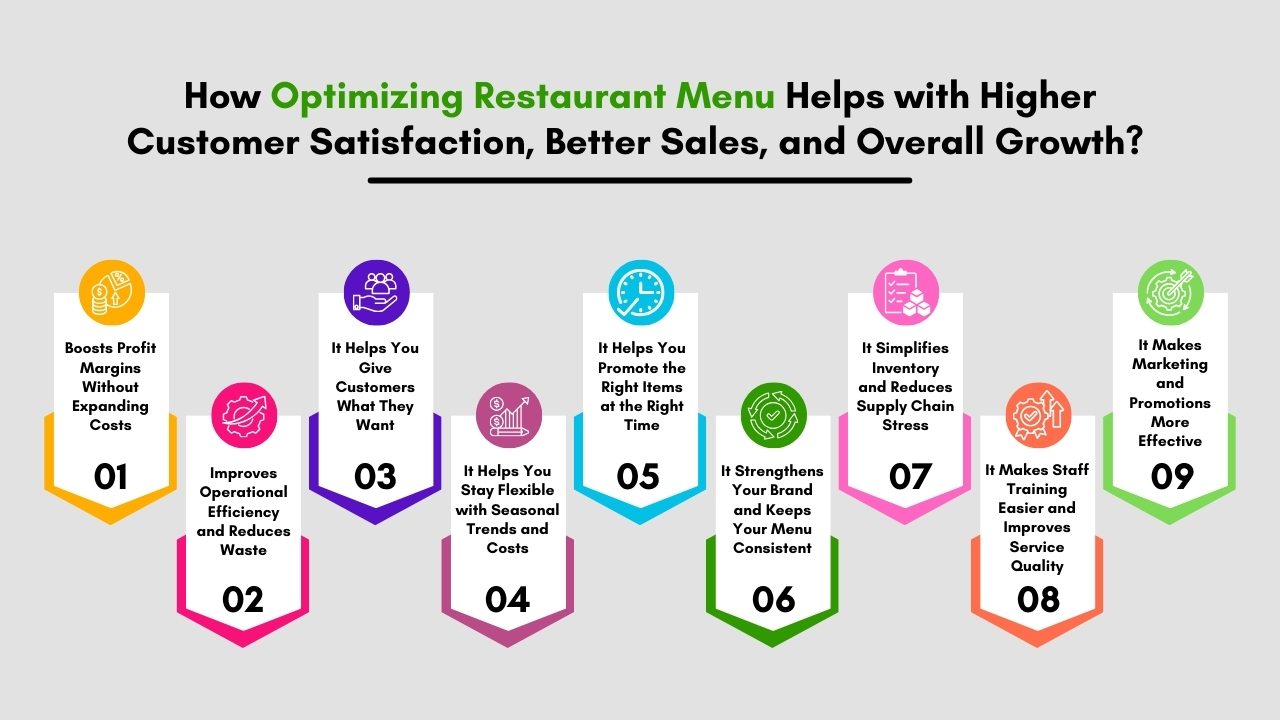
1. Boosts Profit Margins Without Expanding Costs:
Some dishes on your menu might be popular, but they don’t make you much profit. Others might have high margins but aren’t selling as well as they could. When you optimize your menu, you figure out which items are truly making you money and how to highlight them to get the most out of them.
And, the best part? You don’t need to add new dishes or hire more staff. Just adjusting the layout, prices, or focus of your menu can make a big difference.
Also Read: Restaurant Profit Margin Analytics Tool to Boost Profits
2. Improves Operational Efficiency and Reduces Waste:
When you have too many menu items that don’t sell well, you end up buying ingredients that go bad, take up space, and slow down your kitchen. This wastes food, time, and money.
By trimming down your menu and focusing on what sells, you can buy smarter, prep faster, and keep your team more organized. According to the World Wildlife Fund, U.S. restaurants waste between 22 to 33 billion pounds of food every year, and a lot of that is from unused ingredients.
With an optimized menu, you’re not just improving your profit; you’re also reducing operational clutter. Less waste = lower costs, smoother prep, faster service, and a happier team.
Also Read: AI Solution for Reducing Restaurant Waste
3. It Helps You Give Customers What They Want:
When you know what your customers love and what they tend to ignore, you can create a menu that’s easier to navigate and more satisfying to order from. And, you can make it possible with data analytics. That means less confusion, faster decisions, and happier guests who are more likely to return.
A cluttered menu can overwhelm people and lead to “menu fatigue.” But when your offerings are clear, focused, and appealing, it becomes easier for customers to make choices, and more likely they’ll pick something they’ll enjoy (and that’s profitable for you).
According to a study by Cornell University, when restaurants reduced the number of items on their menu, they saw higher customer satisfaction and improved sales because guests made quicker and more confident decisions.
Also Read: Customer Analytics for Restaurants
4. It Helps You Stay Flexible with Seasonal Trends and Costs:
Food prices change all the time. Some ingredients become more expensive due to seasonality, supply chain issues, or inflation. If your menu stays the same all year round, you might end up serving dishes that cost more to make, without being able to raise prices fast enough to protect your profit.
Menu optimization helps you stay ahead of these changes. By reviewing your menu regularly (and using data to track costs and sales), you can swap out expensive or underperforming items and replace them with dishes that use seasonal, lower-cost ingredients.
Let’s understand with a simple example:
Let’s say you run a casual dining restaurant and one of your popular dishes is a salmon risotto. During the summer, salmon prices spike because supply drops. Instead of continuing to serve it at a lower profit, you notice through menu data that customers also enjoy seafood options in general.
So, you replace the salmon risotto with a shrimp and corn risotto for a limited-time summer special. Corn is in season, shrimp is more affordable, and your kitchen already uses those ingredients in other dishes.
Not only do you lower food costs, but you also offer something new and seasonal that gets customers excited.
Also Read: How Restaurant Can Predict Trends With Analytics
5. It Helps You Promote the Right Items at the Right Time:
Your menu isn’t just a list of dishes; it’s one of your most powerful marketing tools. When optimized correctly, your menu can guide customers toward the dishes you want them to order, especially the ones with higher margins or better availability.
Instead of relying on random promotions or guesswork, menu optimization helps you know exactly which items to highlight based on data like:
- What sells best during different times of day or week
- Which items are trending or seasonal
- Which dishes bring in the most profit
According to Menu Engineer Gregg Rapp, rearranging and highlighting the right menu items can increase profits by 10–15%, just by influencing what customers choose.
For example
Let’s say you notice that your chicken sandwich has a high-profit margin and sells well during lunch hours, while your steak burger costs more to make but has slower sales. With menu optimization, you can make strategic changes, like giving the chicken sandwich a more prominent spot on your menu, adding a lunch combo, or even promoting it on your social media.
Also Read: How Real-Time Dashboards Drive Smart Business Decisions
6. It Strengthens Your Brand and Keeps Your Menu Consistent:
Your menu is a big part of your restaurant’s identity. The dishes you offer, how they’re described, and even how they’re grouped all play a role in shaping how customers see your brand. Menu optimization helps you align every item with the image and experience you want to deliver, whether it’s casual, premium, family-friendly, or trend-focused.
And, even if you own more than one location, menu optimization helps you maintain brand consistency and reputation.
Also Read: Boosting Brand Loyalty With Customer Sentiment Analysis
7. It Simplifies Inventory and Reduces Supply Chain Stress:
Managing inventory is one of the trickiest parts of running a restaurant. Too many menu items mean more ingredients to track, more chances of over-ordering, and a higher risk of food going to waste. Menu optimization solves this by narrowing your focus to dishes that use overlapping ingredients and sell consistently.
According to the Food Waste Reduction Alliance, simplified menus can directly lead to better inventory control and less spoilage, which helps restaurants improve their margins and reduce their environmental impact.
With a tighter, smarter menu, you can order more strategically, reduce stockouts, and make your supply chain more predictable. That means less pressure on your kitchen team, fewer delivery issues, and lower food costs overall.
Also Read: AI for Restaurant Inventory
8. It Makes Staff Training Easier and Improves Service Quality:
A large or constantly changing menu can be tough for your staff to learn, remember, and execute. The more complex your menu is, the harder it is for your team to take accurate orders, explain dishes, and deliver consistent quality, especially during peak hours or when training new employees.
When you optimize your menu, you reduce complexity. That means:
- Faster training for new hires
- Fewer mistakes in the kitchen or at the table
- Quicker service and smoother operations
Also Read: How Can Data Analytics Improve the Measurement of Employee Performance
9. It Makes Marketing and Promotions More Effective:
A cluttered or confusing menu makes it hard to know what to promote. But when your menu is optimized and focused around your best, most profitable items, you gain a clear direction for your marketing efforts.
Whether it’s running a social media campaign, printing flyers, or launching a limited-time offer, menu optimization helps you spotlight the right dishes, ones that customers love and that bring you the best return.
For example, let’s say your menu analysis shows that your grilled chicken wrap is high-margin, consistently popular, and quick to prepare. You can confidently feature it in your Instagram promos, add it to a lunch deal, or create a loyalty reward around it, knowing it will drive traffic and boost profits.
Also Read: Business Intelligence for Marketing
How AI-Powered Data Analytics Helps You Optimize Restaurant Menu?
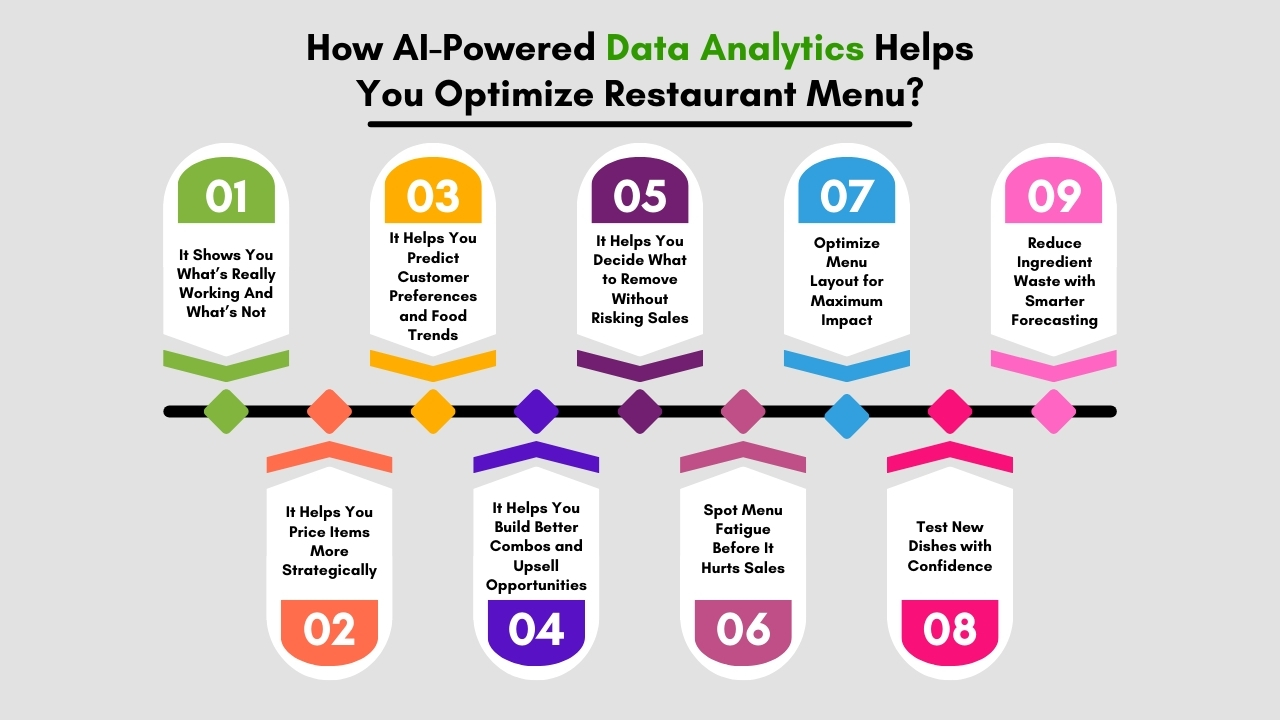
1. It Shows You What’s Really Working—And What’s Not:
You probably have dishes you think are customer favorites, maybe because they’re ordered a lot or get mentioned on social media. But are they actually helping your bottom line?
Data analytics lets you go beyond surface-level popularity by showing:
- Which items sell the most
- Which ones bring in the most profit after food and labor costs
- Which dishes have high return or complaint rates
- How do different menu items perform by time of day or location?
You might find that a lower-profile dish is actually making you more money than the one you’ve been advertising or that certain items only sell well on weekends and sit untouched on weekdays.
So, with these insights, you get to see the bigger picture, and you’ll get AI-powered recommendations on how you can better optimize your menu with the right items and even the promotions.
Real Example:
Let’s say your brunch menu includes an avocado toast that always looks great on Instagram. It gets decent orders, but the data reveal it has a high food cost, longer prep time, and low profit margin. Meanwhile, your breakfast burrito has a simpler ingredient list, faster prep, and better profitability—but you haven’t promoted it. With this insight, you can start spotlighting the burrito, offering deals, or bundling it for upsells.
Also Read: Food Menu Ideas for Restaurants
2. It Helps You Price Items More Strategically:
Pricing isn’t just about covering costs; it’s about understanding what your customers are willing to pay and how that affects your sales and margins. Data analytics helps you analyze the relationships between price, demand, and profitability.
With real-time and historical sales data, you can:
- Track how different price points affect sales volume
- See which items are price-sensitive vs. “safe” for markup
- Compare the cost-to-profit ratio of every dish
- Spot pricing trends by daypart (e.g., weekday lunch vs. weekend dinner)
This gives you the confidence to make small price adjustments where needed, without risking a drop in customer satisfaction.
Also Read: Retail Pricing Strategy
3. It Helps You Predict Customer Preferences and Food Trends:
Customer preferences are always changing. One month it’s all about plant-based bowls, the next it’s spicy chicken sandwiches. Instead of playing catch-up, data analytics helps you stay ahead by identifying what your customers are leaning toward before it becomes a full-blown trend.
By analyzing sales patterns, order history, and even seasonality, data tools can uncover what flavors, ingredients, or menu categories are growing in popularity. This allows you to adapt your offerings quickly, test new ideas, or introduce limited-time specials that truly resonate with your audience.
Real Example:
Your POS data shows a steady rise in orders for vegetarian or dairy-free dishes over the last three months. Rather than ignoring the shift, you introduce a new plant-based entrée and feature it as a special. It sells out consistently. proving that the trend wasn’t a guess, it was backed by real customer behavior.
Also Read: Predictive Analytics in Restaurants a Game Changer
4. It Helps You Build Better Combos and Upsell Opportunities:
Menu optimization isn’t just about cutting or pricing dishes, it’s also about finding smarter ways to increase the value of every order. Data analytics helps you spot patterns in customer behavior, like which items are often ordered together, and what guests tend to add when certain dishes are featured.
This insight lets you:
- Create appealing meal combos
- Suggest high-margin add-ons
- Upsell side dishes or drinks that pair well with top-selling items
Real Example:
Your data shows that customers who order burgers often add fries and a soda, but not when they order wraps. Based on that, you build a combo deal around your burger meals to encourage more complete orders. This helps you boost revenue per ticket and create a better customer experience.
Also Read: Optimizing Table-Turnover Using Analytics
5. It Helps You Decide What to Remove Without Risking Sales:
Removing a dish from the menu can feel risky—especially if it’s been there for a long time or has emotional value for regulars. But keeping too many items that don’t sell can drag down your efficiency and profits. Data analytics gives you the confidence to remove low-performing items without guessing.
You can review:
- Items with consistently low sales
- High food cost but low return
- Dishes that slow down kitchen operations
This makes it easier to trim your menu without upsetting your customer base—or hurting revenue.
Real Example:
You notice your lamb curry dish is rarely ordered, has a high ingredient cost, and takes longer to prepare, slowing down your kitchen during peak hours. Data confirms that its removal won’t affect your top-line revenue. So you take it off, freeing up time and resources for better-performing items.
Also Read: How Livelytics Can Help Restaurants Boost Revenue
6. Spot Menu Fatigue Before It Hurts Sales:
Customers love variety, but even the best dishes can lose their appeal over time. With AI-powered analytics, you can detect signs of menu fatigue early, like a slow but steady drop in orders or declining customer reviews for a previously popular item.
This helps you:
- Refresh your menu before boredom sets in
- Rotate dishes strategically without shocking regulars
- Experiment with new items backed by real data
Real Example: You notice a steady decline in orders for your creamy mushroom pasta, even though it was a top seller last season. AI flags this trend, prompting you to try a lighter seasonal variation with a fresh twist or maybe promoting this dish on your socials and reminding them why it’s the best seller.
Also Read: Food Menu Ideas For Restaurants
7. Optimize Menu Layout for Maximum Impact:
Sometimes, it’s not about what’s on the menu, but where it appears. AI-powered analytics helps you test and refine your menu layout by tracking which items customers notice, click on (if digital), or order more often, depending on placement. This data shows you how to design menus that guide customer choices more strategically.
With this insight, you can:
- Place high-margin or best-performing dishes in high-visibility zones
- Group items in ways that increase cross-selling (e.g., pairing wine with entrées)
- Avoid overwhelming customers with clutter or poor organization
Real Example: You find that your pasta section performs better when it appears on the top right of your digital menu, and your side dishes sell more when they’re paired directly below entrees. After collecting these insights, you can redesign the items’ layout by placing your high-profit items in the right place. With this, the average ticket size jumps by 12%.
Also Read: How Data Analytics Can Help Restaurants Optimize Menus
8. Test New Dishes with Confidence:
Introducing a new dish can feel risky, but AI takes the guesswork out of testing. By analyzing customer behavior, sales trends, and ingredient cost forecasts, AI helps you predict how well a new item might perform before you commit fully.
With this data, you can:
- Soft-launch a dish and monitor its real-time performance
- Compare how it stacks up against similar items
- Decide faster whether to keep, adjust, or remove it
Real Example: You’re thinking about adding a Korean BBQ flatbread to the dinner menu. Instead of going all-in, you list it as a limited-time feature and use AI tools to track how many customers order it, how quickly it sells out, and how it affects ticket size. Within two weeks, you have the clarity to make a confident decision, without wasting resources.
Also Read: How to Use AI in Restaurant Business
9. Reduce Ingredient Waste with Smarter Forecasting:
Food waste eats into your profits, and often, it’s due to over-ordering ingredients for dishes that aren’t selling. AI helps you forecast demand more accurately by analyzing sales patterns, seasonality, and customer preferences. This leads to smarter ordering and fresher ingredients on your menu.
With this insight, you can:
- Adjust orders to match actual dish demand
- Identify low-selling dishes that cause the most waste
- Use perishables more efficiently across multiple items
Real Example: If AI shows your shrimp tacos only sell well on weekends but not midweek, you can cut back on weekday seafood orders and repurpose leftover shrimp into lunch specials, reducing waste while keeping food costs under control.
Livelytics: The Smartest Way to Optimize Your Restaurant Menu with AI
Livelytics is one of the most advanced AI data analytics platforms tailored specifically for restaurant businesses. It uses cutting-edge technologies like Machine Learning, Predictive Intelligence, and Automated Intelligence to help you make the most out of your business data without any complex setup or tech jargon.
Here’s how it works:
Just integrate Livelytics with your existing business tools, and it immediately starts analyzing your restaurant’s performance.
You’ll get:
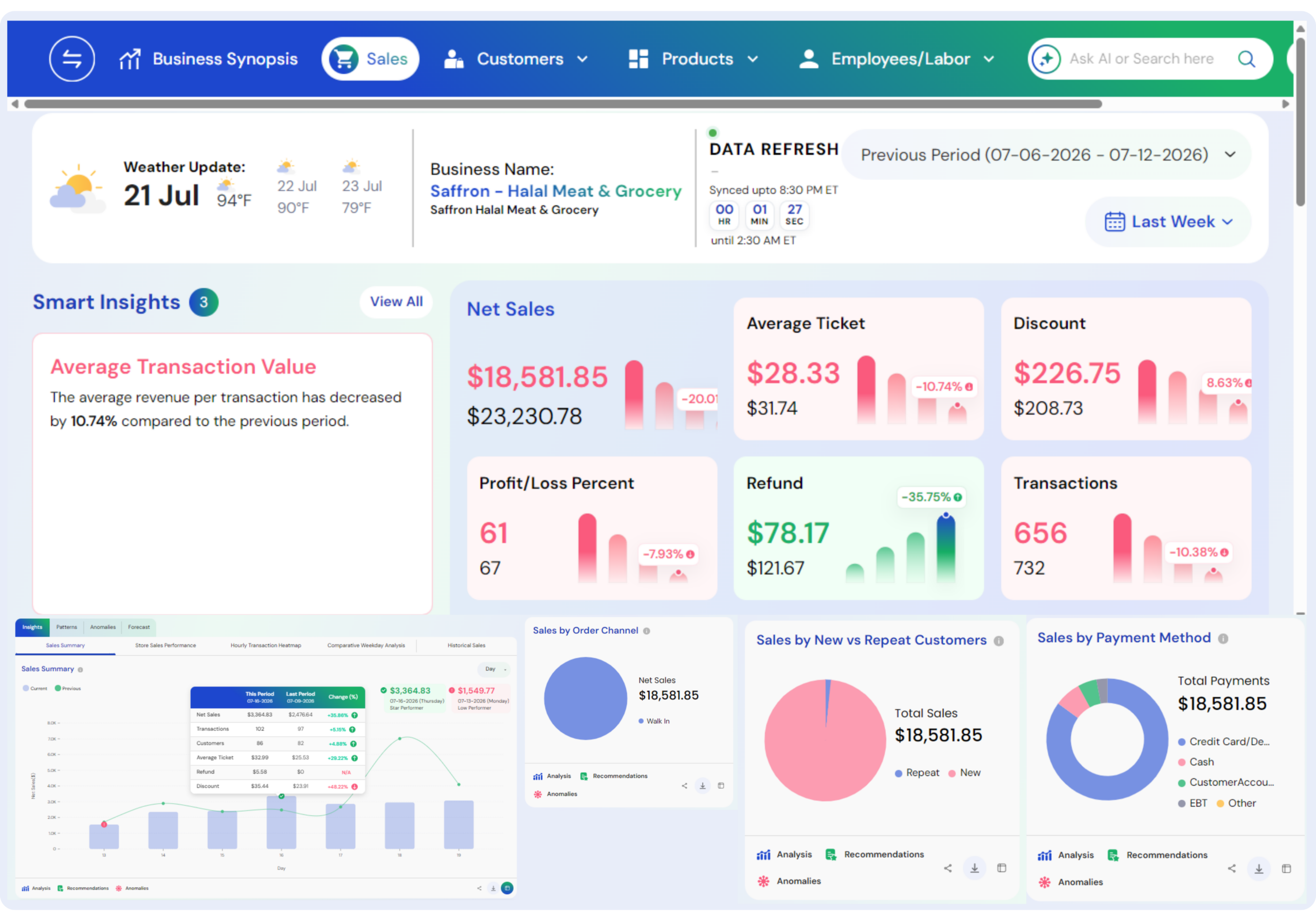
- Real-time insights into what’s selling, what’s not, and why
- Smart reports that go beyond numbers and tell you what actions to take
- AI- and ML-powered recommendations for optimizing your menu, pricing, layout, and even inventory
- Custom suggestions tailored to your restaurant’s unique processes and patterns
Livelytics is designed specifically for restaurants. That means:
- No long learning curves
- No massive setup fees
- And no enterprise-level pricing that breaks the bank
Want to see how it fits your restaurant? Book your free demo now and see how Livelytics can transform your data into decisions.
Final Thoughts
Menu optimization isn’t just a one-time task; it’s an ongoing strategy that can directly impact your restaurant’s revenue, customer satisfaction, and overall efficiency. With the power of AI-powered data analytics, you’re no longer guessing what works; you’re making confident, informed decisions backed by real-time insights.
From identifying your top-performers to reducing waste, adjusting prices, and staying ahead of trends, AI gives you the clarity and control you need to run a smarter kitchen and a more profitable business.
And if you’re looking for a solution built specifically for restaurants, Livelytics checks all the boxes. It’s powerful, easy to use, affordable, and designed to adapt to how you already run your business—without the steep learning curve.
Book your free demo and see how Livelytics can help you optimize your menu and unlock the full potential of your restaurant.
Here’s to smarter menus and even better margins!