In today’s highly competitive restaurant industry, attracting new guests is just a part of achieving long-term success. By creating memorable experiences and making customers feel valued can encourage customers to return, recommend the restaurant, and become loyal supporters.
That is why customer appreciation ideas for restaurants can play a crucial role in improving the overall dining experience for customers. Whether restaurant customer loyalty programs, personalized offers, customer rewards, special events, complimentary treats, and thoughtful services, restaurants have many ways to show genuine appreciation to customers.
Through strong customer retention strategies restaurants can develop long-term relationships instead of depending only on one-time visits. Gathering customer feedback, recognizing regular customers, celebrating special occasions of customers, and providing personalized experiences, restaurants can create stronger relationships with their guests.
While modern restaurant technology and restaurant business analytics can further help businesses to understand customer preferences, their purchasing patterns, and engagement.
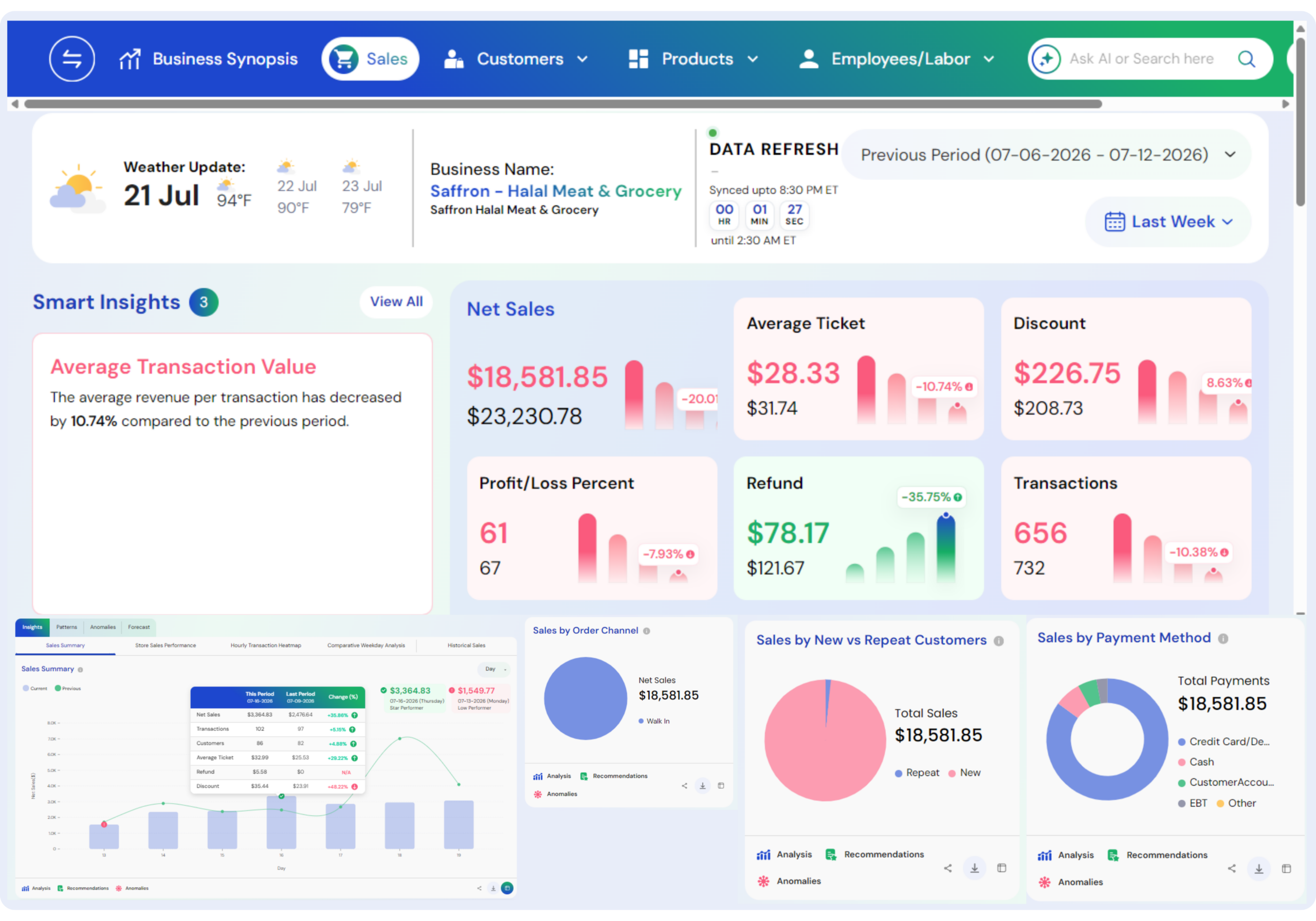
Platforms like Livelytics can connect customer, sales, marketing, workforce, operational, and financial information to help restaurants to identify trends and make informed decisions.
Effective customer experience management involves combining thoughtful hospitality with useful data, helping restaurants to understand the aspects that customers value the most.
Through loyalty programs, surprise rewards, personalized communication, or community engagement, consistent appreciation can strengthen their relationships with customers, encourage repeat visits, and support sustainable restaurant growth in a highly competitive market.
Also Read: How AI Revolutionizes Customer Experience in Restaurants
Why Is Customer Appreciation Important for Restaurants?
Customers have more dining choices than ever, and excellent food alone may not always be enough to stand out. Competitors can offer similar menus, prices, locations, and conveniences.
Customer appreciation gives restaurants another way to create impactful connections and encourage guests to return.
When customers feel recognized and valued, restaurants help to build relationships that go beyond individual transactions. Effective customer appreciation strategies can help restaurants to:
- To increase repeat visits and customer loyalty
- To improve guest satisfaction levels and customer retention
- To encourage positive reviews and referrals
- To strengthen community relationships
- To increase customer lifetime value
- To give a competitive edge to restaurants
- To create memorable dining experiences
The primary goal of restaurants is not to give customers some offers every time they visit. Instead customer appreciation should reflect a simple message that your business matters, and your support is valued, and we are grateful that you chose our restaurant.
Also Read: Customer Analytics for Restaurants
How Restaurants Can Build Loyalty Through Customer Appreciation

Through customer appreciation strategies, restaurants can build long-term relationships with customers. Guests may have many choices while deciding where to eat, so restaurants need to create experiences that make customers feel recognized, respected, and valued.
Customer appreciation does not always involve restaurants to offer expensive discounts or big rewards. Restaurants must offer a sincere thank-you, personalized interaction, convenient ordering experience, or thoughtful gesture can make an impact on customers.
Restaurants can combine simple hospitality with loyalty programs, personalized communication, special events, customer feedback, and technology to strengthen relationships.
Below are the 25 customer appreciation ideas that can help restaurants to create memorable experiences while encouraging repeat visits and long-term loyalty.
1. Simply Say Thank You
One of the easiest ways of customer appreciation is often overlooked, which is simply thanking customers sincerely. It involves hosts thanking guests when they leave, a server expressing appreciation after a meal, and a cashier can thank customers once they complete a takeaway order.
Restaurants have to implement customer appreciation ideas with sincerity.
Guests can quickly recognize when employees are simply using a repetitive scripted phrase. Restaurants should encourage staff to make appreciation feel natural and genuine.
- To train employees to thank customers sincerely after each visit
- To encourage hosts, servers, and cashiers to use friendly, personalized language.
- Make gratitude part of normal customer conversations.
- Remind employees that every visit represents a customer’s choice.
- Recognize that guests could choose competitors, delivery, or home cooking.
A genuine “Thank you for dining with us” shows customers their business is valued and never taken for granted.
Also Read: Customer Sentiment Analysis for Multilocation Business
2. Remember Regular Customers
Regular customers appreciate when they are being recognized when they visit the restaurant again. Through simple gestures restaurants can make their customers feel valued and welcomed.
- Remember names: They must greet returning customers by name whenever appropriate.
- Recall preferences: They must remember favorite dishes, drinks, or preferred tables of guests.
- Offer personalized greetings: Say, “Welcome back. Would you like your usual table?”
- Keep recognition natural: Avoid making customers feel that their personal information is being closely tracked.
- Build relationships: Consistent recognition can create a friendly community atmosphere.
These small acts of recognition can convert an ordinary restaurant visit into a more personal experience. Because when customers feel remembered and appreciated then they may develop stronger customer loyalty, return to restaurants more frequently, and also recommend the restaurants to friends and family.
Also Read: Benefits of Supply Chain Optimization for Businesses
3. Create a Restaurant Loyalty Program
A restaurant loyalty program gives restaurants a more organized way to reward their repeat customers and encourage them for continued visits. A well-developed loyalty program should offer many benefits to customers without being complex.
- Reward purchases: involves giving points for every order or visit
- Offer free items: involves providing complimentary appetizers, desserts, or drinks.
- Celebrate birthdays: involves giving members with special birthday rewards
- Provide exclusive benefits: Offer discounts, bonus points, or early menu access.
- Keep rules simple: Make earning and redeeming rewards easy to understand.
- Personalize rewards: Offer benefits based on customer preferences and loyalty levels.
With a simple and valuable loyalty program customers feel appreciated and also encourage repeat visits, build stronger relationships, and build long-term restaurant loyalty.
Also Read: How to Improve Customer Satisfaction in Restaurants
4. Send Exclusive Offers
Customers who voluntarily join a restaurant’s email or loyalty program have provided an opportunity for direct communication. Restaurants can reward that relationship by providing exclusive offers.
These exclusive offers can be a complimentary dessert, limited-time discount, and early access to a new dish, bonus loyalty points, or members-only promotions.
While the main goal of restaurants is to make customers feel that membership provides more value. Every interaction with customers should focus on building relationships rather than regularly promoting products or offers. But sending too many promotional messages to customers can disengage customers.
So restaurants must balance promotional offers with useful and relevant communication. Providing occasional surprise special offers or early access to customers can make them feel valued.
Also Read: Business Intelligence for Marketing
5. Personalize Customer Communication
Generic marketing messages can instantly become background noise. Sending personalized communication helps customers to feel recognized and valued.
Using willingly provided information, restaurants can send birthday wishes, loyalty updates, seasonal promotions, new menu announcements, and personalized recommendations.
For instance, customers who frequently order vegetarian meals can be offered with new vegetarian offers. Loyalty members who are nearing a reward milestone can receive reminders about available benefits.
Personalization should always remain respectful and useful. Restaurants should use customer information responsibly and avoid making communication feel intrusive.
Thoughtful messages show customers that the restaurant values their relationship. Such an approach can improve connections with customers, engagement, encourage repeat visits, and create a more memorable dining experience.
Also Read: Leveraging AI to Collect Customer Insights
6. Celebrate Birthdays
Birthdays are also a good opportunity for restaurants to show appreciation to customers. Restaurants can make their customer’s birthdays special by offering complimentary desserts, digital gift cards, bonus loyalty points, birthday discounts, free appetizers, or personalized messages.
The reward given to loyal customers need not to be expensive. Even a simple birthday message from a restaurant can show that the business remembers and values the customer.
Restaurants can make birthday programs effective by offering loyalty coupons. Customers who provide their birthday information can instantly receive an appropriate offer when their special day approaches.
The essential thing is to make the customer recognition feel personal. A birthday reward should show customer appreciation rather than simply sending a promotional coupon.
Also Read: Cost-Effective AI Solution for Restaurants
7. Recognize Anniversaries and Milestones
Birthdays are not the only occasions that restaurants can celebrate their customers. Customers may also appreciate when restaurants celebrate their wedding anniversaries, graduations, engagements, family celebrations, first visits, loyalty anniversaries, or other important milestones.
By offering a complimentary dessert, handwritten note, personalized message, or small surprise can make a crucial occasion more memorable.
Restaurants should also focus on thoughtfulness rather than monetary value of the reward. When restaurants recognize and celebrate an anniversary, a customer may remember a server’s kind gesture long after they have forgotten the exact expenses of their meal.
Recognizing customer milestones also gives restaurants an opportunity to become part of an impactful customer experience. When guests associate a restaurant with positive memories, then they may be more likely to return to your restaurants for future celebrations.
Also Read: Is Email Marketing for Restaurants Still a Good Choice
8. Surprise Customers With Unexpected Rewards
Predictable loyalty rewards are useful, but surprising customers with unexpected rewards can create stronger memories. Restaurants can occasionally surprise customers with a free appetizer, complimentary dessert, beverage upgrade, bonus loyalty points, merchandise, or discount.
The element of surprise makes the gesture feel special. However, restaurants should use this approach at moderate levels. Because if customers keep receiving discounts during every visit, then the provided reward can lose its emotional value.
Surprise and delight strategies can be especially effective when it is connected to customer milestones or unexpected moments. A restaurant might surprise a long-term customer during a visit or provide a small reward to recognize an especially loyal guest.
The objective is not just simply to give something away but to create a positive moment that customers remember.
Also Read: 10 Ways Restaurant Data Analytics Solution Reduce Costs Improve Profit
9. Host a Customer Appreciation Day
A dedicated customer appreciation day can turn gratitude into an experience. Rather than offering a single discount, restaurants can create an event centered around their customers.
Possible activities include special tasting menus, complimentary samples, live entertainment, loyalty rewards, gift-card giveaways, limited-time menu items, raffles, and family activities.
Restaurants can promote the event through email, social media, their website, and in-store signage. Loyalty members can also receive early invitations or additional benefits.
A customer appreciation event can build excitement while giving employees an opportunity to interact directly with guests. It can also introduce customers to new menu items and encourage them to invite friends or family members.
Also Read: How Livelytics Can Help Restaurants Boost Revenue
10. Offer Complimentary Tastings
Offering complimentary tastings has two benefits. First, they demonstrate appreciation and introduce customers to new menu items.
Restaurants can provide samples of new appetizers, seasonal dishes, desserts, sauces, beverages, or chef specials. Tastings can be offered during special events, loyalty-member experiences, or selected dining periods.
This strategy can also provide useful customer feedback before a restaurant launches a new product widely. Customers get to share their opinions about flavor, presentation, portion size, and overall food appeal.
When customers are invited to try something new, then they can feel included in the restaurant’s development process. It creates a stronger connection between the restaurant and its customers while helping management to make better menu decisions.
Also Read: Restaurant Analytics Software Guide
11. Ask Customers for Feedback
Customers want to know that their opinions matter. Restaurants can ask guests about food quality, service, wait times, menu choices, ordering convenience, cleanliness, and their overall experience.
Customer feedback can be gathered through surveys, loyalty communications, review platforms, conversations, or other appropriate channels.
However, asking for customer feedback is just the beginning. Restaurants need to act on impactful customer suggestions. If customers repeatedly request a particular menu item and the restaurant eventually introduces it, conveying that customer feedback influences the decision can be especially powerful.
Customers are more likely to feel appreciated when they see that their opinions result in impactful improvements. Hence, customer feedback should become part of an ongoing customer relationship instead of just a one-time survey exercise.
Also Read: How to Improve Restaurant Operations
12. Follow Up With New Loyalty Members
Customers joining a loyalty program should just be the beginning of a relationship and not the end of the registration process. Restaurants can send a short follow-up message after a customer’s first loyalty visit.
The message can thank the customer for joining and ask whether anything could have made their experience better. This creates an early opportunity to establish a relationship with customers and identify potential problems before they become recurring problems.
Sending a simple message like “Thank you for joining our loyalty program. We hope you enjoyed your visit. Is there anything we could improve?” can convey that the restaurant genuinely cares about the customer’s experience.
Following up also helps restaurants to show that the loyalty membership is about more than collecting points.
Also Read: Two Way Data Analytics in Shaping Retail Business
13. Give Loyal Customers Exclusive Menu Access
Customers will appreciate more when they are considered to be insiders. Restaurants can invite loyalty members to try new dishes before they are introduced to the public.
For instance, members could receive an invitation to a private lasting seasonal menu. Offering such benefits to customers can create a sense of exclusivity without requiring a major discount.
Providing early menu access can also help restaurants to gather customer feedback from highly engaged customers. Members can provide opinions about new dishes before the restaurants make them widely available.
Such strategy combines appreciation, exclusivity, customer engagement, and product testing. This can be useful for restaurants that regularly introduce seasonal dishes or limited-time offerings.
Also Read: Optimizing a Restaurant Menu With AI-Powered Data Analytics
14. Provide Menu Upgrades
Providing small menu upgrades can make customers feel appreciated. Restaurants can provide premium toppings, a beverage upgrade, complimentary sauce, a free appetizer, or a dessert upgrade.
The best food upgrades should feel thoughtful instead of being automatic. For instance, recognizing a loyal customer with a complimentary topping on their favorite dish can feel more personal than providing the same discount to everyone.
Food menu upgrades can also introduce guests to higher-value products. Because a customer who receives complimentary food upgrades may find a new favorite food item and choose it during future visits.
The main objective is to create more value while making the customer feel that the restaurant is making an effort to recognize them.
Also Read: How Data Analytics Can Help Restaurants Optimize Menu
15. Recognize Customers on Social Media
With appropriate permission, restaurants can recognize loyal customers through social media. For instance, customer-of-the-month features, birthday celebrations, loyalty milestones, special events, user-generated content, and community achievements.
When restaurants recognize customers on social media can make customers feel valued and also strengthen the online community of restaurants.
But, restaurants should always obtain appropriate customer consent before publishing someone’s name, photograph, or personal information. Not every customer wants public recognition, so customer participation should not be compulsory.
Restaurants can also encourage customers to share their own experiences on social media. Because user content can give authentic social proof to guests to become part of the online community of the restaurant.
Also Read: Social Media Marketing for Restaurants
16. Create a Customer of the Month Program
Organizing a customer-of-the-month program can help restaurants to recognize their loyal customers publicly. Restaurants can select some customers and provide them with a complimentary meal, gift card, merchandise, social media recognition, or special dining experience.
Choosing the customers of the month does not have to be based only on customer expenses. Rather restaurants can recognize customers for their loyalty, community participation, referrals, consistent engagement, or impactful contributions.
Such programs can make customers feel more inclusive. Because a customer who visits your restaurants regularly but spends modestly can still be recognized by restaurants for being a supporter of the restaurant.
While recognizing customers publicly, they must always be handled respectfully and with their permission. Because when such customer recognition programs are executed appropriately then it can help restaurants to strengthen relationships with customers and also encourage a sense of community.
Also Read: Components of Business Intelligence
17. Give Away Restaurant Merchandise
Branded merchandise can turn customer appreciation into long-term brand visibility. Restaurants can give hats, T-shirts, stickers, mugs, reusable bags, bottle openers, pens, or other useful items.
Merchandise can be connected to loyalty milestones, special events, purchases, referrals, or customer appreciation campaigns. Restaurants should focus on items that customers are most likely to use.
As producing large quantities of unwanted merchandise can lead to unnecessary expenses. While producing useful merchandise can keep the restaurant visible even outside the dining environment.
Giving away a reusable bag, mug, or T-shirt can serve as a reminder of the customer’ relationship with the restaurant. Reward given to the customers should feel like an appreciation rather than being simply a promotional product.
Also Read: AI For Restaurant Marketing for Maximum Conversions
18. Encourage Staff-Customer Conversations
Technology can make transactions faster, but hospitality still depends highly on people. Restaurants should encourage employees to interact naturally with customers.
For instance, a host might ask how someone’s evening is going. A server might check whether a regular customer is enjoying a new dish. A manager might stop by briefly to thank a loyal guest.
Such conversations do not need to be long. A genuine interaction with customers lasting only a few seconds can make a customer feel noticed.
Restaurants should train employees to recognize appropriate opportunities for conversation without making customers uncomfortable. The goal is genuine hospitality, and not forced interaction with customers.
When staff members show authentic interest, technology and personal service can work together rather than compete with one another.
Also Read: How Data Analytics Improve the Measurement of Employee Performance
19. Make Ordering More Convenient
Customer appreciation is not always about rewards. Respecting customer’s time is also a form of customer appreciation. Restaurants can also give online ordering, mobile ordering, self-service kiosks, digital menus, contactless payments, pickup ordering, and multiple ordering channels.
Convenience can be valuable for customers with busy schedules. Offering a quick and easier ordering experience may give more value than just a small discount.
Restaurants should consider the way customers want to interact with the business and provide them with the right options without making the whole process complex.
When the restaurants make the customer experience simple, it shows that the restaurant values the customer’s time and choices.
Also Read: The Future of Restaurant and Retail Decision Intelligence
20. Support the Local Community
Customer appreciation can often go beyond the restaurants. Restaurants can work with local schools, community groups, charities, sports organizations, local businesses, and cultural organizations.
Community partnerships can create opportunities for combined experiences, events, fundraisers, and local promotions. Such activities can improve relationships between the restaurant and the community it serves. Customers may appreciate businesses that actively contribute to local causes and organizations.
Community involvement should sound genuine instead of being purely promotional. Restaurants can identify problems that match to their values and provide impactful support.
Having a strong local connection with the community can help to convert a restaurant from simply a place to eat into an active part of the community.
Also Read: Business Intelligence for Restaurants
21. Introduce Referral Rewards
Satisfied customers can become some of the strongest advocates of a restaurant. A referral program can encourage existing customers to introduce friends and family to the restaurant.
Positive incentives are bonus loyalty points, free appetizers, discounts, gift cards, or complimentary desserts. Referral rewards should complement a genuinely good customer experience.
Customers are less likely to recommend a restaurant simply because they receive an incentive if the food and services provided are disappointing.
Restaurants can make referral programs that are easy for customers to understand. Customers should know the way referrals work, what qualifies as a successful referral, and what reward they will receive.
A well-designed program can increase customer loyalty while also helping the restaurant to attract new customers through personal recommendations.
22. Turn Complaints Into Service-Recovery Opportunities
A customer complaint can be an opportunity for restaurants to show that customer feedback matters. When a customer raises a problem, then employees should listen carefully, acknowledge the issue, apologize whenever appropriate, resolve the problems instantly, and follow up when necessary.
Restaurants should also record recurring problems and use that information to improve operations. The objective is not just simply to prevent a negative review.
The objective is not just to prevent a negative review. Management should investigate why the problem happened and determine how similar experiences can be prevented in the future.
For instance, repeated complaints about long waits could indicate staffing, scheduling, kitchen, ordering, or workflow issues. Effective service recovery can therefore turn a frustrating customer experience into an opportunity to show responsiveness and commitment to improvement.
Conclusion
Customer appreciation is one of the most effective ways for restaurants to build stronger relationships and encourage long-term loyalty. While discounts and rewards can attract customer attention, genuine appreciation goes beyond financial incentives.
Remembering regular customers, celebrating special occasions, offering personalized experiences, requesting customer feedback, and simply thanking guests can make people feel valued.
Restaurants do not need to implement every customer appreciation idea at once. Starting with a few practical initiatives and measuring their results can help businesses to discover what their customers value most. Employee training is equally essential because authentic appreciation is based on consistent and thoughtful interactions.
By combining personal service, meaningful rewards, convenient communication, and data-driven insights, restaurants can create experiences that encourage customers to return.
Customer appreciation should be viewed as an ongoing strategy instead of a one-time campaign. When guests consistently feel recognized, respected, and valued, restaurants can strengthen customer retention, improve customer satisfaction, generate positive word-of-mouth, and build a loyal customer community that supports sustainable business growth.
If you still have any query about customer appreciation ideas for restaurants then you may book a free demo at Livelytics and we are more than happy to assist you.