Although it is essential for restaurants to attract new diners, encouraging existing customers to return can be even more valuable for long-term restaurant growth.
Through effective customer retention strategies helps restaurants to build stronger relationships, increase repeat visits, and create a loyal customer base.
Being in a highly competitive industry, restaurants need to give more than occasional discounts to keep customers coming back to your restaurants. Rather they must consistently provide good experiences to customers and understand the aspect that their customers value most.
Successful restaurants use loyalty programs, personalized offers, customer feedback, restaurant marketing, customer experience, online ordering, email marketing, SMS marketing, customer engagement, repeat orders, and customer loyalty to give meaningful reasons for diners to return. Such strategies can help restaurants to remain connected with customers before, during, and after each visit.
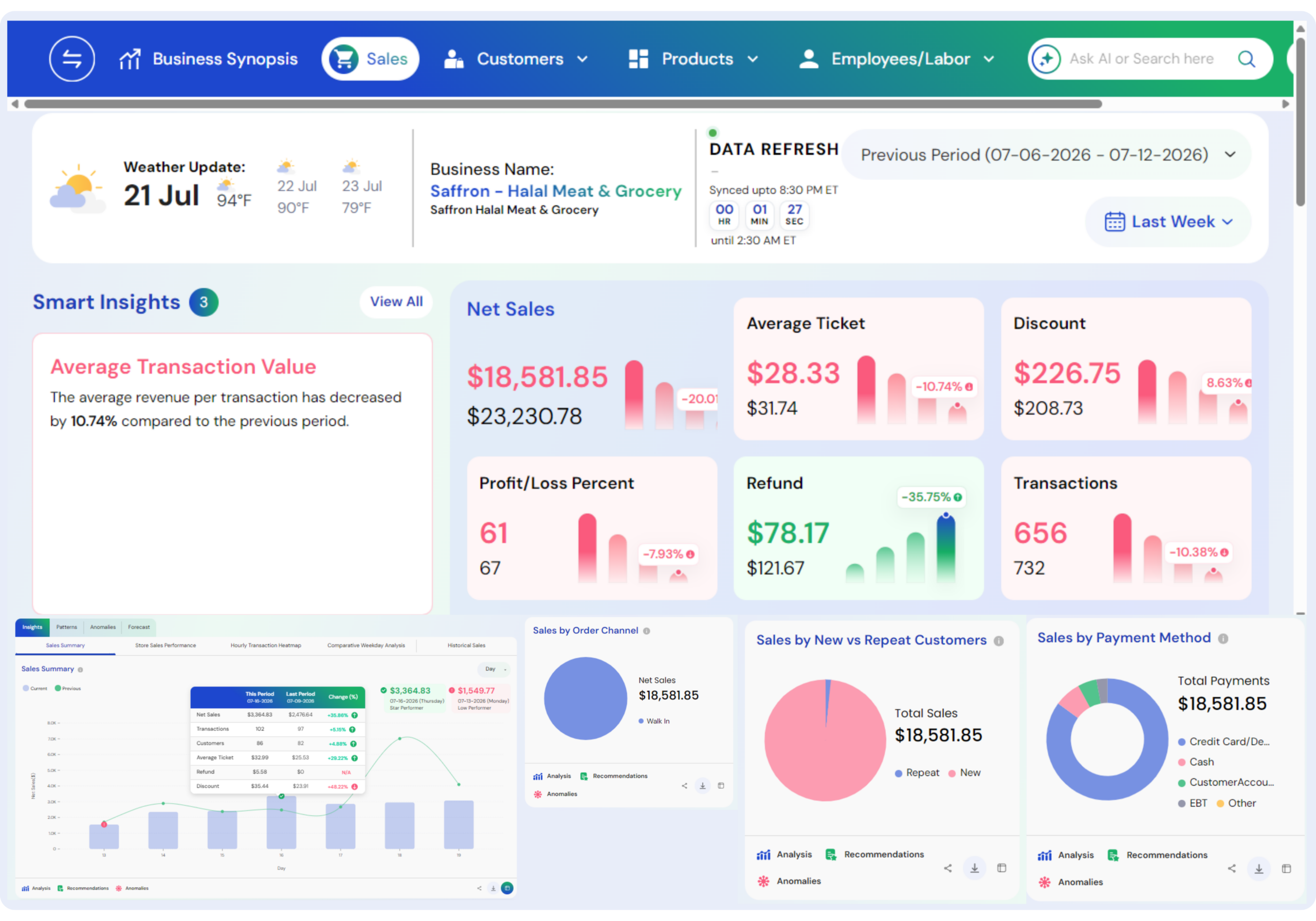
Technology can also make customer retention efforts more effective. Platforms like Livelytics can help restaurants to analyze business and customer data, identify trends, understand purchasing patterns, and discover opportunities to improve the overall dining experience.
By combining restaurant business intelligence with personalized communication and consistent service, restaurants can make better retention decisions.
This blog will walk you through 10 customer retention strategies for restaurants that can encourage repeat visits, strengthen customer relationships, improve customer satisfaction, and support sustainable restaurant growth.
Also Read: Customer Sentiment Analysis for Multi-Location Business Challenges and Solutions
Why Customer Retention Matters for Restaurants
Usually restaurants focus highly on acquiring new customers through advertising, social media, delivery platforms, promotions, and local marketing. Even though attracting new diners is essential for restaurants, retaining existing customers is equally important.
Because a customer who has already visited your restaurant has experienced your food, service, atmosphere, pricing, and brand. And if the experience was positive, then the customer already understands the food menu and services that your restaurant offers. So the challenge for the restaurants is to give customers an appealing reason for them to return to your restaurants.
Customer retention can help restaurants:
- Increase repeat visits
- Build stronger customer relationships
- Improve customer lifetime value
- Encourage word-of-mouth recommendations
- Generate more loyalty
- Reduce dependence on constant customer acquisition
- Create predictable purchasing patterns
- Strengthen the restaurant’s reputation
Customer retention is challenging for restaurants because often diners enjoy trying and dining at new restaurants. Because of high competition, changing customer preferences, price sensitivity, and occasion-based dining can all reduce repeat visits. Hence, it is essential for restaurants to make the second visit for customers just as appealing as the first.
Also Read: AI to Collect Customer Insights
10 Customer Retention Strategies for Restaurants That Increase Repeat Visits

Building long-term relationships with diners is essential for restaurants that want to achieve sustainable growth. Customer retention helps restaurants to convert first-time guests into loyal customers who make regular repeat visits and repeat orders.
Effective customer retention strategies like loyalty programs, personalized offers, customer feedback, and strong customer experience can encourage diners to return.
Restaurants can also use restaurant marketing, email marketing, SMS marketing, and convenient online ordering to strengthen customer engagement. By understanding customer needs and consistently delivering value, restaurants can increase loyalty and long-term value.
1. Create a Simple and Valuable Loyalty Program
Creating a simple and valuable loyalty program gives customers a clear reason to return. The basic idea is simple: reward customers for choosing your restaurant repeatedly.
Rewards can include points, free appetizers, complimentary desserts, discounts, exclusive menu items, birthday rewards, or early access to special events.
However, the program should be easy to understand. Customers should quickly know how they earn rewards, how many visits or points are required, what rewards they receive, when rewards expire, and how they can redeem them. Complicated reward rules can discourage participation from customers.
For example, a restaurant could use a straightforward system such as “Visit 5 times → Receive a free appetizer” or “Earn points with every purchase → Redeem points for rewards.”
Restaurants can also introduce tiers for highly engaged customers. A Silver level could provide basic rewards, Gold could offer extra points and birthday benefits, while Platinum could provide exclusive menu items and priority invitations.
The goal is not just to make every visit based on discounts. The strongest loyalty programs create a sense of recognition and belonging while giving customers an additional reason to choose the restaurant again.
Also Read: How AI Revolutionizes Customer Experience in Restaurant Industry
2. Personalize Customer Offers
Customers are most likely to respond to received personalized messages from restaurants as it feels relevant to their interests. Instead of sending the same generic promotion to every customer, restaurants can send offers as per customer preferences and order history to create personalized offers.
For instance, if a customer frequently orders pizza, the restaurant might send a message like “Your favorite pizza is back this weekend. Enjoy a complimentary drink with your next order.” A customer who regularly orders vegetarian dishes could receive information about new vegetarian menu items.
Personalized customer offers may be based on favorite dishes, order frequency, past purchases, preferred dining times, birthday details, location, loyalty status, and online ordering behavior.
The main objective of restaurants should not be to overwhelm customers with messages. Rather, restaurants should use relevant information to make communication more useful. Personalized recommendations can make customers feel recognized instead of being considered as anonymous transactions.
Further customers can be segmented based on their behavior. Frequent customers may receive loyalty-based offers, and customers who have not visited recently could receive a thoughtful invitation to return. When customers know that a restaurant understands customer preferences, then they naturally return back to your restaurants.
Also Read: How to Improve Customer Satisfaction in Restaurants
3. Deliver Consistent Food and Service Quality
No loyalty program can work well if customers have an inconsistent experience with food and services. A customer may return because they enjoyed their first visit, but if during the second visit they get poor food quality, slow service, inaccurate orders, or an uncomfortable ambience, then the restaurant may lose that customer.
It is essential for restaurants to be consistent with food and service quality which is one of the strongest foundations of customer retention. Restaurants should establish clear standards for food preparation, food portion sizes, food presentation, ingredient quality, order accuracy, service behavior, cleanliness, delivery packaging, and waiting times.
Being consistent with food quality and services, does not mean that the restaurant can never introduce something new. Instead customers should know that their favorite dishes and core experiences will remain dependable.
When a customer orders the same popular dish several times, then they should receive the same level of quality every time they order.
Restaurants must conduct regular food quality checks by reviewing customer feedback, tracking customer complaints, evaluating food preparation, and checking online ordering experiences.
Managers can also identify recurring operational problems as they can negatively affect large numbers of customers. While the goal is simple , the customer should receive the experience as they expect or something even better.
Offering good food quality to customers builds trust, and trust makes customers more comfortable while choosing the restaurant repeatedly.
Also Read: Why Restaurant Needs a Food Inventory Management
4. Make Every Visit Feel Special
Customer retention cannot be achieved by just providing discounts. Sometimes even small gestures can have a higher emotional impact than a promotion. Restaurants can make customers feel valued by recognizing returning guests and creating memorable experiences.
Some simple actions such as remembering a regular customer’s favorite table, greeting returning customers warmly, recognizing birthdays, and providing a complimentary dessert for a special occasion, remembering their dietary preferences, thanking customers personally, and celebrating loyalty milestones.
Staff has a crucial role in creating such experience. A customer who feels recognized may develop an emotional connection with the restaurant. Such connections can influence future dining decisions.
Assume two restaurants offering similar food at similar prices. Where one restaurant treats every customer visit as a transaction, while the other restaurant remembers customers, welcomes them warmly, and makes them feel appreciated. The second restaurant has a stronger opportunity to build customer loyalty.
Restaurants should encourage their staff to make customer appreciation to be a part of conversations with customers naturally instead of depending only on scripted statements. Conveying a genuine thank-you can make a customer feel valued.
Customer retention is ultimately about the way they build relationships with customers and not just transactions. When customers view a restaurant with positive personal experiences, then they have another reason to return even while their competitors offer similar food or pricing.
Also Read: Social Media Marketing for Restaurants
5. Use Email and SMS Marketing to Stay Connected
A customer may love the food and services offered by a restaurant but still forget about it. When restaurants regularly communicate with customers, they can help them to keep their restaurants visible.
Through email marketing and SMS marketing, restaurants can inform their customers about new food menu launches, seasonal dishes, special events, loyalty rewards, birthday offers, limited-time promotions, reorder reminders, and exclusive customer benefits.
The key is for the restaurants to remain relevant and frequent in their strategies. Restaurants should avoid consistently sending promotional messages. Because sending too many marketing messages and SMS can cause customers to unsubscribe or ignore future messages.
Rather, businesses can create a simple communication calendar. For instance, Week 1 could feature a new menu announcement, Week 2 could highlight customer stories, Week 3 could provide a loyalty reward reminder, and Week 4 could promote a weekend special.
For sending short, time-based messages, restaurants can use SMS marketing, while emails can be used for sharing stories, photographs, food menus, and detailed promotions.
Restaurants should also consider customer preferences while sending them offers and updates.communicating. Some customers may prefer email, while other customers may respond better to short text messages. Relevant segmentation of customers can make communication more effective.
The goal of restaurants is to keep them always in customer’s minds by sharing helpful, timely, and relevant messages that encourage them to return without feeling overwhelmed.
Also Read: Is Email Marketing for Restaurant Still a Good Choice
6. Offer Birthday and Special-Occasion Rewards
Special occasions give restaurants opportunities to create emotional connections with customers. Every special occasion of customers like Birthdays, anniversaries, loyalty milestones, and other crucial dates can encourage customers to come back to your restaurant.
Restaurants might offer a free dessert, complimentary appetizer, birthday drink, special meal upgrade, discount for the birthday group, anniversary reward, or exclusive dining experience.
For instance, rather than sending a generic message like “Get 20% off this month,” a restaurant could send: “Happy Birthday! We would love to celebrate with you. Enjoy a complimentary dessert during your birthday week.”
Where the second message feels more personal and occasion-focused. It gives the customer a reason to visit while making the communication feel like recognition instead of a simple sales promotion.
Timing also matters while sending offers to customers. A restaurant can send the offer several days before the customer’s birthday, giving the customer enough time to make plans. A follow-up message can work as a gentle reminder closer to the occasion.
Special-occasion rewards can also go beyond birthdays. Restaurants can celebrate a customer’s tenth visit, loyalty anniversary, first online order, or other meaningful milestone.
By gathering customer information responsibly and providing appropriate choices about communication preferences. When such campaigns are handled thoughtfully, special occasions can improve relationships and encourage customers to remember your restaurant with positive memories.
Also Read: SMS Marketing for Restaurants
7. Ask for Feedback and Close the Feedback Loop
Customer feedback can help restaurants to understand why customers return or why they do not return. Restaurants should create simple ways for customers to share their feedback.
Customer feedback can be about food quality, service, waiting time, cleanliness, pricing, ordering accuracy, delivery, staff friendliness, and overall customer satisfaction. However gathering customer feedback is only the initial step, but restaurants should consistently work on customer suggestions.
Suppose several customers mention that lunch service takes too long. The restaurant could review staffing levels, kitchen workflow, table management, and ordering procedures. If the restaurant later reduces waiting times, then it can monitor whether customer complaints decrease.
It creates a valuable cycle:
Feedback → Analysis → Improvement → Better Experience → Greater Retention
Restaurants should also respond to customer complaints professionally. A customer may be more willing to return to your restaurant when they see that their problems was acknowledged and addressed
Customer’s feedback should therefore become part of the restaurant’s operational improvement process instead of simply a marketing strategy. Managers can identify repeated customer problems, focus on improvements, and communicate changes to staff.
When customers see that their opinions cause meaningful improvements in restaurants then they may feel that the restaurant values their experience. This can strengthen customer trust and create a stronger foundation for long-term customer relationships.
Also Read: Customer Sentiment Analysis Vs Traditional Surveys
9. Introduce Exclusive and Limited-Time Menu Items
Customers appreciate when they are offered with familiar menu favorites, but they may also enjoy trying some new dishes. Restaurants can maintain a balance by keeping popular dishes and also introducing seasonal dishes, limited time offers, and exclusive items. A restaurant might promote a special dish that is available only for a weekend or give loyalty members early access to a new menu item.
Limited-time offerings create curiosity and urgency, encouraging existing customers to return and try something different. Restaurants can consider:
- Seasonal menus and chef’s specials
- Loyalty-member dishes and early-access items
- Customer-voted menu items
- Monthly specials and limited-edition desserts
- Holiday menus and special promotions
Introducing exclusive dishes can make loyalty programs more valuable by giving members experiences that other customers cannot access immediately. However, it is essential that restaurants should not change their menus frequently. Because regular customers still need to be offered with their favorite menu items.
Being consistent with menus builds customer trust, while food innovation creates excitement. Maintaining reliable core menu offerings along with carefully selected new experiences gives customers familiarity and fresh reasons.
Offering a limited number of food dishes can also encourage customers to share their experiences with friends and on social media.
Also Read: Optimizing a Restaurant Menu With AI-Powered Data Analytics
10. Make Ordering and Dining Convenient
It is essential for restaurants to offer food and services as per customer convenience. Customers expect simple ways to browse menus, make reservations, order online, customize meals, pay online, track food deliveries, and redeem loyalty rewards. If the ordering process is complex, then it can discourage customers from returning to your restaurant’s event when the food is good.
Restaurants should review the complete customer journey and focus on removing unnecessary steps. They can improve convenience by:
- Providing mobile-friendly menus and websites
- Offering simple online ordering and checkout
- Clearly communicating delivery times and updates
- Making loyalty rewards easy to access and redeem
- Connecting digital and in-person customer experiences
A convenient ordering process reduces friction and saves customers time. When diners can quickly find information, customize meals, pay securely, and receive updates without complications, then they are more likely to choose the restaurant again.
Combining convenience with quality food service, personalization, loyalty rewards, and consistent experiences can help restaurants to strengthen customer relationships and encourage repeat visits.
Also Read: Why Data Analytics is The New Secret Weapon for Successful Results
How Customer Experience Drives Repeat Visits
Customer retention strategies work well when they are connected to the actual customer experience.
Consider the journey of a usual customer:
Discovery -> First Visit -> Positive Experience -> Follow-Up -> Reward -> Second Visit -> Personalization -> Loyalty.
If the first experience of the customer with your restaurant is poor, marketing may not be enough to bring the customer back.
For instance, a restaurant might offer a 20% discount through email. But if the customer’s previous order arrived late and incorrectly, the discount may not solve the underlying issues of customers.
Retention should therefore begin with the fundamentals:
- Good food
- Reliable service
- Accurate orders
- Clean environment
- Fair value
- Convenient ordering
- Responsive customer care
Marketing and loyalty programs should build on positive customer experiences, rewarding customer satisfaction and encouraging repeat visits instead of covering up service problems or disappointing dining experiences.
Use Customer Data Responsibly
Restaurants require customer information for effective customer retention, but data should always be gathered and used responsibly. A customer database can reveal useful patterns, including visit frequency, purchasing behavior, preferred rewards, promotion responses, and signs of declining engagement.
Restaurants can use this information to create more relevant communication:
- New customers: Send friendly offers or reminders that encourage a second visit.
- Regular customers: Provide rewards and personalized benefits that recognize their continued loyalty.
- Inactive customers: Create targeted win-back campaigns that encourage them to return.
Customer segmentation helps restaurants to avoid sending the same messages to everyone. Rather, communication with customers must be with each customer’s interests and relationship with the restaurant.
Restaurants should also respect customer preferences and follow applicable privacy requirements while gathering and using personal information. Data should be used to improve the customer experience, provide impactful offers, and strengthen relationships with customers and not to overwhelm customers with unnecessary or irrelevant marketing messages.
Conclusion
Customer retention is one of the most essential factors for restaurants seeking to increase repeat visits and achieve long-term growth. Attracting new customers is valuable, but encouraging existing customers to return can create stronger relationships and more consistent revenue.
Having a successful retention customer strategy goes beyond serving good food. Restaurants must also provide excellent service, convenient ordering, personalized communication, meaningful loyalty rewards, and a consistently positive dining experience.
All the customer retention strategies discussed above give restaurants practical ways to understand customer expectations and encourage repeat visits.
By listening to customer feedback, recognizing loyal customers, using customer data responsibly, simplifying the ordering process, and providing relevant offers, restaurants can create experiences that make customers want to return. Being consistent is especially essential because one positive experience should become part of an ongoing relationship.
Technology can further support these efforts by helping restaurants understand their performance and customer behavior. Livelytics can provide valuable restaurant analytics and insights that help businesses identify trends, evaluate performance, and make informed decisions. These insights can help restaurant teams improve operations while developing more effective retention strategies.
Ultimately, customer loyalty is built through trust, value, appreciation, and consistent experiences. When restaurants focus on genuinely satisfying customers, they can increase repeat visits, strengthen loyalty, encourage recommendations, and build sustainable long-term success.
If you still have any query about customer retention strategies for restaurants that increase repeat visits then you may write to us at Livelytics and we are more than happy to assist you.