The restaurant industry is changing the way it functions, with the rapid increase in the adoption of Artificial Intelligence(AI) and advanced data analytics.
As restaurants are facing many challenges like increasing labor expenses, changing customer expectations, inventory management issues, and increasing competition, AI is emerging as a powerful tool for improving efficiency and profits.
Whether AI-powered restaurant operations, automated ordering systems, predictive analytics, and smart inventory management, artificial intelligence is changing the way modern restaurants operate.
Each day restaurants generate large amounts of data through point-of-sale systems, online ordering platforms, customer loyalty programs, and delivery apps.
Where AI powered systems can analyze this data in real time that helps restaurant owners to make smarter decisions, improve workflows, and provide personalized customer experiences.
From restaurant automation, demand forecasting, menu optimization, workflow scheduling, or customer engagement, AI is enabling businesses to function more efficiently and also reduce operational costs.
One of the main reasons for such a shift towards AI systems is the rise in the importance of restaurant analytics or data-driven decisions.
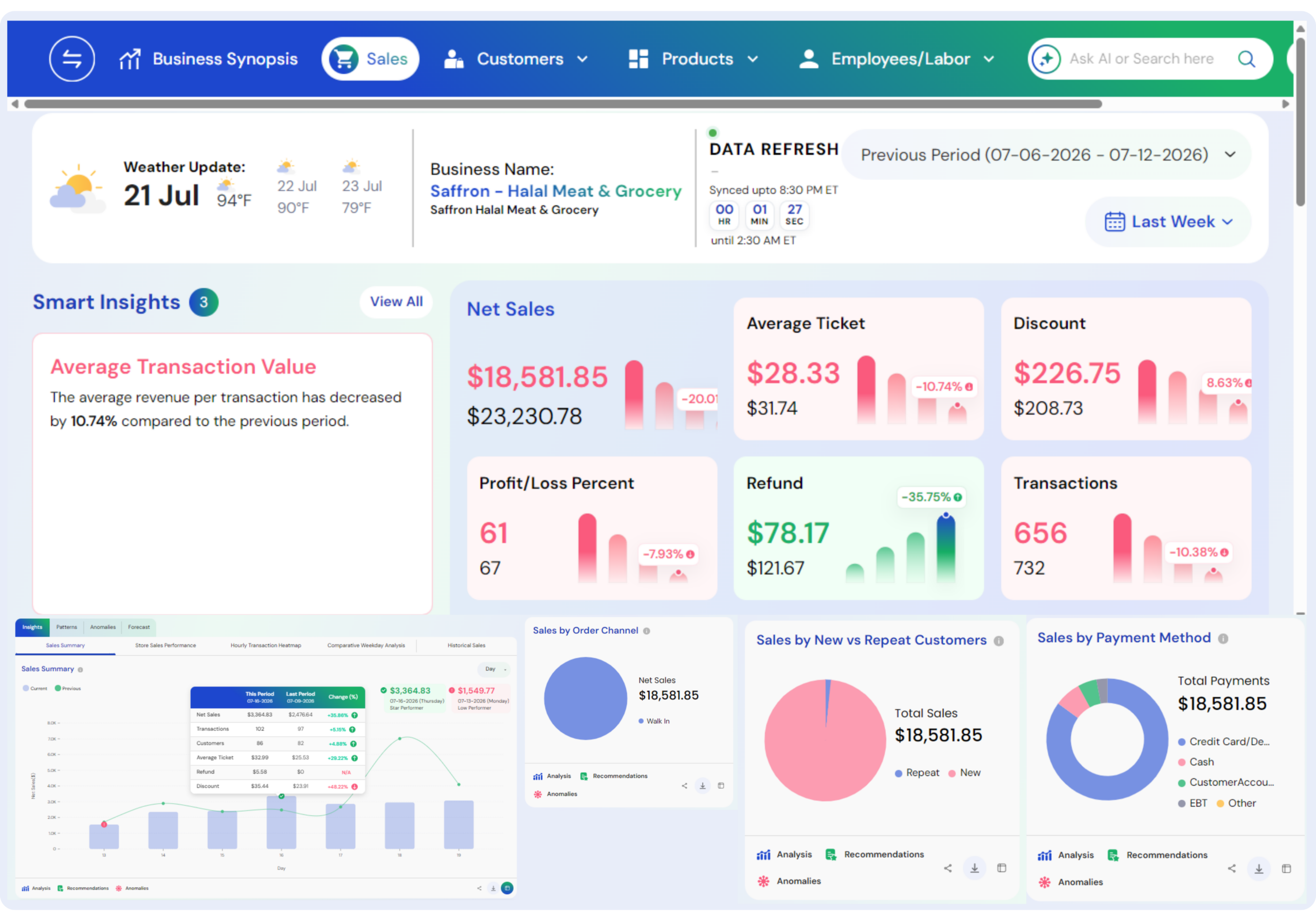
Platforms like Livelytics help restaurants to turn complex operational and customer data into actionable insights. This allows restaurant operators to track performance of restaurants, identify customer patterns, and improve profits.
These platforms along with AI allows restaurants to predict customer demand, improve inventory levels, and improve overall operational efficiency.
While the restaurant industry continues to evolve, the integration of artificial intelligence in restaurants, restaurant technology, predictive analytics, and business intelligence is not just a competitive advantage rather it has become a necessity.
Through this blog, we will explore how AI is reshaping restaurant operations, the benefits it offers, the challenges businesses may face, and why the future of restaurant management will be increasingly smart, automated, and data-driven.
Also Read: Business Intelligence for Restaurants
Understanding Artificial Intelligence in Restaurants
These are advanced computer systems which can perform tasks which require intelligence of humans such as learning from data, identifying customer patterns, making customer demand predictions, understanding language, and automating decisions.
In the restaurant industry, AI is transforming the way restaurants operate because it provides insights through which they can improve operational efficiency, reduce expenses, and improve customer experiences.
Unlike traditional software that follows fixed instructions, AI continuously adapts and improves by analyzing new data and learning from past outcomes.
Such adaptability makes artificial intelligence essential for restaurants because the customer preferences, customer demand, and operational challenges keep changing.
Restaurants use AI in different ways to streamline operations and support business growth.
Important applications include:
- Automating customer interactions through chatbots and virtual assistants
- Improving order accuracy through AI-powered ordering systems
- Forecasting customer demand and sales patterns
- Optimizing employee scheduling and workforce management
- With predictive inventory management reducing food waste
- Personalizing marketing campaigns and promotions
- Analyzing customer behavior and purchasing patterns
- Improving kitchen operations through smart equipment and automation
- Supporting data-driven decisions to increase profits
Due to continuous advancements in artificial intelligence, AI systems have become essential for restaurants who are willing to improve performance of their operations, deliver personalized dining experiences, and remain competitive in a quickly changing market.
Also Read: How to Use AI in The Restaurant Business
Why AI Is Becoming Essential for Restaurants
Several industry patterns are leading to the rapid adoption of artificial intelligence in the restaurant sector. Though businesses have high operational challenges, AI is helping them to improve operational efficiency, reduce operational costs, and improve customer experiences.
1. Addressing Labor Challenges
In the restaurant industry, finding and retaining employees is a concern because of regular shortage of labor. AI systems help to reduce the workload on staff by automating many repeat tasks like scheduling, inventory tracking, order management, and customer inquiries.
Automating these tasks allows employees to focus more on their services, food quality, and customer service which improve overall productivity.
Also Read: How Can Data Analytics Improve the Measurement of Employee Performance
2. Managing Rising Operating Costs
Restaurants are having high expenses due to food, labor, rent, utilities, and supply chains. AI systems help restaurants to identify operational inefficiencies, optimize inventory levels, reduce food waste, and predict future customer demand.
These capabilities let restaurant operators control their expenses while maintaining good service quality and predict future customer demand.
Also Read: How to Improve Restaurant Operations
3. Meeting Higher Customer Expectations
In today’s times customers expect quick service, convenient payment options, personalized recommendations, and smooth ordering experiences.
AI systems enable restaurants to deliver the right orders, personalized recommendations, faster services which helps to offer a more satisfying customer experience.
Also Read: How AI Revolutionizes Customer Experience in Restaurant Industry
4. Leveraging Business Data Effectively
Restaurants generate large volumes of data through POS systems, online ordering platforms, loyalty programs, delivery apps, customer feedback, and reservation systems.
AI systems then convert this data into insights. These insights enable restaurants to make smarter decisions, identify customer patterns, improve performance, and support long-term business growth.
Also Read: Two Way Data Analytics in Shaping Retail Businesses
AI in Restaurants: Revolutionizing the Future of Food Service
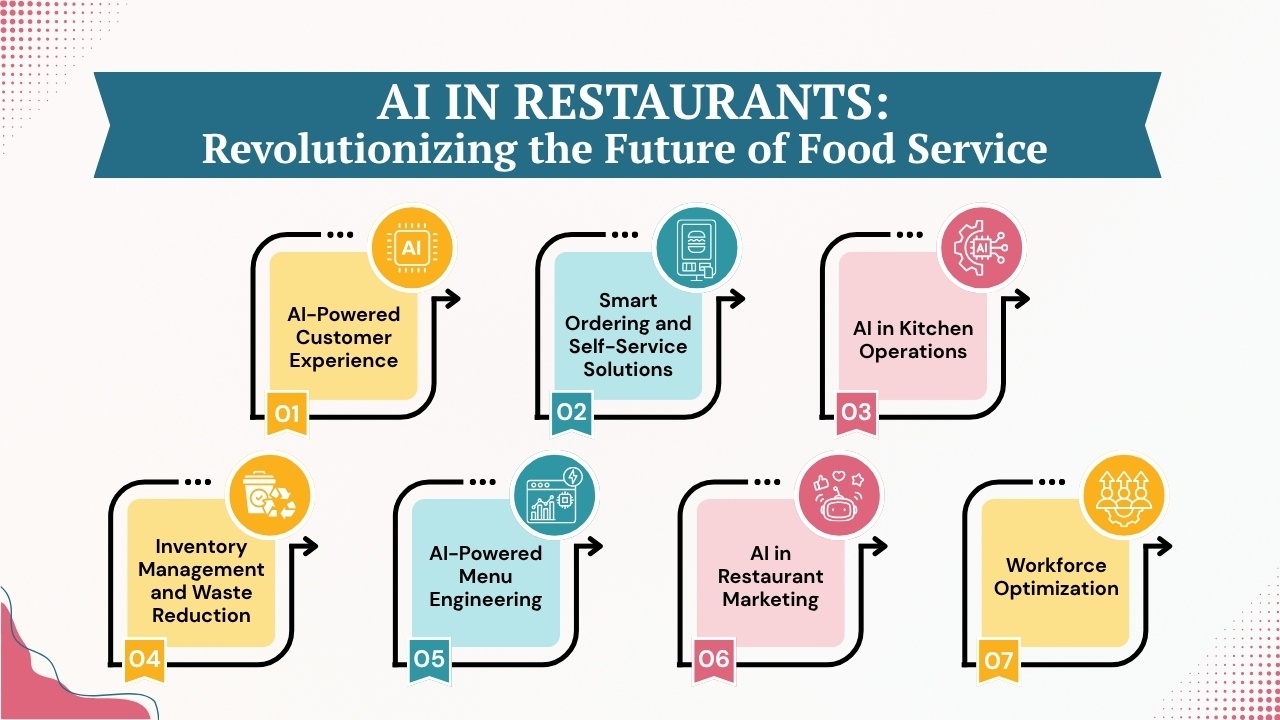
1. AI-Powered Customer Experience
One of the advantages of using artificial intelligence is to improve the customer experience. While today’s customers expect quick, convenient services, Artificial intelligence enables restaurants to meet expectations of customers effectively.
Analyzing customer data such as purchase history, favorite menu items of customers, customer preferences, ordering habits, and visit frequency, AI can generate personalized recommendations which align with each customer’s tastes.
Implementing strategies like personalization not just improves customer satisfaction but also encourages customers for repeat visits and also increases average order value.
AI-powered tools are transforming customer interactions in several ways:
- Personalized Recommendations: It involves suggesting menu items to customers based on their customer preferences and previous purchases.
- AI Chatbots and Virtual Assistants: It offers 24-hours of customer support that provides answers to menu operations, managing reservations, processing orders, and handling inquiries.
- Voice Ordering Technology: Using this technology customers can place orders through phone systems, mobile apps using conversational AI.
- Improved Convenience: Self-service technologies enables quick ordering, reduces queues, and enables customers to complete purchases more efficiently.
- Higher Accuracy: AI systems reduce ordering mistakes and improves overall service quality.
While AI technology keeps evolving which enables restaurants to deliver faster, smarter, and more personalized experiences which increases customer loyalty and business growth.
Also Read: Customer Analytics For Restaurants
2. Smart Ordering and Self-Service Solutions
Digital ordering systems have become a crucial feature in modern restaurants that helps businesses to improve operational efficiency and improve customer convenience.
Artificial intelligence takes these systems to the next level by providing smart decision-making capabilities that personalize the ordering experience and increase effectiveness of operations.
AI-based self service systems not just reduce wait times while encouraging additional purchases through smart upselling and promotional offers.
Key AI-driven features include:
- Self-Service Kiosks: Such kiosks can recommend complementary menu items, promote special offers based on customer selections.
- Personalized Menu Displays: Such menu displays adjust recommendations on the basis of customer preferences and purchasing order.
- Upselling Opportunities: AI systems can encourage additional purchases such as drinks, sides, or desserts which increases average order value.
- Dynamic Menu Displays: AI systems can automatically update menus on the basis of weather conditions, time of day, availability of stock, and customer demand patterns.
- Improved Customer Convenience: AI systems lets guests browse menus, customize orders, and complete transactions independently.
For instance, if a customer is ordering a burger then they may receive recommendations for fries, beverages, or desserts. Such type of smart suggestions improve customer experience and also help restaurants to improve sales, use of inventory, and maximize revenue.
Also Read: The Complete Guide for Restaurant Business Analytics
3. AI in Kitchen Operations
Kitchen operations are also essential for determining profits of restaurants, their food quality, and customer satisfaction.
Though artificial intelligence is helping kitchens to become more efficient, consistent, and more productive as it automates routine restaurant operation tasks and improves quality control.
With AI-equipments and advanced tracking systems, it enables restaurants for smooth food preparations and also maintains high standards across every shift and location.
Important applications of AI in kitchen operations include:
- Automated Cooking Systems: AI-based equipment monitors food preparation temperatures, time taken for preparing food, food portion sizes, and maintains food quality standards which ensures food is prepared consistently.
- Robotics in Food Preparation: Restaurant robots can perform repeat tasks such as frying foods, preparing pizzas, and portioning food ingredients.
- Improved Productivity: These systems automate tasks which enable kitchen staff to prioritize food preparation while reducing overall other manual tasks for staff.
- Consistent Food Quality: AI ensures meals are prepared as per specific food standards which reduces errors.
- Quality Assurance Through Computer Vision: Advanced camera systems verify food preparation processes and find quality concerns before meals reach customers.
Such AI-based innovations help restaurants to improve operational efficiency, reduce food waste, and offer a more consistent dining experience for customers.
Also Read: 10 Ways Restaurant Data Analytics Solutions Reduces Costs Improve Profit
4. Inventory Management and Waste Reduction
Artificial intelligence(AI) systems also help to manage inventory and reduce food waste. Because ineffective control of inventory often causes excess stocking of inventory, ingredient shortages, food waste, and increased costs.
Analyzing large amounts of operational data enables restaurants to implement smarter purchasing decisions and accurately predict future inventory requirements.
This enables restaurants to maintain optimal stock levels while reducing food waste and improving profits.
Important ways AI improves inventory management include:
- Predictive Inventory Management: AI systems analyze past sales data, local events, weather forecasts, and promotional activities which helps restaurants to predict and purchase inventory accurately.
- Automated Purchasing: AI systems recommend stock purchase quantities or automatically place orders for stock whenever stock reaches limits.
- Reduced Stockouts: AI systems ensure that important ingredients are available during peak demand hours.
- Improved Supplier Management: AI systems enable restaurants to improve ingredient purchasing decisions and maintain stronger relationships with suppliers.
- Food Waste Reduction: AI systems identify ingredients which are frequently wasted, customer patterns which are leading to overproduction of food.
By reducing food waste and improving accuracy of inventory purchase, AI systems enable restaurants to reduce operational expenses, improve cash flow, support sustainability initiatives, and ensure that ingredients are available when customers need them.
Also Read: Why Restaurants Need a Food Inventory Management System
5. AI-Powered Menu Engineering
Menu design plays a crucial role in determining a restaurant’s profitability and customer satisfaction. Artificial intelligence enables restaurant operations to make informed menu decisions by analyzing sales data, food preferences of customers, and market patterns.
Instead of simply guessing, businesses can use insights provided by AI systems and identify the best selling food menu items and also those food items that require adjustments.
This type of data-driven approach enables restaurants for maximum revenue while ensuring that food items prepared are still relevant as per the customer demand.
Important applications of AI-powered menu engineering include:
- Performance Analysis: AI systems identify best-selling items, profitable food items, low-performing food items, and opportunities for growth.
- Consumer Trend Analysis: AI systems track new food trends like plant-based meals, high-protein options, sustainable ingredients, and international tastes.
- Menu Optimization: AI systems enable restaurants to refine menu offerings on the basis of customer preferences and customer purchasing behavior.
- Dynamic Pricing Strategies: AI systems adjust menu prices based on customer demand, inventory availability, seasonal trends, and competitive conditions.
- Improved Profitability: AI system supports better pricing decisions and promotes high selling food items.
By using AI-powered menu engineering, restaurants can remain ahead of their competitors and make decisions and purchases based on customer preferences, improve operational efficiency, and increase long-term profits.
Also Read: Optimizing a Restaurant Menu With AI Powered Data Analytics
6. AI in Restaurant Marketing
Marketing in restaurants has become highly data-driven. AI systems help businesses to engage customers more effectively through targeted campaigns and personalized communication.
These systems analyze customer data and behavioral patterns. AI systems enable restaurants to develop marketing strategies that specific audiences are able to correlate with.
It causes higher customer engagement, stronger customer relationships, and improved return on marketing investments.
Important applications of AI in restaurant marketing include:
- Customer Segmentation: AI systems group customers on the basis of their spending habits, visit frequency, food preferences which enables restaurants to implement targeted marketing efforts.
- Personalized Promotions: AI systems deliver customized offers like birthday rewards, loyalty incentives, personalized food discounts, re-engagement campaigns on the basis of customer behavior.
- Improved Campaign Performance: AI systems help restaurants to send valid messages to the right customers at the right time which increases customer response rates.
- Sentiment Analysis: AI systems track online reviews, social media mentions, and customer feedback for understanding customer opinions and experiences.
- Data-Driven Insights: AI systems identify customer patterns and areas for improvement which increases customer satisfaction and brand reputation.
By using AI-based marketing tools, restaurants can attract new customers, improve customer loyalty, and drive sustainable business growth.
Also Read: AI for Restaurant Marketing
7. Workforce Optimization
Labor expenses are one of the high expenses for restaurants. Hence it is essential for restaurants to manage workforce effectively which is essential for restaurant profits and consistent service quality.
Artificial intelligence(AI) systems enable restaurant operations to optimize staffing decisions, improve employee productivity, and smooth staff recruitment processes.
AI systems analyze past data and operational patterns which lets managers make informed decisions regarding workforce which align labor costs with customer demand.
Important applications of AI in workforce optimization include:
- Predictive Scheduling: Based on expected customer demand, AI systems can predict customer traffic and the right number of staffing.
- Reduced Labor Costs: AI systems enable restaurants to avoid overstaffing and also ensure the right number of staff during busy hours.
- Improved Employee Productivity: AI systems aligns staffing schedules as per the workload requirements which helps to maximize operational efficiency.
- Enhanced Customer Service: AI systems ensure sufficient staff is available to maintain high service standards during busy hours.
- Training and Performance Insights: AI systems identify strength of each staff member, their productivity levels, service quality metrics, and areas which require additional training.
- Recruitment Assistance: AI systems help restaurants to identify qualified candidates efficiently that reduces time required for hiring and improving workforce planning.
With the use of AI-based workforce management tools, restaurants can improve operational efficiency, improve employee performance, and offer a better customer experience while also controlling labor costs.
Also Read: How AI Unlocks Business Insights That Drive Required Results
The Role of Data Analytics in AI Success
Artificial intelligence is only powerful as the data it receives and analyzes. For restaurants that are gathering data is no longer the challenge. Rather the actual challenge is converting that data into impactful insights is where the real value lies.
This is why advanced analytics platforms are essential for implementing AI successfully. Platforms such as Livelytics help restaurants to convert operational, financial, and customer data into actionable insights which enables restaurants to make smarter decisions.
By integrating data from multiple sources like POS systems, customer transactions, sales reports, inventory platforms, and operational metrics, Livelytics provides a detailed view about the restaurant performance.
These insights help managers to identify patterns, reveal opportunities, and improve operational efficiency across all areas of the business.
Important benefits of combining analytics with AI include:
- AI systems track sales patterns to identify growth opportunities
- AI systems analyze customer behavior and purchasing patterns
- AI systems measure menu performance and menu profitability
- AI systems improve operational efficiency through data-driven insights
- AI systems track profits across different locations and departments
- AI systems support strategic decision-making with real-time reporting
When combined with AI technologies, analytics platforms such as Livelytics enables restaurants to go beyond guessing and make informed decisions based on accurate data and predictive insights.
Also Read: The Role of Data Analytics in Reducing Restaurant Waste
AI and Drive-Thru Innovation
Drive-thru service has become one of the most crucial revenue channels for quick-service and fast-food restaurants.
While today customer demand for speed and convenience continues to increase, Artificial intelligence(AI) systems are helping restaurants to optimize drive-thru operations and improve operational efficiency.
AI-based systems can smooth the customer food ordering process, reduce wait times, and improve the customer experience while supporting higher sales volumes.
Important applications of AI in drive-thru operations include:
- Automated Order Taking: Voice AI systems can accurately process customer orders with natural conversations which reduces the need for manual order-taking.
- Shorter Wait Times: AI systems enable quick processing of order that improves speed of services and customer satisfaction.
- Improved Order Accuracy: AI systems reduce chances of misunderstanding and ordering mistakes that ensures a smoother customer experience.
- Reduced Labor Requirements: Automating most tasks allows staff to prioritize food preparation and customer service.
- Predictive Demand Forecasting: AI systems analyze traffic patterns, past sales data, and busy hour patterns which help managers to prepare staffing and inventory levels.
- Personalized Recommendations: AI systems enable restaurants to recognize customer preferences and suggest valid food menu items, increasing average order value.
Using AI-driven driven-thru technologies, restaurants can improve operational efficiency, increase revenue, and deliver faster, more personalized service to customers.
Also Read: Business Intelligence Vs Machine Learning
Benefits of Artificial Intelligence in Restaurants
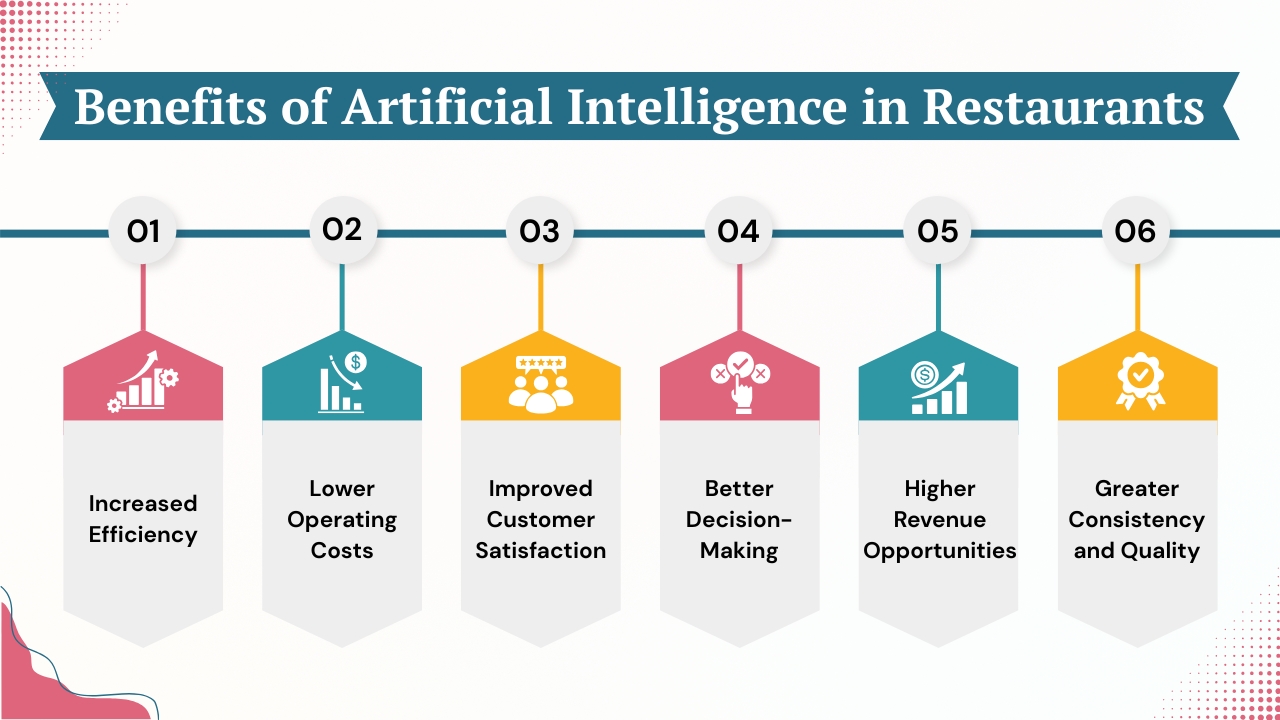
Restaurants that implement Artificial intelligence(AI) systems often experience huge improvements in terms of efficiency, profits, and customer satisfaction.
These systems automate routine tasks, by analyzing large amounts of data, and supports data-driven decision-making. AI systems help businesses to streamline operations and remain competitive in a quickly changing industry.
1. Increased Efficiency
AI systems automates repetitive tasks such as order processing, inventory tracking, employee scheduling, and customer support.
It helps to reduce the workload of completing tasks manually which allows staff to prioritize customer service and on food preparation.
2. Lower Operating Costs
Through predictive inventory management, labor optimization, and waste reduction, AI enables restaurants to reduce unwanted expenses.
Through better demand forecasting restaurants can avoid overstocking and inventory shortages cause improved cost control.
Also Read: The Blind Spot Costing Your Business More Than You Think
3. Improved Customer Satisfaction
AI systems improve the guest experience through personalized food recommendations, quick ordering, and accurate service.
While personalized promotions and convenient self-service options enables restaurants to build stronger relationships with customers and increase customer loyalty.
Also Read: Leveraging AI to Collect Customer Insights
4. Better Decision-Making
AI systems convert operational and customer data into actionable insights.
This enables managers to track performance of their restaurants, identify customer patterns, predict customer demand, and make informed decisions using real-time data.
Also Read: Benefits of Data-Driven Decision Making
5. Higher Revenue Opportunities
AI systems support intelligent upselling, targeted marketing campaigns, personalized promotions, and dynamic pricing strategies.
These capabilities allow restaurants to increase average order value and increase overall sales growth.
Also Read: Restaurant Profit Margin Analytics Tool to Boost Profits
6. Greater Consistency and Quality
AI-powered systems help maintain consistent food quality, service standards, and operational performance.
These systems reduce chances of human mistakes and standardize processes, restaurants can deliver a reliable customer experience while improving brand reputation and long-term profits.
Conclusion
Artificial Intelligence (AI) systems are changing the restaurant industry by changing how businesses manage operations, engage customers, and ensure long-term profits.
While restaurants are facing many challenges like rising labor costs, changing customer expectations, inventory inefficiencies, and increasing competition, AI offers innovative solutions which improve efficiency and support long-term growth.
From automated ordering systems and personalized marketing campaigns to predictive analytics and kitchen automation, AI systems have become essential for managing modern restaurants.
One of the highest benefits of AI systems is that it analyzes large amounts of operational and customer data. Identifying customer trends, forecasting demand, optimizing staffing levels, and reducing food waste, AI systems help restaurants to make smarter and faster decisions.
Such capabilities enable restaurant operators to improve service quality while controlling expenses and maximize revenue.
To fully utilize AI systems, restaurants also need powerful analytics tools which transform raw data into actionable insights. Platforms like livelytics play a crucial role by integrating data from POS systems, sales reports, customer transactions, and inventory management systems.
This allows restaurant owners and managers to track restaurant performance, profits, customer behavior, and make data-driven decisions confidently.
While technology keeps evolving, AI and analytics solutions like Livelytics help restaurants to create efficient, personalized, and profitable operations which shape the future of the restaurant industry.
If you still have any queries about artificial intelligence in restaurants then you may book a free demo at livelytics and we are more than happy to assist you.