Founders don’t fail because they lack data. They fail because they’re drowning in it.
Every week, there’s a new report in your inbox: sales performance, marketing attribution, funnel drop-offs, churn analysis. You skim the charts, nod at the conclusions, maybe bookmark it for later… and then move on.
Here’s the real problem: reports are built for yesterday’s questions. Founders live in today’s decisions. When revenue dips suddenly, when CAC spikes overnight, or when a campaign feels right but didn’t convert, you don’t want a 40-page PDF. You want a straight answer. Right now. In plain language.
That’s where the shift begins, and that’s what the best founders are already doing.
And, AI turns data into a conversation. You ask. It responds. No long PDFs. No guessing. Quick clarity to help you make better decisions, faster.
This blog is about that shift. What it is, how it works, the benefits & beyond. Let’s get to it.
Also Read: How AI Unlocks Business Insights That Drive Required Results
The Hidden Cost of Waiting for Reports

Before we talk about better alternatives, let’s get real about what waiting for reports actually costs founders and business owners. Reports feel safe because they’re neat, structured, and look authoritative, but the delay they introduce has real financial and strategic consequences.
Here’s a breakdown of the highest hidden costs:
1. Missed Revenue Opportunities
When you wait for a weekly or monthly report, the world moves on. Market shifts, customer behaviors, and performance trends don’t pause for a PDF.
Every moment you delay a decision, you risk missing out on revenue you could have captured if you acted faster. That concept is captured in Cost of Delay, which measures how much value slips away over time due to your delayed action. In product and business contexts, delaying key decisions, even by a few week,s can translate directly into lost revenue or market share because competitors act faster and customers move on.
Also Read: How AI Helps in Boosting Restaurant Revenue and Profits
2. Lower Productivity and Performance
Being stuck in a cycle of waiting for data slows the whole team down. Marketing waits on finance. Product waits on analytics. Leadership waits on summaries. This creates silent bottlenecks.
When your team spends hours waiting for reports, synchronizing across departments, or re-running analyses for every new question, that’s time taken away from execution.
Even if the cost doesn’t show up as a direct line item, it’s costing you momentum, and momentum is one of the hardest things to build and the easiest to lose.
Also Read: How Data Analytics Improve the Measurement of Employee Performance
3. Reactive Instead of Proactive Decisions
Delayed reports push teams into reactive mode, where decisions are always based on what already happened, not what’s happening now or what’s coming next.
That means:
- You react to customer churn after it spikes instead of spotting the pattern early.
- You adjust marketing budgets after a campaign underperforms.
- You reposition pricing after competitors have already captured price-sensitive segments.
Also Read: Benefits of Data-Driven Decision Making
4. Information Overload and Poor Focus
Data overload is real, and more reports often add to the noise instead of clarifying it. When you’re overloaded with charts and dashboards, it becomes harder to identify what truly matters. This cognitive strain slows decision quality and can even lead to decision fatigue, where you delay or avoid decisions entirely.
Instead of clarifying, too many static metrics can drown you in details that don’t meaningfully impact your next move.
Also Read: Business Intelligence for Marketing
5. Opportunity Cost of Mental Load
Reports give you numbers, not clarity. Reading through pages of charts and tables takes time and mental energy. Instead of making decisions, founders end up trying to figure out what the data means.
That’s focus taken away from running the business, solving real problems, and moving fast.
When decisions rely on heavy interpretation, it’s easy to misjudge timelines and outcomes. Founders often think a decision will be quick or obvious, but it isn’t. The result? More delay, more second-guessing, and less confidence in the next move.
Also Read: Cost Effective AI Solution for Restaurants
6. Blind Spots Between Reporting Cycles
Reports run on fixed schedules—weekly, monthly, quarterly. But business doesn’t. What happens between those cycles often goes unseen.
According to Gartner, organizations that rely on delayed or batch reporting miss up to 30% of critical business signals because insights arrive too late to act on them.
Founder reality:
Your business is changing daily, but you’re only seeing it once a week or once a month.
Also Read: Blind Spots Costing Your Business More than You Think
7. Forecasting Becomes Less Reliable
When reports are delayed, forecasts are built on outdated inputs. That makes revenue, hiring, and inventory planning less accurate.
According to McKinsey, companies that rely on static forecasting models experience forecast errors of 20–50%, especially in fast-changing markets.
Founder reality:
Businesses are making big bets, hiring, spending, and expanding on numbers that no longer reflect reality, and you end up wasting your money and other crucial business resources.
Also Read: How Restaurant Can Predict Trend With Analytics
8. Higher Customer Churn Goes Unnoticed
Customer churn rarely happens overnight. It starts with small behavior changes, less engagement, fewer logins, and smaller orders. Static reports often surface churn after customers are already gone. By the time churn appears in a report, the customer has already made their decision. It is too late, and you have already lost your customer.
Bain & Company shows that increasing customer retention by just 5% can boost profits by 25% to 95%, but only if issues are identified early.
Also Read: How AI Revolutionizes Customer Experience in Restaurant Industry
What Changes When You Can Ask AI Directly?

When founders can ask AI questions directly, the relationship with data completely changes. Data stops being something you check at the end of the week and starts becoming something you use throughout the day. Instead of planning time to read reports, you get clarity exactly when a decision shows up(in real-time).
This shift simplifies day-to-day work for founders and removes friction from the moments that slow them down the most.
1. Decisions Happen in Real Time, Not in Review Meetings
With reports, decisions wait. You notice something off, note it down, and promise to look at it later. With AI, that delay disappears.
You can ask:
- Why did revenue dip today?
- Which region is pulling overall numbers down?
- What changed compared to last week?
Right when you feel and need. No expert analysis needed, no waiting for reports till the end of every week. No back & forth, just clear insights when needed.
AI connects data across sales, marketing, customers, and operations instantly, and explains it in plain language.
The Business Impact:
Decisions move from scheduled reviews to everyday moments. You fix issues the same day they appear instead of discovering them weeks later.
Also Read: Real-Time Analytics Why Does Your Business Needs It
2. Your Mental Load Drops Significantly
Reports demand attention. You read charts, interpret trends, and try to decide what matters. That constant context-switching is exhausting.
When you ask AI directly, it does the filtering for you. It surfaces:
- It tells you what actually needs attention today, like a sudden drop in conversions from one channel or an unexpected spike in refunds.
- It highlights what’s unusual or trending, such as a steady rise in repeat purchases from a specific customer segment or an ad set that’s starting to underperform comparatively.
- And it confirms what’s stable and doesn’t need action, like revenue holding steady across regions or customer support volumes staying within normal range.
Instead of tracking everything, you focus on what’s worth looking.
Founder impact:
Less mental fatigue. Fewer decisions postponed. More energy for leadership, strategy, and execution.
Also Read: Data-Driven Social Media Strategy for Businesses
3. Follow-Up Questions No Longer Slow Execution
Founders rarely stop at one question. They always have something to follow up on. But reports don’t do much a help here. Because every follow-up means another report, another wait, another meeting.
AI works like a conversation. You ask:
- Why is this happening?
- Which customer segment is most affected?
- What should I prioritize next?
AI adapts instantly, helping you go deeper without breaking your flow. And, it is simple to understand and follow up on.
Founder impact: Clarity builds continuously. Teams move faster because answers keep up with how founders think, curious, fast, and iterative.
Also Read: AI To Collect Customer Insights
4. Your Team Stops Waiting and Starts Acting
When insights live inside reports, teams hesitate. They wait for confirmation, approvals, or the next review meeting to decide what to do. With AI, clarity is immediate, and clarity removes hesitation.
Founders can quickly share what’s happening and why, without forwarding long reports or explaining charts. Everyone sees the same insight, in the same language, at the same time.
Founder impact:
Decisions don’t get stuck in Slack threads or meeting agendas. Teams act faster because they know exactly what’s happening and what needs to be done.
Also Read: How to Setup KPIs for Your Business
5. You Stay Close to the Business Without Micromanaging
As the business grows, founders naturally lose day-to-day visibility. Staying informed often means asking for updates, checking multiple dashboards, or jumping into details that shouldn’t need founder attention.
AI bridges that gap by giving you a clear, high-level view whenever you need it. You know what’s going on without hovering over teams or digging into tools.
And, you can quickly ask questions and get answers on whatever you need without juggling multiple tools, micromanaging, or drowning in reports.
Founder impact:
You stay in control without being in the weeds. Teams feel trusted, and you stay focused on strategy instead of chasing updates.
Also Read: What is Business Intelligence and Why Does it Matter
6. You Move From Guesswork to Confident Decisions
When data lives in reports, founders often fill the gaps with instinct. Not because they want to, but because the answers aren’t available when decisions need to be made.
Asking AI directly removes that gap. You’re no longer guessing whether a decision feels right. You know what’s happening, what’s changed, and why.
Founder impact:
Decisions feel calmer and more confident. You move forward knowing your choices are backed by real signals, not assumptions.
Also Read: Restaurant Analytics And Reporting Drive Better Business Decision
7. Small Problems Get Fixed Before They Grow
Most business problems don’t start big. They begin as small shifts, slightly lower engagement, slower sales in one region, and rising costs in one area.
AI surfaces these early, while there’s still time to act. You don’t need to wait for a report to confirm that something is wrong.
Founder impact:
You prevent issues instead of firefighting them. Less damage control, fewer surprises, and smoother operations overall.
Also Read: Why Do Restaurants Fail
8. Scaling Feels More Manageable
As the business grows, complexity increases. More customers, more channels, more moving parts. Reports don’t scale well; they add more pages and more confusion.
AI scales with the business. No matter how complex things get, you can still ask simple questions and get clear answers. And, with all the answers in real-time in plain English, scaling the business feels more manageable.
Founder impact:
Growth feels controlled instead of chaotic. You scale faster without losing visibility or clarity.
Also Read: How Livelytics Can Helps Restaurants Boost Revenue
9. Your Time Stops Getting Fragmented
Founders lose time in small, invisible ways, jumping between dashboards, asking for updates, scanning reports, and following up for clarification.
When you can ask AI directly, those micro-interruptions disappear. One question replaces multiple tools, messages, and meetings.
Founder impact:
Your day feels more focused. Fewer context switches. More uninterrupted time to think, plan, and lead.
10. Curiosity Replaces Passive Consumption
Reports encourage passive behavior. You read what’s presented, absorb what you can, and move on. AI changes that dynamic completely.
When insights are conversational, founders and teams naturally start asking better questions. Not just what happened, but why it happened, what it means, and what could happen next. Curiosity becomes part of the workflow, not an extra effort.
This shift matters because better questions lead to better decisions and faster learning.
Founder impact:
A more proactive, thinking organization where people explore insights, challenge assumptions, and act with intent instead of just tracking metrics.
How To Ask Business-Related Questions from AI? (Courtesy the Right Tool)?
Knowing that AI can change how decisions are made is one thing. Actually getting useful answers is another. The difference doesn’t come from asking more questions; it comes from asking the right kind of questions, using a tool that understands your business context.
This is where most founders struggle. Generic AI tools can give generic answers. But business decisions need answers grounded in your data, your customers, and your operations. That’s exactly where Livelytics fits in.
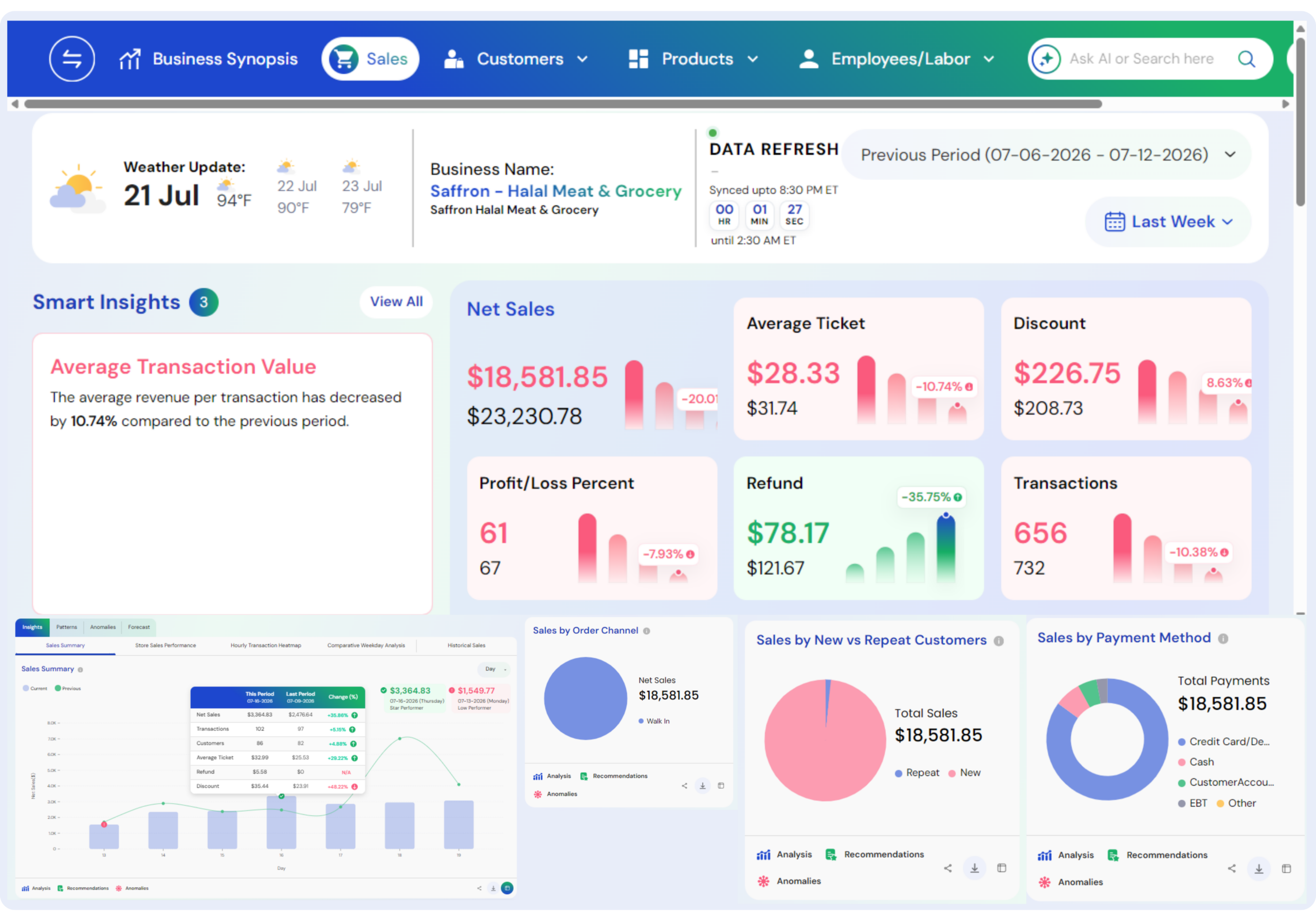
Livelytics is an AI-powered data intelligence tool that integrates easily with your existing business systems. It cleans, prepares, and manages your data behind the scenes. With LivAI, our built-in AI assistant, you can ask real business questions and receive real-time, reliable answers without manual analysis.
Here’s how founders should start asking business-related questions the right way:
1. Ask in Terms of Business Impact, Not Raw Metrics
Founders think in real situations. A number drops. A campaign slows. A region underperforms. You don’t think in dashboards, you think, what’s going on right now?
With Livelytics, your business data stays connected, cleaned, and ready at all times. LivAI sits on top of that data as your personal AI assistant, built specifically for your business. You ask about sales, customers, or operations in plain language, and LivAI responds with answers grounded in your actual data.
LivAI learns how your business works, your industry, goals, and priorities, so it speaks your language, not analytics jargon.
Impact:
You stop translating thoughts into data queries and start getting answers that match how you think and decide.
Also Read: Business Intelligence for Small Restaurants
2. Ask Questions the Moment Something Feels Off
Founders often sense issues before data confirms them. The mistake is waiting for a scheduled report to validate that instinct.
The better approach is to ask immediately:
- Why do conversions feel lower today?
- What changed since yesterday?
Because Livelytics continuously prepares and manages live data, LivAI can respond in real time, right when the question arises. No delay, no back-and-forth, and no need to involve analysts for every concern.
Why this works:
You act while problems are small and opportunities are still fresh.
3. Ask in Plain Language, Not Analytical Terms
You shouldn’t have to translate your thinking into dashboards or technical queries. The best AI tools adapt to how founders think, not the other way around.
LivAI is designed for natural, conversational questions. You ask things the same way you’d ask a teammate, and the answers come back clear, structured, and easy to act on.
This makes AI useful not just for founders, but for leadership teams who need clarity without diving into numbers.
Why this works: More people can use insights confidently, and decisions don’t get stuck at the top.
4. You Stay Informed Without Constant Checking
Founders waste time jumping between tools just to stay updated. You check dashboards, ask for updates, and still feel unsure.
LivAI flips this dynamic. You tell it what matters, sales drops, inventory levels, rising costs, or fast-moving products and it keeps an eye on those signals for you. When something changes, LivAI alerts you immediately and explains what’s happening.
You don’t chase data anymore. The data comes to you.
Impact:
You protect your time, reduce mental fatigue, and stay aware without micromanaging the business.
5. You Move From Insights to Action Faster
Knowing what changed only helps if you know what to do next.
LivAI uses AI and machine learning to spot patterns in your data and suggest next steps based on your goals. When revenue slows, it points to contributing factors. When something performs well, it shows where to double down. When risk builds, it flags it early.
You don’t just see insights, you act on them with confidence.
Impact:
You make smarter decisions faster and keep the business moving forward without second-guessing.
6. You Get Both Data & Direction
Most analytics tools stop at telling you what happened. Livelytics goes further.
LivAI uses AI and machine learning to spot patterns, flag risks, and recommend next steps based on your business goals. When something changes, it doesn’t just show the change, it explains what it means and how to move forward.
This helps founders move from observation to action without overthinking.
Impact:
Clear direction, faster execution, and decisions that push the business forward instead of stalling it.
If you want to see how Livelytics and its intelligent AI assistant can help you simplify decision-making and stay on top of your business without the daily chaos, book a free demo today and experience how it works for your business.
To Wrap!
Founders don’t need more dashboards, longer reports, or deeper dives into data. They need answers when questions show up, during the day, between meetings, and in moments when decisions can’t wait.
The real shift isn’t about using AI for the sake of it. It’s about moving from reviewing the business to actively thinking with it.
Asking better questions, staying curious, and acting faster are what separate reactive businesses from confident ones. When clarity becomes immediate, decision-making feels less heavy and more natural and that’s when progress compounds.
If this way of working feels like the direction you want to move in, Livelytics and its AI assistant LivAI are designed to support exactly that shift. You can book a free Livelytics demo to see how real-time, question-driven decision-making can fit into your day.