Introduction:
In a world full of options, what truly keeps customers returning back to the same brand again and again?
It’s not always the price, discounts or loyalty points.
At the heart of true brand loyalty lies more powerful and more personal : emotion.
Brand loyalty is not any more built on habit – it’s built on emotional connection. And the best way to interpret emotion at scale?Customer sentiment analysis.
And in the digital age, emotion has a voice – it resides in your customer’s reviews, social media posts, survey responses, and support interactions. To hear it, understand it, and act on it to some extent, you need Customer Sentiment analysis.
Think about this: Your customers leave behind emotional breadcrumbs every day. If it is a glowing review on Google, a complaint on Twitter, or a neutral support chat message – they are constantly expressing how they feel. So, are you picking up on the patterns?
For many years, brands measured loyalty with points, punch cards, and purchase frequency. But today’s consumers expect more. They want to feel seen, heard, and valued. They want brands that reflect their values, respond to their concerns, and remember their preferences.
In other words, they need a relationship – not just a transaction.
Customer loyalty strategies develop lasting relationships through personalized service, rewards programs, emotional engagement, consistent value, and proactive customer experience management.
In customer sentiment analysis, emotional engagement with customers involves identifying how customers feel about a brand, then using those insights to develop deeper connections, build trust, and create emotionally resonant experiences that drive loyalty.
Through this blog we will walk you through how to use sentiment analysis to determine loyalty trends early, identify hidden brand advocates and at-risk customers, convert emotional insights into action plans and combine data with empathy to develop lasting loyalty.
Also Read: What is Customer Sentiment Analysis
What is Customer Sentiment Analysis?
Customer Sentiment Analysis is the process of using AI and natural language processing(NLP) to interpret how customers feel based on what they say – whether in reviews, social media posts, chat transcripts, or surveys.
In simple terms, it’s a tool that reads customer comments, and classifies them as positive, negative, or neutral. Advanced systems go a step further, identifying emotions like joy, frustration, confusion, or disappointment – providing brands emotional clarity at scale.
Unlike surveys that ask structured questions, sentiment analysis listens to what customers say organically. It collects real-time feedback across different platforms and highlights emerging patterns that may go unnoticed through traditional monitoring methods.
Think of a recent review or social media post about your brand. What emotion did it carry?Did you respond?
That’s the voice of your customer – and sentiment analysis helps you hear it, loud and clear.
For example,
“Love the product, but the packaging was not good”.
Surveys may overlook this nuance, but sentiment analysis sees both praise and a service issue – which gives you a more complete picture.
Also Read: How AI Revolutionizes Customer Experience
Why Brand Loyalty Matters More than Ever:
In today’s hyper-competitive and digitally connected world, brand loyalty is no longer a bonus – rather it’s a business imperative. It has become a rare and valuable commodity.
It’s no longer enough to provide a great product or competitive price – today’s customers demand more. They expect connection, connectivity, and care. And what if they don’t get it? They switch.
With just a few taps, customers can compare prices, read reviews, or switch to your competitor. It means that acquiring new customers is easier than ever – but keeping them? That’s the real challenge. And that’s where brand loyalty becomes your most powerful asset.
Also Read: Best Marketing Strategy for Restaurants
Loyalty is the New Currency:
Loyal customers don’t just bring repeat business – they bring sustainable growth. According to Bain & Company, increasing customer rates by just 5% can improve profits by 25%-95%.
Loyalty Means Long-Term Profitability:
Recent studies show that loyal customers are five times more likely to repurchase and four times more likely to refer a friend, and significantly cheaper to retain than to acquire.
Loyal customers don’t just spend more – they advocate for your brand, forgive occasional mistakes, and become your best marketing channel.
Loyal customers:
i. Spend more over time.
ii. Refer to their friends and family.
iii. leave positive reviews.
iv. Forgive occasional mistakes.
v. Act as informal brand ambassadors.
Also Read: AI For Expanding Restaurant Customer Base
Loyalty has Changed:
But Loyalty has changed or evolved. What used to be built through punch cards and reward points is now built through experience and emotion.
Customers want brand that:
i. Respond to their feedback.
ii. Share their values.
iii. Personalize interactions.
iv. Show empathy and transparency.
In today’s times, loyalty is not just about incentives – it’s about how a brand makes someone feel.
In an era of instant alternatives, brand loyalty is fragile – but is incredibly powerful. In order to protect and nurture it, businesses must understand not just what customers are doing, but also how they are feeling. That’s where sentiment analysis becomes a game-changer.
Also Read: AI to Collect Customer Insights
The Psychology Behind Emotionally Connected Customers:

So, what drives a customer to stay loyal – not just for months, but for years?Why do some people swear by a brand, defend it online?The answer lies in emotional connection – a powerful, but often overlooked driver of long-term loyalty.
1. It’s Not Just Logic – it’s Emotion:
Humans are emotional decision-makers. Though often we may rationalize our purchases(“It was on sale”, “It had great reviews”), neuroscience shows that emotions play a crucial role in shaping decisions, especially when it comes to loyalty.
According to a Harvard professor Gerald Zaltman, 95% of purchasing decisions are made subconsciously, driven by emotion – not logic. Mostly when customers feel emotionally connected to a brand, they are:
- More likely to repurchase.
- Less likely to switch, and go after other options, even when competitors are cheaper.
- More likely to recommend the brand to others.
- More forgiving when mistakes happen.
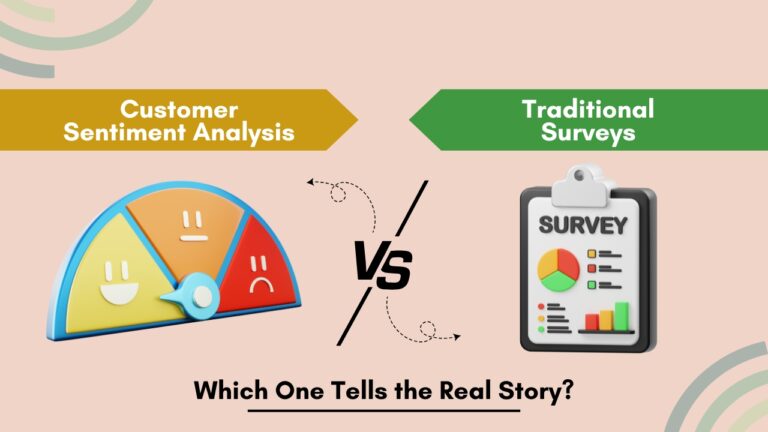
Also Read: Customer Sentiment Analysis Vs Traditional Surveys
2. Emotional Loyalty vs. Behavioral Loyalty:
Every loyalty is not created equal.
- Behavioral loyalty is when a customer keeps buying because it’s easy or convenient (for example: default grocery store).
- Emotional loyalty is when a customer keeps buying because they genuinely like, trust, or even identify with the brand.
Brands with emotionally connected customers have a deeper moat. Such customers not just shop – they become brand advocates, defenders, and promoters.
Also Read: How AI is improving table turnover-rate in restaurants
3. How Brands Build Emotional Bonds:
Brands develop emotional bonds by creating experiences that go beyond transactions. It includes personalized interactions that make customers feel understood, consistent service that builds trust, and shared values that aligns with customer beliefs.
Whether it’s remembering a name, standing up for a cause, or delivering a suspenseful moment of delight – every interaction shapes perception. Emotionally connected customers aren’t just satisfied – they are loyal advocates who stick around, even when competitors offer more.
Emotional loyalty is earned through empathy, trust, and human connection – and it’s the secret weapon behind the world’s most beloved brands.
Customers feel emotionally connected to brands when they experience:
- Personalized interactions: when they get their customers.
- Reliability: when they always deliver as per customer requirement.
- Shared values: when the brands about what their customers care about.
- Positive memories: when the brands make their customers feel special.
Every touchpoint – marketing, customer service, product experience – either builds or breaks that emotional bond.
Also Read: Business Intelligence for Restaurants
4. Why it’s Essential:
In competitive markets, most products are often similar. But what sets great brands apart is the emotional connection they develop.
And the only way to measure that at scale? Customer sentiment analysis.
Also Read: How do Machine Learning and Artificial Intelligence Help Businesses
How Sentiment Analysis Helps Identify Loyal vs. At-Risk Customers:
Not all loyal customers shout their love from the rooftops – and not all unhappy customers fill out a complaint form. That’s where sentiment analysis comes to your rescue and acts as a powerful lens for identifying who is with you – and who might be searching for other alternatives.
Using AI and Natural Language Processing(NLP), sentiment analysis tools scans your customer feedback – reviews, social posts, support tickets, chats – and determines emotional tone.
What It Reveals:
1. Loyal Customers:
Use emotionally positive language like “love”, “always”, or “favorite”. They leave good reviews, express brand pride, and forgive small mistakes.
2. At-Risk Customers:
Show rising frustration through words like “used to”, “disappointed”, or “not like before”. They may still buy – but the emotional connection is declining.
By identifying shifts in tone, frequency, or language patterns, sentiment analysis tools help you to:
- Retain your customers by intervening early.
- Prioritize follow-ups with at-risk segments.
- Recognize brand champions for advocacy or loyalty rewards.
The emotional tone behind a comment tells you what a purchase history never will.
So, want to start turning insights into action?Let’s explore the data sources that power sentiment analysis.
Also Read: Benefits of Supply Chain Optimization for Businesses
Sources of Customer Sentiment Analysis:

Customer sentiment is available in more places than you might even think – and knowing where to look is half the battle. From good praise to subtle frustrations, each feedback contains emotional signals. So, the best way is to capture them from the right channels.
Below are the top sources of sentiment data for identifying loyalty patterns – and what to prioritize.
1.Online Reviews(Google, Yelp, Amazon):
Customers often express their honest feelings about a product or service in reviews. These are high-impact sentiment sources, especially for restaurant brands, retail brands, salon brands.
Also Read: The Importance of Customer Analytics in Retail
2.Social Media(Twitter/X, Instagram, Facebook):
Social media captures real-time emotions, as customers mostly tag or mention brands during moments of excitement, frustration, or disappointment.
Also Read: Social Media Marketing for Restaurants
3. Customer Support Chats and Call logs:
Customer support interactions hold rich emotional clues. Tracking customer tone and language can reveal signals of frustration, confusion, or satisfaction.
Also Read: Key Metrics Restaurant Owner Should be Tracking
4. Open-Ended Survey Responses:
Open-ended responses in surveys often reveal emotional insights that structured ratings simply can’t capture.
5. Product Reviews and Q&A Sections:
Most customers often express satisfaction, frustration, or regret in product reviews on your eCommerce site or third-party platforms.
So, are you ready to decode what actually drives – or damages – loyalty? Now, let’s explore the emotional triggers.
Sentiment Triggers: What Makes or Breaks Loyalty?
Customer loyalty does not just depend on what you sell – it depends on how customers feel at key moments. Every touchpoint is a chance for a brand to either build trust – or break it.
Such moments are called sentiment triggers – interactions that leave a strong emotional impact, positive or negative.
What Strengthens Loyalty?
Certain experiences trigger positive sentiment that reinforces brand love:
- Surprise and Delight: A handwritten thank-you note, an unexpected freebie, or early access to a product.
- Speed and Convenience: Fast checkouts, quick deliveries, easy returns.
- Empathetic Support: Agents who listen, understand, and resolve problems without the script.
- Recognition: Personalized recommendations or loyalty rewards that feel earned and thoughtful.
Such moments spark emotions like gratitude, excitement, and trust – that translate into repeat business and advocacy.
Also Read: How Livelytics Help Retailers Reduce Operational Costs
What Damages Loyalty?
On the other side, certain interactions trigger negative sentiment that puts loyalty at risk:
- Unresolved Issues: When a complaint goes ignored or is not followed up.
- Broken Promises: Missed delivery dates, out-of-stock items after confirmation.
- Cold Interactions: robotic replies, lack of empathy, or scripted support.
- Lack of Personalization: feeling like “just another customer”.
These create feelings of frustration, betrayal, and indifference, which often might lead to disturbances.
Real-Time Action: Responding to Negative Sentiment Before Loyalty Breaks:
Negative sentiment can spread faster than positive – and if left unchecked, it takes away trust and loyalty. So, what is the good news?You can catch it before it causes damage.
With sentiment analysis tools, brands can monitor feedback in real time – from social media tweets to support chats – and indicate emotionally charged language like “frustrated”, “never again”, or “disappointed”. Such early warnings allow you to act immediately, not weeks later in a quarterly review.
A prompt, personalized response can convert a critic into a fan. Even if it’s a public reply, a private follow-up, or a surprise discount to make things right – speed and empathy are everything.
Nevertheless, every minute you wait is a minute closer to losing a loyal customer. Real-time sentiment tools empower your team to intervene when it matters most – in the moment.
Also Read: Real-Time analytics why does your business needs it
Real-Life Case Studies : Brands Winning Loyalty with Sentiment:
- Starbucks uses sentiment analysis to track feedback across mobile orders and social media. So, whenever customers complained about inaccurate drink orders, then the brand adjusted store workflows – enhancing accuracy and boosting loyalty scores.
- Chewy, the pet supply brand, uses emotional hints from chats and emails to send surprise gifts and handwritten notes after pet loss – turning emotional moments into lasting connections.
- Zara monitors sentiment in product reviews to identify trends such as fit issues. Quick design fixes on the basis of emotional insights often lead to fewer returns and stronger brand trust.
Also Read: How Businesses are adopting to AI in decision making
Building a Sentiment-Driven Loyalty Strategy:
A sentiment-driven loyalty mostly goes beyond points and purchases – it builds trust through emotional intelligence. It starts by actively listening especially to what customers are saying in reviews, support chats, and social media.
Use AI-powered sentiment analysis to determine positive, negative, and neutral emotions in real time. Next, segment your audience on the basis of emotional patterns: identify brand advocates, silent supporters, and at-risk customers.
Engage each group differently – celebrate advocates, re-engage neutral, and quickly address issues from the frustrated customers. Then, customer experience with those insights.
From personalized outreach to proactive issue resolution, every action must reflect what customers feel- not just what they do. Finally, close the loop. Make sure that your customers know that you heard them. When your customers feel valued, loyalty deepens.
By keeping sentiment at the heart of your strategy, you are not just tracking behavior – you are earning hearts.
Also Read: Data-Driven Social Media Strategies
Tools and Technologies to Power your Loyalty Engine:
In order to build a sentiment-driven loyalty engine, you need more than just good intentions – you need the right tools and technologies. Today’s tools help you to listen at scale, interpret emotion, and act with precision.
1. Sentiment Analysis Platforms:
Tools like MonkeyLearn, Lexalytics, IBM Watson, or Google Cloud NLP analyze unstructured text such as reviews, chats, and social media and categorize sentiment by tone, emotion, and intensity.
Also Read: Why does every small business needs analytics
2. Social Listening Tools:
Platforms like Brandwatch, Sprout Social, or Hootsuite Insights track real-time conversations about your brand across digital channels. It is the perfect choice for spotting sentiment trends early.
Also Read: Is Email Marketing for Restaurants Still a Good Choice
3. Customer Experience Dashboards:
Tools like Qualtrics, Medallia, or Zendesk CX unify feedback data with sentiment scoring, providing teams an actionable view of loyalty drivers across the customer journey.
Also Read: Business Intelligence for Marketing
4. CRM Integration:
While connecting sentiment data to platforms like Salesforce or HubSpot allows for real-time segmentation – so you can send the right message to the right customer at the right time.
The secret to loyalty is not any data any more – it’s the emotion behind it. With such tools, you can convert feelings into strategy.
Also Read: How to Set-up Key Performance indicator for Businesses
Pitfalls to Avoid in Sentiment – Based Loyalty Programs:
Though sentiment analysis is powerful, missteps can weaken your loyalty strategy. Look out for these:
1. Ignoring Context – AI can misinterpret sarcasm or slang without human review.
2. Overreacting to one comment – Do not change strategy on the basis of isolated feedback.
3. Neglecting Neutral Voices – Overlooking neutral feedback means missing insights from the silent majority – those whose opinions are not extreme but still shape the overall customer sentiment loyalty.
4. Failing to Act on Insights – Ignoring insights without taking any action signals to customers that their feedback does not matter, ultimately spoiling trust and weakening brand loyalty.
5. Using Sentiment Alone – It is essential to combine sentiment with behavioral and transactional data for a fuller picture.
Try to balance technology with empathy – and avoid letting automation override human connection.
Future of Loyalty – Predictive Insights and Emotional AI
The future of loyalty is emotional, intelligent, and proactive. With Emotional AI and predictive analytics, brands can interpret not just how customers feel – but what they are likely to do next.
Below are 5 key developments to watch:
1. Emotion Forecasting – predict customer sentiment trends even before they surface.
2. Churn Prediction – Indicate customers at emotional risk of leaving.
3. Real-Time Personalization – Adjust experiences for the customers on the basis of their mood.
4. Proactive Engagement – proactively intervene even before frustration escalates.
5. Deeper Loyalty Segmentation – identify emotional advocates, not just repeat buyers.
Loyalty will soon be led by empathy – on a larger scale.
Conclusion:
In an era where competition is just a click away, loyalty is no longer about transactions – it’s about gaining customer’s trust. Customers in today’s times are emotionally aware, digitally connected, and quick to change preferences.
So, to stay ahead, brands must move beyond outdated loyalty models and start working on what really drives repeat engagement: emotion.
This is where customer sentiment analysis becomes a game-changer. It converts scattered feedback into meaningful insights, allowing brands to understand not just what customers say, but how they feel. And once you can understand emotion, you can respond with empathy, relevance, and precision.
From identifying at-risk customers to recognizing your biggest fans, sentiment data empowers brands to be proactive – not reactive. It allows teams to resolve customer issues before they escalate, personalize communication on the basis of mood, and celebrate loyalty in ways that feel genuine.
The future of loyalty belongs to brands that listen deeply, act quickly, and connect emotionally. By embracing sentiment analysis, you are not just tracking data – rather you are building relationships, one feeling at a time.
Leading loyalty means making your customers feel heard, valued, and understood – at every point.
Nevertheless, the most powerful loyalty programs are not built on points – they are built on connection. If you still have any query for boosting brand loyalty with customer sentiment analysis, feel free to reach us at Livelytics expertise and Book a Free Demo, we are more than happy to assist you.