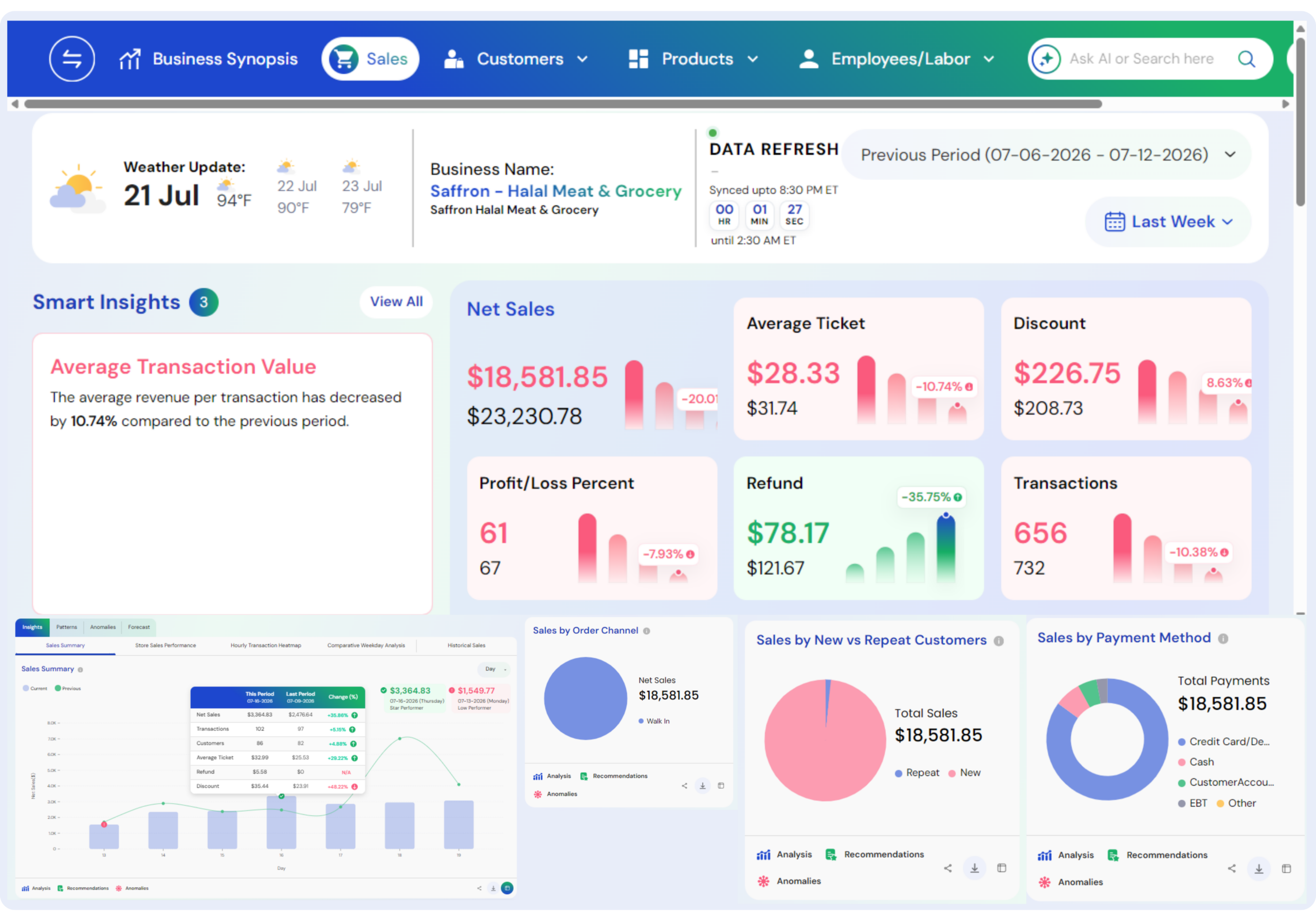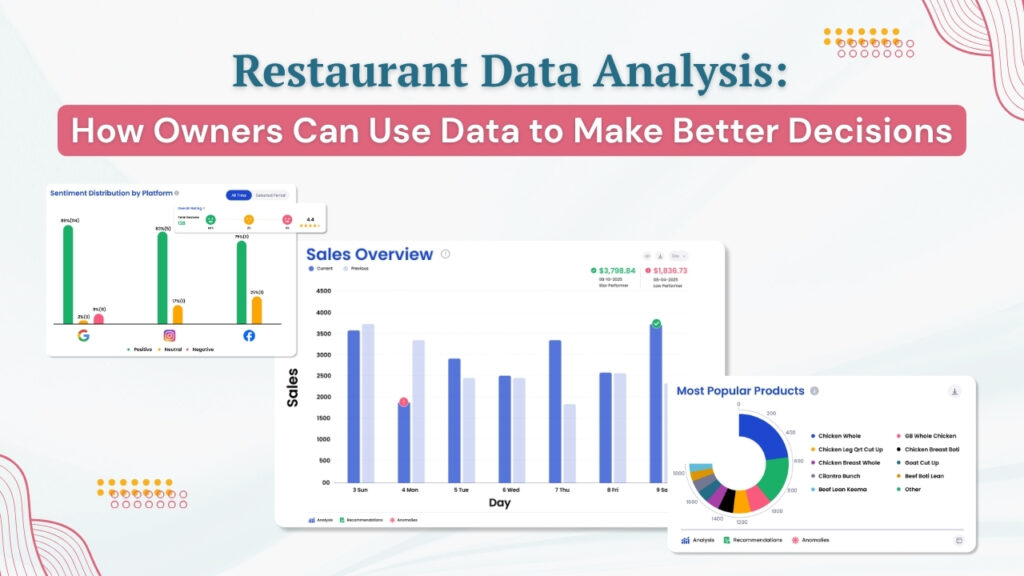

In today’s highly competitive restaurant industry, restaurant data analysis is essential for restaurant owners who want to increase their profits and operate efficiently.
Everyday restaurants create large amounts of data from sales reports, customer behavior, inventory tracking, labor costs, and menu performance.
When this data is collected accurately, it helps owners go beyond guesswork and helps restaurants to make smarter, faster, and confident decisions.
Instead of depending only on instincts, businesses can use real numbers to understand the strategies which are working, underperforming, and the areas that require improvements.
For modern restaurants, data-driven decision making may impact every aspect of the business. This helps restaurant owners to identify their best-selling dishes with menu analysis, track food wastage with inventory management data.
Further it helps restaurants to improve staffing through labor analytics, and understand customer preferences through customer data insights.
Such data analysis helps restaurants to control their experiences, improve service quality, and increase overall profits.
So if you are adjusting pricing, reducing food waste, planning promotions, or improving table turnover, the right data shows opportunities that may otherwise get missed.
The rising importance of restaurant analytics is linked to changing customer expectations. Because guests now expect better service, personalized experiences, and consistent quality.
Using business intelligence helps restaurant owners to respond to changing restaurant patterns and make decisions based on facts instead of assumptions.
Whether you are running a small cafe, multi-location chains, using restaurant performance metrics helps restaurants to implement efficient operations and stronger long-term strategies.
This blog will walk you through how restaurant data analytics helps restaurant owners to make better decisions, improve efficiency, profits, and stay ahead in a competitive market.
When restaurants have the right approach, data can become one of the most powerful tools for restaurant success.
Also Read: A Complete Guide to Data Analytics for Restaurants
What Is Restaurant Data Analysis?
Restaurant data analytics involves the process of collecting, organizing, and interpreting data from daily restaurant operations which helps them to make smarter business decisions.
Data is collected from different sources like POS systems, online ordering platforms, inventory tools, customer reviews, loyalty programs, reservations, and marketing campaigns.
Analyzing such data helps owners to understand how well their business is performing on a daily basis. Rather than relying on assumptions or guesswork, data analysis helps restaurant owners to gain insights backed by real numbers.
For instance, sales data reveals the top selling items, customer data reveals customer buying habits, preferences, and peak dining hours. Inventory data helps to reduce waste and control food expenses.
The main aim of restaurant data analytics is to turn raw data into actionable insights. These insights help owners to improve efficiency, reduce expenses, improve profits and customer satisfaction, and lets them make confident decisions that support long-term restaurant growth and success.
Also Read: How Small Business Get Out of Data Analysis
Why Data Analysis Matters for Restaurant Owners
1. Eliminates Guesswork
Every day restaurant owners have to make many decisions that involve setting menu prices, staff scheduling, and managing inventory. When they decide only on their own intuition then the risk of mistakes is high.
Data analysis removes uncertainty while implementing strategies by providing clear facts and trackable insights.
Restaurants instead of assuming their popular dishes or guessing about the staff availability, restaurant owners can rely on sales patterns, customer patterns, and performance reports.
It helps restaurants to make smarter and reliable decision-making. When restaurants have accurate data, restaurants can quickly respond to changes in demand, identify problems early, and make decisions confidently.
Also Read: Benefits of Data-Driven Decision Making
2. Improves Profitability
Profitability is one of the biggest concerns for any restaurant. Implementing data analysis is essential for improving profits. Reviewing sales reports and cost data, helps restaurant owners to identify the menu items which give the highest profits, and the menu items which are causing losses.
This analysis helps restaurant owners to track food waste, portion sizes, and identify unwanted expenses. Labor data helps to ensure that staffing expenses remain under control while inventory data helps restaurants to prevent over-ordering and food wastage.
Even if there are small improvements in these areas it helps restaurants to make a huge difference in operations and revenue. Data analysis allows restaurants to focus on strategies that are profitable and make essential changes which support long-term financial growth.
Also Read: Restaurant Profit Margin Analytics Tool to Boost Profits
3. Enhances Customer Experience
Customer satisfaction is also essential for restaurants to achieve repeat business and long-term success. Data analysis helps restaurant owners to understand customer behavior, their food preferences, and also customer expectations.
Tracking order history, dining times, feedback, and reviews, helps restaurants to understand what customers enjoy most and the areas that require improvement.
This helps restaurants to create personalized promotions, improve menu offerings, and deliver better service. When restaurants know their customers clearly, it helps them to offer an enjoyable and consistent experience to customers.
Also Read: AI Revolutionizes Customer Experience in Restaurant Industry
4. Increases Operational Efficiency
For running a restaurant smoothly it is essential for restaurants to have a strong coordination between staff, systems, and daily processes. Data analysis helps restaurants to improve efficiency by identifying the areas that are causing delays, errors or challenges.
Owners can use this data to optimize staff schedules, reduce wait times, improve kitchen workflows and manage inventory effectively. It often leads to faster service, less errors, and better communication across the team.
Efficient operations helps to not just increase customer satisfaction but also reduce stress for staff and reduce unwanted expenses. When every part of the restaurant works smoothly, then the overall performance of the restaurant also improves.
Also Read: How Livelytics Helps Retailers Reduce Operational Costs
5. Supports Growth and Scalability
Restaurants who are willing to grow to further locations, data analysis provides a strong foundation for expansion. This helps restaurant owners to track performance, compare their results across different locations, and maintain consistent operations while the business grows.
Data helps restaurants to identify the strategies that are successful easily, repeat the strategies that work, and fix weak areas of restaurants before they become larger issues.
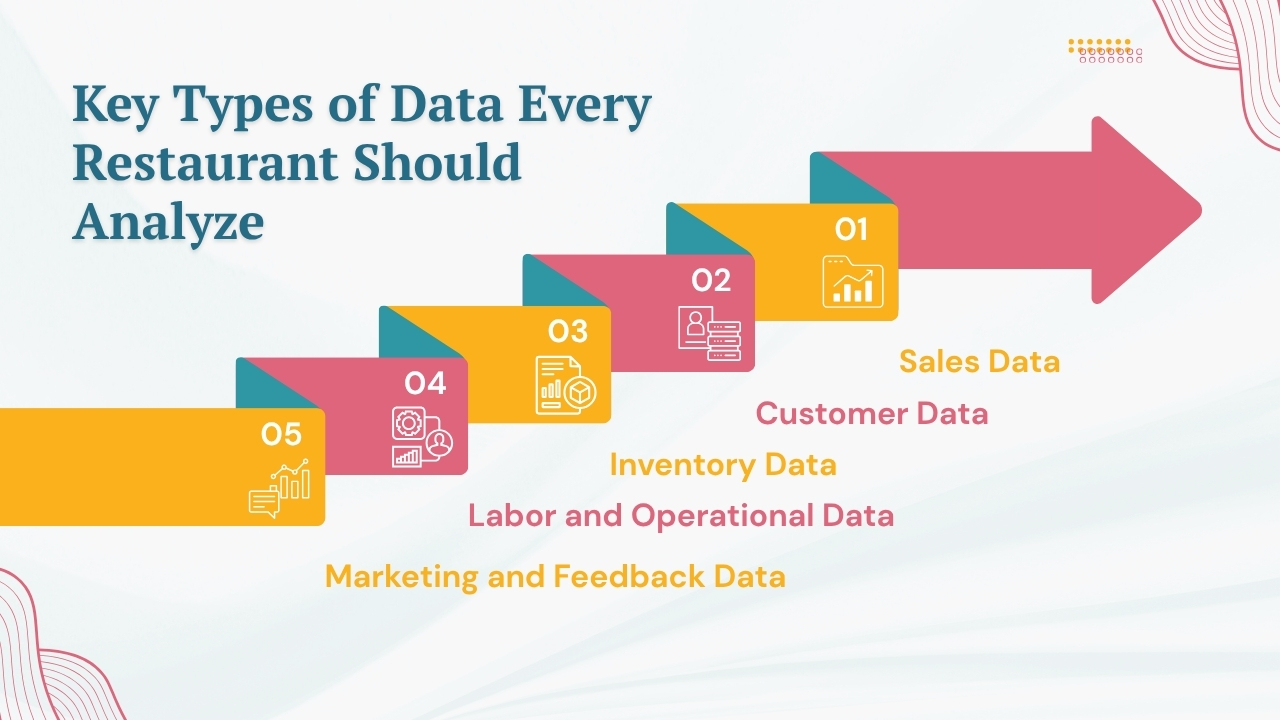
Key Types of Data Every Restaurant Should Analyze
1. Sales Data
Sales data is one of the most important data that every restaurant should analyze. This data shows the food items that customers are ordering, when they are buying, and the amount of revenue that each item generates.
Reviewing sales reports on a daily, weekly, and monthly basis helps restaurant owners to identify best-selling menu items, know less sold items, peak hours, and seasonal patterns.
This data helps restaurants to make better decisions regarding menu planning, pricing, and promotions.
Sales data reveals the days or time periods that bring the highest profits, which helps restaurant owners to prepare themselves effectively. When this data is used correctly, it becomes the foundation for smarter and profitable decision-making.
Also Read: How to Increase Restaurant Sales Without Advertising
2. Customer Data
Customer data helps restaurants to understand their customers well. This data includes order history, dining preferences, average spending, visit frequency, and customer feedback.
Analyzing their customer behavior helps restaurants to identify the strategies that work well with the customers and the factors which influence guests for repeat visits.
Using customer data, restaurants can develop personalized promotions, improve customer loyalty programs and also provide an excellent dining experie
For instance, if customers frequently order certain dishes, or visit restaurants during specific times, restaurants can customize their offers and provide services as per customer preferences.
Understanding customer data helps restaurants to develop stronger relationships with customers, improve customer satisfaction, and increase long-term loyalty.
Also Read: Customer Analytics for Restaurants
3. Inventory Data
Inventory data helps restaurants to control expenses and reduce food wastage. This data shows how much inventory is being used, about the food ingredients that get used quickly, and the areas that are causing losses.
Restaurant owners can use this inventory data to track ingredient usage, avoid over-ordering, and reduce food spoilage. This helps to ensure that popular menu items remain available and avoid unnecessary stocking of inventory.
When restaurants compare this inventory data with sales data helps restaurant owners to identify inconsistencies that indicate waste, poor portion control, or theft.
When inventory is analyzed properly, it helps to improve efficiency, protect profit margins, and also support better purchasing decisions.
Also Read: AI for Restaurant Inventory
4. Labor and Operational Data
Labor and operational data helps restaurants to manage their daily performance effectively. This data includes staff schedules, labor costs, service speed, table turnover, order accuracy, and kitchen efficiency.
When restaurants understand this data, it helps them to determine whether they are overstaffed or understaffed during specific hours and identify when service delays happened.
Operational data helps to improve teamwork, reduce errors, and smooth workflows between the front and back of hours. When restaurants implement better labor planning and smoother operations it can lead to faster service, lower costs, and provide a better customer experience to customers.
Also Read: How Data Analytics Improves the Measurement of Employee Performance
5. Marketing and Feedback Data
Marketing and feedback data reveals how well a restaurant is attracting and retaining their customers. This data includes campaign performance, coupon usage, online engagement, customer reviews, and survey responses.
Analyzing this data helps restaurant owners to understand the marketing strategies which are working and the strategies which require improvement.
Customer reviews and feedback also provide valuable insight into customer satisfaction, service quality, and menu appeal. It helps restaurants to improve their brand image, refine promotions, and implement customer-focused strategies which drive growth.
Also Read: Business Intelligence for Marketing
Key Metrics Restaurant Owners Should Track
Below are key indicators that provide valuable insights into sales, operations, and customer satisfaction.
1. Average Order Value (AOV)
It is one of the crucial metrics to be tracked for restaurants. Average Order Value helps to know the amount that every customer spends on average per order.
When the Average Order value is high, it indicates more profits probably without increasing customer traffic.
Restaurants may use upselling techniques, offer meal combos, promote add-ons, and encourage premium menu choices for improving average order value. Because even if there is a small increase in Average Order Value it may have a good impact on overall profits.
Also Read: Business Intelligence for Restaurants
2. Food Cost Percentage
Food Cost Percentage is another crucial metric as it measures the cost of ingredients as compared to food sales. When food costs are high, profit margins may reduce rapidly.
Tracking food cost percentage helps restaurant owners to identify waste, control portion sizes, adjust supplier choices, and price menu items effectively. Maintaining a high food cost percentage is crucial for ensuring long-term profits.
Also Read: How to Calculate Food Cost Percentage
3. Table Turnover Rate
For dine-in restaurants tracking table turnover rate is crucial. This metric helps restaurants to know how frequently tables are occupied, served, and made available for new guests.
When table turnovers rates are faster, it can increase daily revenue even during busy hours. It is essential to track this metric which helps owners to identify service delays, improve seating strategies, and optimize staff performance.
Also Read: Optimize Table-Turnover Using Analytics
4. Customer Retention Rate
Customer retention rate tracks how many guests return back to the restaurants with time. For restaurants, repeat customers are more profitable rather than acquiring new customers.
If the customer retention rate is high, it indicates customer satisfaction, loyalty, and good dining experience. Restaurants can improve customer retention by providing good service, loyalty programs, personalized offers, and delivering consistent food quality.
Also Read: Leverage AI To Collect Customer Insights
5. Order Accuracy Rate
Order accuracy rate directly impacts customer trust and satisfaction. If restaurants deliver incorrect orders it may lead to complaints, refunds, and poor reviews from customers.
It is essential for restaurants to track order accuracy that helps restaurant owners to identify the areas where problems are happening in the kitchen, POS system, or staff communication.
Improving order accuracy rate helps restaurants to improve service quality and a stronger restaurant image.
Also Read: A Complete Guide for Data Analytics for Restaurants
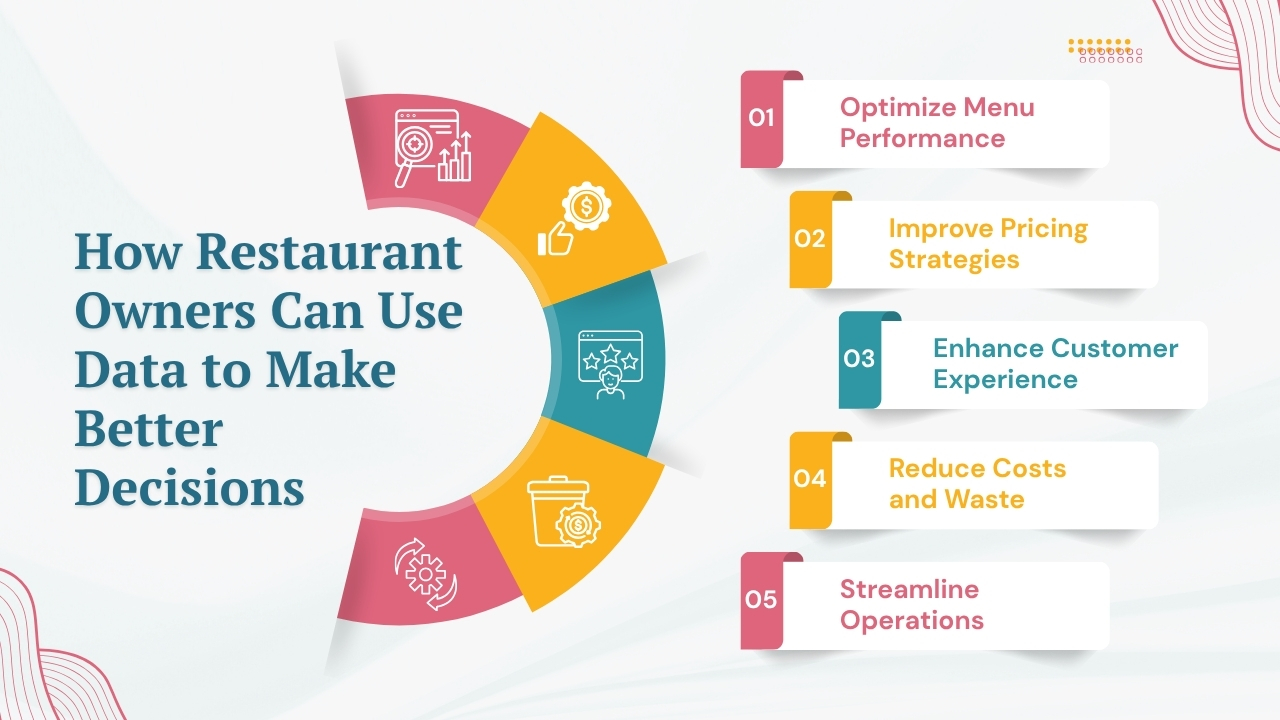
How Restaurant Owners Can Use Data to Make Better Decisions
1. Optimize Menu Performance
One of the effective ways for restaurants to use this data is in improving menu performance. It is essential for restaurants to ensure that every item on the menu contributes to customer satisfaction and profits.
By analyzing sales reports, helps restaurants to identify best-selling dishes, low-performing menu items, seasonal patterns, and high-margin products. This helps restaurants to understand what customers enjoy and the menu items that drive revenue.
This data helps restaurants to compare their most popular items to most profitable menu items. Because though dishes may sell frequently but may generate low profits due to high ingredient costs, other dishes may generate better profits despite lower sales.
This process also known as menu engineering helps restaurants to decide which items they require to promote, adjust, or remove. Additionally, data reveals trends such as busy ordering times or seasonal demand which allows restaurant owners to design smarter menus and provide limited-time offers.
Also Read: Optimizing a Restaurant Menu With AI Powered Data Analytics
2. Improve Pricing Strategies
Pricing is crucial for any restaurant who wants to be successful. Data analysis helps restaurant owners to make informed decisions. When restaurants set low prices for their food item it can reduce profits.
But when restaurants set high prices for their menu items it may discourage customers from ordering. This data helps restaurants to maintain the balance between demand and profits.
By analyzing sales patterns, restaurant owners may understand the way customers react to any price changes. For instance, if a popular menu keeps selling well even after a price increase, then it may indicate that restaurants may have chances to improve profits.
Data helps to identify premium products or price sensitive items which helps restaurants to know about customers who are willing to pay more for restaurants.
Restaurants when combine pricing with food cost analysis helps restaurants to manage rise in ingredient costs. This helps restaurant owners to adjust their pricing, portion sizes, or ingredients to maintain profits.
This data helps restaurants to develop smarter promotions by revealing discounts or offers that actually increase order value. Instead of restaurants randomly deciding prices, restaurants can use data to create strategies that improve revenue while also keeping customers satisfied.
Also Read: Retail Pricing Strategy
3. Enhance Customer Experience
Customer experience is an important factor that decides whether the restaurants achieve success in the long run. This data provides valuable insights about customer behavior.
By analyzing data from POS systems, loyalty programs, online orders, and customer feedback helps restaurants to understand their customer preferences, their spending habits, and visit frequency.
This information helps restaurants to develop personalized marketing and improved service. For instance, restaurants may provide targeted offers to regular customers based on their favorite dishes or dining habits.
Restaurants can use this data and customize promotions for customers like offering lunch deals for weekday visitors or family bundle deals for group diners.
Customer feedback and reviews are also important for data analysis. It helps restaurants to identify long wait times or inconsistent quality which helps restaurant owners to resolve these problems early.
At the same time, when restaurants receive positive feedback from restaurants it reveals that their strengths can be reinforced. Using this data to improve service, helps restaurants to bring stronger relationships with customers, increase customer loyalty, and encourage repeat visits.
Also Read: AI Revolutionizes Customer Experience in Restaurant Industry
4. Reduce Costs and Waste
Managing expenses effectively is essential for profits, and data analysis helps restaurants to identify the areas where the money is getting lost.
Restaurants deal with various expenses which includes ingredients, labor, and operations, and data provides clarity on inefficiencies.
Inventory data helps restaurants to track inventory overspending and reduce waste. Tracking stock levels , stock usage, food spoilage helps restaurants to avoid over-ordering of stock and reduce food waste.
This data can also reveal concerns such as inaccurate portion control or inventory mismatches that helps to improve overall management.
Labor data further supports cost control. Because when restaurants compare their sales to staffing schedules, it helps restaurant owners to prevent overstaffing during slow hours and understaffing during peak hours.
Operational data also reveals inefficiencies like long preparation times or frequent order errors. Resolving these issues, helps restaurants to reduce unwanted expenses and create a sustainable business.
Also Read: Cost Effective AI Solution for Restaurants
5. Streamline Operations
Implementing restaurant operations effectively is essential for offering fast service and maintaining service quality. Data helps restaurant owners to understand how well their operations are performing and the areas which require improvement.
Operational data may show the challenges faced by restaurants in food preparation, order processing, delivery times, and table turnover.
For instance, if service becomes slow during busy hours, data can help restaurants to identify where the problems are happening due to staffing, kitchen workflow, or low equipment.
These insights help restaurant owners to improve workflows, simplify processes, and assign work to their staff more effectively. This data also helps restaurants to measure the impact of changes and also ensure continuous improvement.
In multi-location restaurants, performance data is crucial that helps restaurants to compare different locations and identify best strategies which can be applied across all locations.
Streamlining operations uses data which helps restaurants to improve their speed, reduce errors, improve productivity, and deliver a better overall experience. It often leads to stronger restaurant performance and long-term growth in a competitive market.
Practical Steps to Implement Data Analysis
1. Choose the Right Tools
Data analysis begins by choosing the right data analysis tools for your restaurant. It is essential to have a reliable POS system and analytics platform that helps restaurants to collect and organize data effectively.
Ensure you select the tools which align with the size of your business, budget, and operational requirements. When the restaurants have right tools it helps them to track sales, customer behavior, and overall performance without adding more complications to daily operations.
Also Read: Choosing the Right AI Data Platform for Your Business
2. Collect Data
Once the restaurants have tools, it ensures that all systems are integrated properly and is capturing accurate data. This data includes sales, inventory, customer interactions, and staff performance.
It is essential that restaurants collect accurate data consistently because poor-quality data can often lead to incorrect decisions and missed opportunities.
3. Analyze Data
Restaurants may use dashboards, reports, and analytics tools which helps them to analyze the data regularly. Then understand the patterns, trends, and performance insights about best-selling items, busy hours, and customer preferences.
This step helps restaurants to convert raw data into impactful insights that support better decision-making.
4. Take Action
Then restaurants may apply the insights gained from data analysis to improve operations of your restaurant. These strategies may be adjusting menu items, pricing strategies, staffing schedules, or marketing campaigns. When restaurants start taking action is when the data begins to add value to operations.
5. Monitor Results
It is essential for restaurants to continuously track performance after making changes. Track results, identify improvements, and adjust strategies which are required to ensure growth and efficiency of restaurants.
Conclusion
Restaurant data analysis is no longer a luxury; instead it is an essential to implement data analysis for restaurants who want to stay competitive and achieve long-term success.
In an industry where profit margins are less and customer expectations keep increasing, it is essential for restaurants to make decisions based on accurate data to improve their profits.
Rather than depending on guessing, restaurant owners can use data to gain an understanding of their business performance and customer behavior.
Analyzing important areas like sales trends, menu performance, pricing strategies, and operational efficiency, helps restaurant owners to identify opportunities for growth and identify areas which require improvement.
Data helps restaurants to highlight the dishes that are most profitable, when busy hours happen, and how customers interact with the business. It enables restaurants to make more informed decisions which directly impact revenue, cost control, and overall efficiency.
Technology also plays an important role in making data analysis accessible and actionable. With the help of modern POS systems, AI-powered tools, and real-time dashboards, restaurant owners can instantly gather insights and respond to changes in demand or operations.
These tools help to simplify complex data and convert them into impactful information which supports smarter planning.
Ultimately, the true value of data is when the data is used consistently. Restaurants who adopt a data-driven approach can improve decision-making, improve customer satisfaction, and build a stronger, more resilient business for the future.
If you still have any query about restaurant data analysis then you may book a free demo at livelytics and we are more than happy to assist you.