Running a restaurant successfully which is a highly competitive industry requires not just great food or service, but rather it is essential for restaurants to make data-driven decision making.
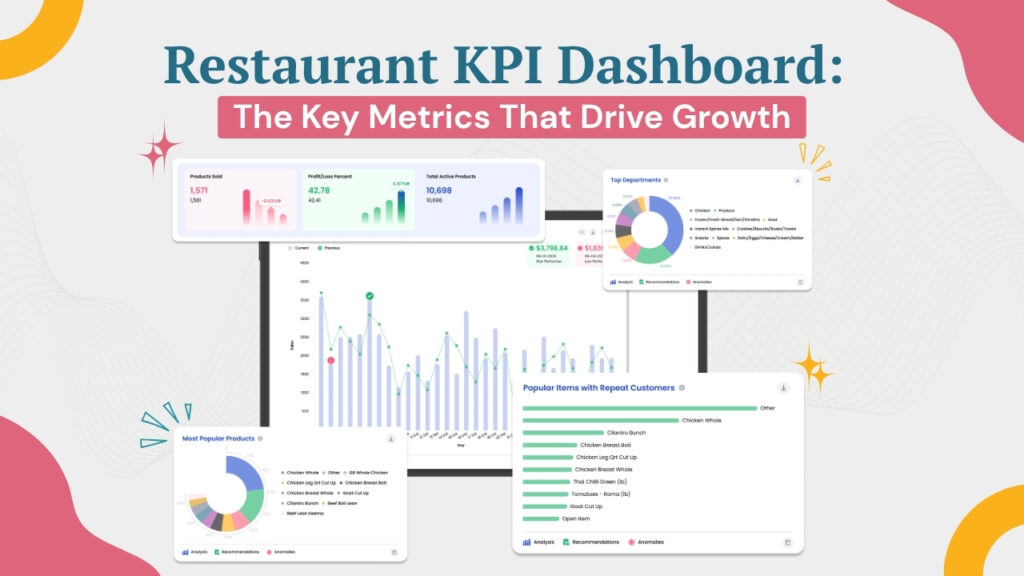
A Restaurant KPI Dashboard is a tool that helps restaurant owners to track their performance, track trends, and also find opportunities for growth.
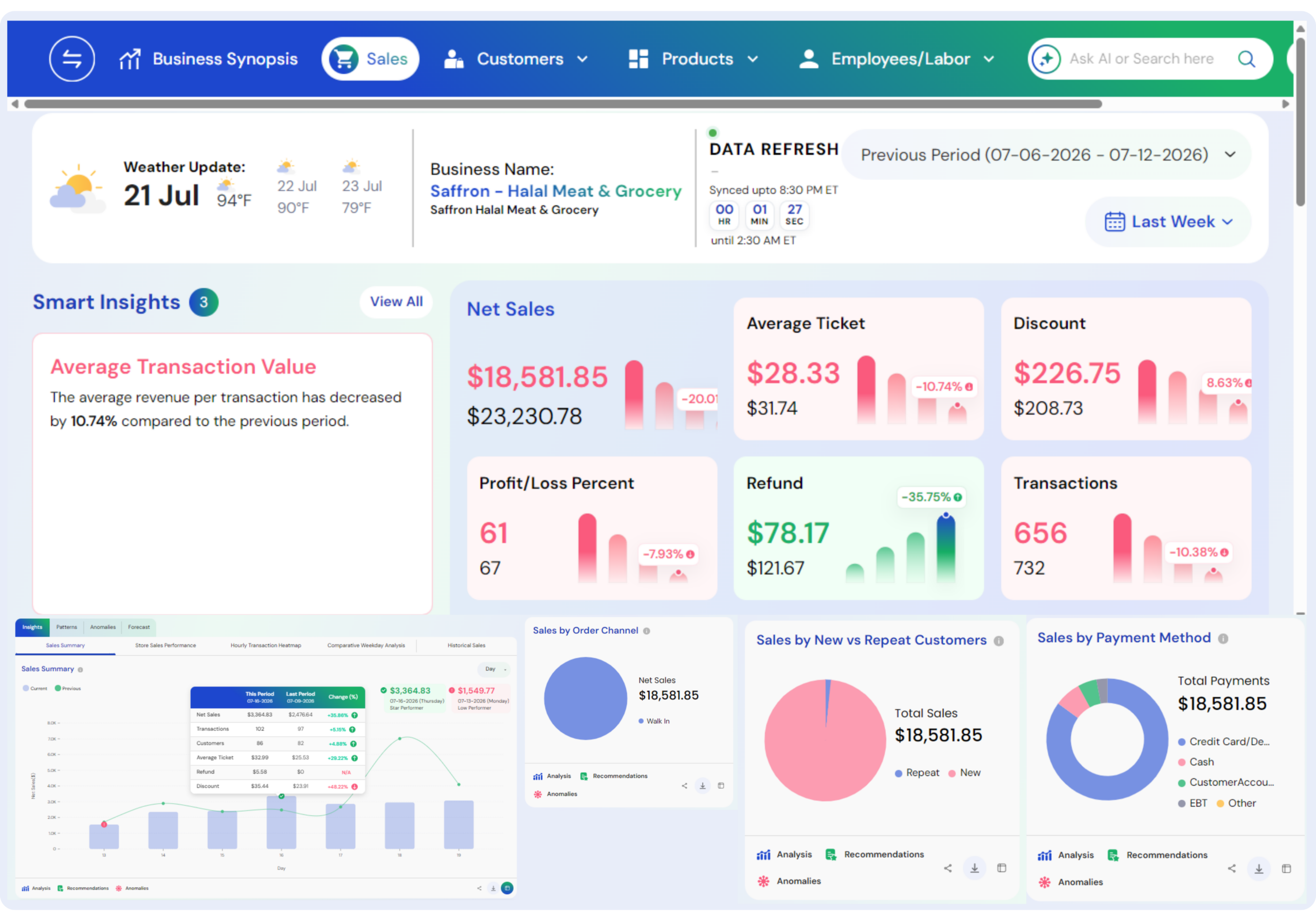
When data from different sources is combined into one place, a dashboard offers real-time visibility into the performance of a restaurant.
A KPI dashboard for restaurants tracks the crucial restaurant metrics like sales performance, food cost percentage, labor cost, average order value(AOV) and customer retention rate.
These crucial performance metrics provide valuable insights into profits, operational efficiency, and customer behavior. So restaurants rather than simply guessing, restaurant operators can make informed decisions that improve profits and streamline operations.
An effective restaurant analytics dashboard reveals restaurant patterns over time that helps them to identify their peak hours, popular menu items, and factors which are causing food wastage.
This helps restaurants to manage inventory smartly, better staffing decisions, and more effective marketing strategies. Additionally, tracking customer satisfaction, online reviews, and repeat visits ensures that you stay aligned with what your guests expect.
In today’s times when technology drives business success, using restaurant data analytics is not optional, instead it is a necessity. A powerful KPI dashboard not just simplifies complex data but also converts it into actionable insights.
When restaurants track the right metrics, then restaurants can improve profits, improve customer experience, and achieve sustainable long-term growth.
Also Read: How to Setup Key Performance Indicators KPIs for Your Business
What Is a Restaurant KPI Dashboard?
A Restaurant KPI Dashboard is a centralized tool which tracks, analyzes, and displays the crucial performance metrics of a restaurant at one place.
KPI or Key Performance Indicators are measurable values that help restaurants to check how well their business is able to meet its goals.
Restaurants instead of depending on manual reports or guesswork, a dashboard offers real-time insights which is required for making faster and smarter decisions.
These insights include financial data, customer behavior, operational efficiency, marketing performance, and staff productivity. When this data is presented through charts, graphs, and summaries, the dashboard helps restaurant owners to identify trends, issues, and track progress.
When restaurants have more visibility into daily performance, restaurants can improve efficiency, reduce costs, increase customer satisfaction, and support long-term growth and profits.
Also Read: Business Intelligence Dashboard for Data Collection
Why KPIs Matter for Restaurant Growth
KPIs or Key Performance Indicators is essential for restaurant growth because it helps restaurants to not understand sales performance, expenses, customer behavior, and operational efficiency in real time.
With accurate data insights, restaurants can make better decisions, reduce risks, and resolve concerns before they increase. Key Performance Indicators not just improve profits but also help to control food expenses, labor expenses, and food waste.
While customer-focused metrics reveal whether the guests value the food, service, or flavors the most which help restaurants to improve their service and customer retention.
Operational KPIs reveal service delays and inefficiencies which make daily restaurant processes smoother and more productive.
Most importantly, KPIs create a strong foundation for long term growth. Restaurants that track performance consistently are better prepared to grow, stay competitive, and achieve sustainable success in a quickly changing and demanding industry.
Also Read: How Data Analytics Help Restaurants Grow
Key Restaurant KPIs
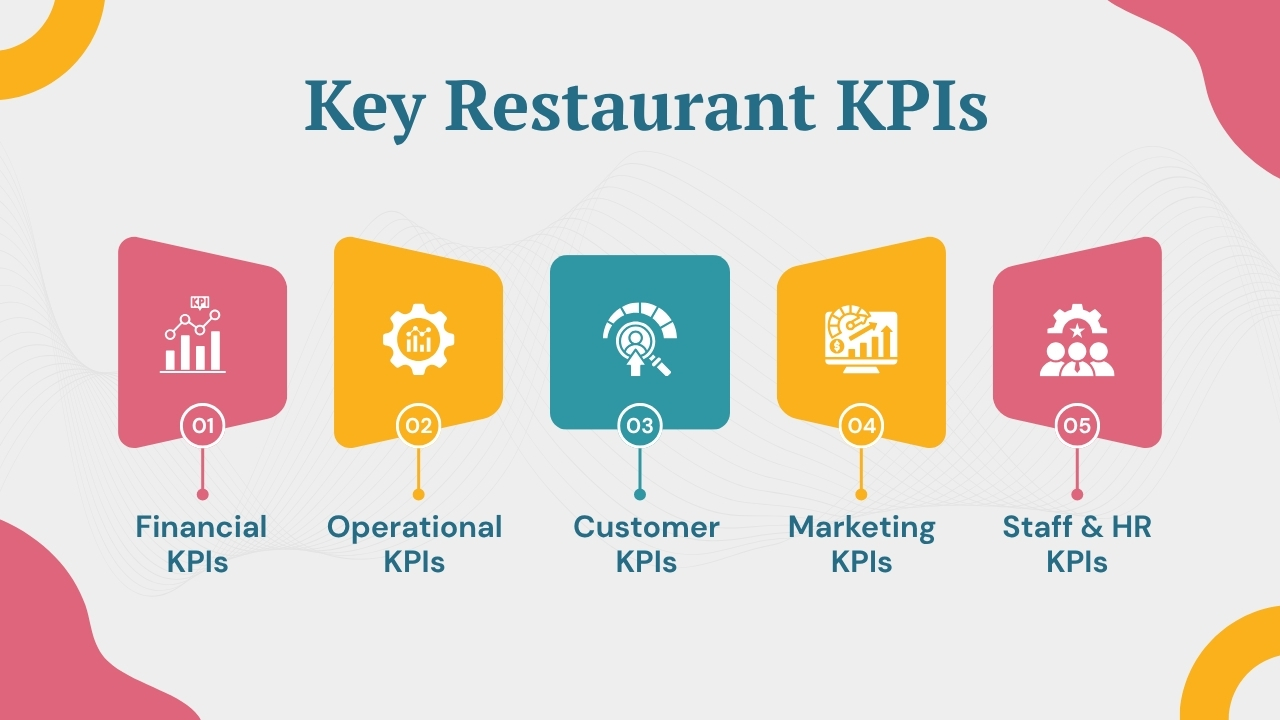
1. Financial KPIs
Financial KPIs reveal the way a restaurant is performing in sales, expenses, and profit. These metrics help restaurants to know if they are doing well financially, control expenses, and also make better decisions.
When restaurants track these metrics it helps restaurants to plan their operations effectively, set goals, and support long-term business growth and increase profits.
Revenue (Total Sales)
Revenue(Total Sales) is the total income that your restaurant makes over a certain time like daily, weekly, or monthly. This income restaurants usually earn from food, beverages, dine-in, takeaway, and daily services. Tracking this metric is crucial as it reveals the performance of your restaurants.
Also Read: How AI Helps in Boosting Restaurant Revenue and Profits
Why it matters
- Revenue(Total Sales) lets restaurants know about how well the business is performing or whether their operations are growing over time. By tracking sales patterns, you can identify peak hours, busy days, and seasonal patterns.
- This helps restaurants to assess the success of their promotions, menu changes, and marketing efforts which helps to make informed decisions which drive consistent growth.
Also Read: How Livelytics Can Help Restaurants Boost Revenue
Gross Profit Margin
- Gross Profit Margin reveals the profits restaurants make after spending on food and ingredient expenses. This metric is calculated by subtracting the cost of goods sold from total sales and then dividing the result by total sales.
- Tracking this metric is essential for restaurants because it helps to assess food pricing, cost control, and total profits that ensures that business is profitable and ensures sustainable financial performance.
Why it matters
- It is a crucial metric because it helps restaurants to track how well your menu is generating profit. A high gross profit margin indicates that your restaurant has better cost control and pricing strategies. While a low gross profit margin indicates that ingredient prices are high or poor pricing.
- Tracking this metric helps restaurants to adjust their menu prices, portion sizes, and better sourcing for high profits.
Also Read: A Complete Guide to Restaurant Business Analytics
Food Cost Percentage
- Food Cost Percentage measures the revenue which restaurants spent on ingredients. It is calculated by dividing the cost of ingredients by food sales and multiplying by 100.
Why it matters
- Restaurants by tracking this metric can maintain profits and control expenses. If the food cost percentage is high, indicates food waste, over-portioning, or high supplier costs.
- But if the food cost percentage is low, it may indicate that restaurants manage their ingredients and food costs well.
- Tracking this metric helps restaurants to adjust menu pricing, improve portion sizes, reduce food waste, due to which restaurants can ensure that restaurants operate efficiently and run profitable restaurants.
Also Read: How to Calculate Food Cost Percentage
Labor Cost Percentage
- Labor Cost Percentage measures how restaurant revenue is spent on employee income, salaries, and benefits.
- It is determined by dividing total labor costs by total sales and multiplying by 100, with most restaurants aiming for a range of 20% to 30%.
Why it matters
- Labor is one of the areas where restaurants spend their revenue the most as staffing is essential for running restaurants profitably. A high labor cost percentage indicates that the restaurant is overstaffing or reducing service quality.
- Tracking this metric helps restaurants to do better staff scheduling, balance workload, and maintain cost control and customer satisfaction.
Also Read: How Can Data Analytics Improve the Measurement of Employee performance
Prime Cost
- Prime Cost is one of the most important financial metrics in restaurant management. It is calculated using the formula Food Cost + Labor Cost, combining your two largest expenses into a single, powerful indicator of profitability.
Why it matters
- Tracking Prime cost lets restaurants know how well their restaurant is operating. As restaurants spend most of their revenue on food and labor, it is essential for restaurants to keep these expenses under control which helps restaurants to maintain high profits.
- A high prime cost indicates that profits which the restaurant is making are less despite strong sales. Tracking this metric helps restaurants to adjust their staffing, control food waste, and improve overall expenses.
Average Revenue Per Day
- Average Revenue Per Day reveals the amount of revenue that the restaurants generate on a usual day.
- It is calculated by dividing total revenue over a period by the number of days, helping you understand daily sales performance.
Why it matters
- Livelytics states that tracking this metric is essential because it helps restaurants to track their busy days, slow periods, and seasonal trends. When restaurants analyze their revenue daily helps restaurants to make smarter decisions about staffing, inventory, and promotions.
- For instance, having such insights help restaurants to schedule more staff on busy days and less staff on slow days. Tracking this metric helps restaurants to improve efficiency, operations, and ensure better financial performance.
Also Read: Restaurant Profit Margin Analytics Tool to Boost Profits
2. Operational KPIs
Operational KPIs measure the operational efficiency of restaurants each day. It tracks service speed, workflow, productivity, and staff coordination.
Tracking metrics like table turnover, order preparation time, and accuracy is essential as it helps restaurants to reduce service delays, improve operations, control expenses, and offer a smoother, consistent customer experience.
Table Turnover Rate
- Table turnover rate tracks how well a restaurant uses their tables.It is calculated by dividing the number of parties served by the number of tables.
- A high table turnover rate indicates that restaurants provide quick services, utilizes their space effectively, and increased revenue.
Also Read: Optimizing Table Turnover Using Analytics
Why it matters
Tracking table turnover rate helps restaurants to evaluate whether they are using their seating effectively. A higher table turnover rate indicates that more customers were served in less time that increased profits without increasing seating. While it also reveals that the restaurants have service speed and good staff coordination.
When restaurants improve their metric helps restaurants to reduce service wait times, improve profits, and offer a smooth, good dining experience.
Order Preparation Time
Order preparation time measures the duration that the restaurant takes to prepare and serve their order once when they place a food order.
Tracking this metric helps restaurants to evaluate the kitchen speed of restaurants which leads to improved workflow, reduced delays, and ensures that their customers receive food quickly and efficiency.
Why it matters
Order preparation time affects the way customers are satisfied with restaurant services. Because faster service leads to a better dining experience and also higher chances of repeat visits.
If there are delays while delivering food, it can frustrate customers and also receive poor reviews. Tracking this metric reveals kitchen efficiency by revealing workflow issues, staffing gaps, or food preparation delays which helps restaurants to improve speed, coordination, and operational performance.
Inventory Turnover
Inventory turnover measures whether a restaurant uses and replenishes its stock over a certain time. A high inventory turnover indicates restaurants are managing inventory efficiently, use fresh food ingredients, and better cost control which helps restaurants to ensure smooth kitchen operations and maintain profits.
Also Read: AI for Restaurant Inventory
Why it matters
Inventory turnover is important because it helps prevent food waste and ensures ingredients remain fresh. Regularly using and replenishing stock reduces the risk of spoilage and expired items. It also supports better cost control, improves food quality, and maintains consistency in dishes, leading to higher customer satisfaction and efficient kitchen operations.
Waste Percentage
Waste percentage measures the food wasted as compared to total food used. This metric helps restaurants to track any inefficiency, control expenses, and reduce unnecessary water which helps restaurants for better inventory management, improve profits, and more efficient kitchen operations.
Also Read: AI Solutions for Reducing Restaurant Waste
Why it matters
Livelytics states that tracking waste percentage is crucial as it helps restaurants to reduce unnecessary food expenses by identifying the reasons which are leading to food waste.
When restaurants control waste, restaurants can improve profits and use their resources efficiently. It supports sustainability efforts by reducing environmental impact, reducing landfill waste, and promoting responsible kitchen practices which are beneficial for the business.
Online Order Accuracy
Online order accuracy measures the count of orders accurately delivered as requested. Tracking this metric helps restaurants to track how well they process their orders, packaging, and delivery.
A high order accuracy indicates that there are less complaints, customer trust, and improved customer satisfaction which is helping restaurants to offer a smooth and reliable ordering experience.
Why it matters
Tracking online order accuracy is crucial for restaurants to ensure delivery and takeaway success as the customers expect their orders to be delivered accurately every time when they order.
If there are mistakes while delivering online orders may lead to complaints, refunds, and negative reviews. So a high online ordering accuracy builds trust, improves customer satisfaction, and encourages customers to repeat orders which reduces operational costs caused by errors and order corrections.
Also Read: The Blind Spots Costing Your Business More Than You Think
3. Customer KPIs
Customer KPIs measure whether your customers are satisfied and are loyal to your restaurant. It includes metrics such as satisfaction scores, repeat visits, and reviews.
Tracking these metrics helps restaurants to improve service, food menu, and overall customer experience. Because if the customers are happy then they may return, recommend your restaurants and support consistent growth due to which tracking these metrics is essential for achieving long-term success.
Customer Satisfaction Score (CSAT)
Customer Satisfaction Score (CSAT) whether customers are happy with the dining experience that your restaurants provide. It is collected through surveys or feedback forms.
It offers direct insights regarding service quality, food, and overall experience that helps restaurants to identify areas for improvement and maintain high customer satisfaction levels.
Also Read: Customer Sentiment Analysis for Multi-Location for Businesses
Why it matters
Tracking customer satisfaction scores is essential for restaurants because it helps restaurants to know about the direct feedback regarding the way customers perceive their experience.
It helps restaurants to identify strengths and also areas where restaurants require improvement in service, food quality, and ambiance.
When owners understand their customer opinions, restaurants can make better decisions, improve customer satisfaction, build loyalty, and create a more enjoyable and consistent dining experience.
Repeat Customer Rate
Repeat Customer Rate measures the percentage of customers who return to your restaurant. It is calculated as returning customers divided by total customers.
A higher repeat customer rate indicates restaurants have strong customer loyalty, high customer satisfaction, and consistent service that ensures long-term business growth and stability.
Why it matters
Tracking repeat customer rate is crucial for restaurants as it offers stable and predictable revenue. Because repeat customers are likely to visit your restaurants frequently, spend more, and even recommend your restaurants to others.
When restaurants have a strong number of repeat customers, it helps them to reduce marketing expenses, improve brand reputation, and ensure long-term growth and stability for your business
Customer Retention Rate
Customer Retention Rate measures whether the restaurants effectively keep its customers to return to restaurants with time which shows customer loyalty and satisfaction.
When there is a high customer retention rate may indicate strong relationships, consistent service quality, and long-term growth driven by repeat customers.
Why it matters
Customer retention is essential because acquiring new customers is more expensive than keeping existing customers.
Loyal customers trust your brand, so restaurants require less marketing as there are high chances that these customers may return and spend more.
When restaurants focus on restaurants, restaurants can reduce costs, increase profits, and build long-term relationships which support stable and consistent business growth.
Also Read: Customer Analytics for Restaurants
4. Marketing KPIs
Marketing KPIs measure whether a restaurant’s campaigns are successful in attracting and engaging customers. It tracks performance over social media, email, and ads.
Tracking metrics like conversion rate, customer acquisition cost, and reach, helps restaurants to improve their targeting, expenses, increase return on investment, and increase customer traffic, sales, and brand awareness.
Customer Acquisition Cost (CAC)
Customer Acquisition Cost (CAC) tracks the revenue that restaurants spend on acquiring each new customer.It is calculated by dividing total marketing spend by the number of new customers gained.
This KPI helps to evaluate whether you are able to effectively implement marketing efforts that ensures you are spending your revenue effectively which is increasing your customers while maintaining profits.
Why it matters
Tracking Customer Acquisition Cost is effective because it helps to determine whether implemented marketing efforts are profitable.
When restaurants compare customer acquisition cost with customer value, it helps them to know whether they are spending their revenue for marketing efforts effectively to gain new customers.
Restaurants by keeping customer acquisition cost low helps them to maintain quality leads which ensures better return on investment, smarter budgeting, and consistent business growth.
Conversion Rate
Conversion rate measures the percentage of visitors who may place an order online or book a table. This metric helps restaurants to know how effectively marketing and websites are converting their potential customers into actual paying customers.
Why it matters
Tracking conversion rate is crucial because it shows how effectively your marketing campaigns are converting visitors into customers.
A higher conversion rate indicates that your messaging, offers, and user experience are working well among their audiences.
By tracking this KPI, restaurants can identify factors which are driving results, optimize campaigns, reduce wasted speed, and improve marketing performance and return on investment.
Also Read: How AI Unlocks Business Insights That Drive Required Results
Social Media Engagement
Social media engagement measures customer likes, shares, and saves on your content. This helps restaurants to know whether the audience connects well with your brand.
A high social media engagement means that customers are strongly interested in your restaurant food and services, better content performance and increased visibility of your content across all social media platforms.
Why it matters
Tracking social media engagement is important because it shows whether your audiences are able to remember your brand and if they are interested in your content.
A high social media engagement means that the customers are able to connect with your posts, which helps to increase reach and brand awareness.
It helps restaurants to attract new customers, increase brand loyalty, and also guide them for better content strategies that help to improve marketing results.
Also Read: Data-Driven Social Media Strategies for Businesses
Email Campaign Performance
Email campaign performance measures if your emails connect well with your customers through open rates and click-through rates. It helps restaurants know how effective your messaging, subject lines, and offers are that helps restaurants to further improve communication, engagement, and lead to more conversions from your audience.
Why it matters
Email campaign performance is crucial as it helps restaurants whether your email marketing efforts are effective. Metrics like open rates, and click-through rates reveal whether subject lines, content, and offers attract your audience.
By tracking this KPI, restaurants can improve their messaging, increase customer engagement, lead to more conversions, and get maximum return on your marketing efforts.
Also Read: Email Marketing for Restaurants
Promotion ROI
Promotion ROI measures the revenue that your promotions generate as compared to their cost. Tracking this metric helps restaurants to determine whether your campaigns are profitable that guide restaurants for improving budgeting, optimizing strategies, and ensure that your marketing efforts deliver strong returns.
Why it matters
As Livelytics emphasizes, tracking promotion ROI is crucial for restaurants because it helps them to understand whether their marketing campaigns are effective. When restaurants analyze returns versus costs then restaurants can refine your strategies, focus on high-performing promotions, reduce unnecessary expenses, and allocate your budget effectively to increase overall marketing impact.
Also Read: The ROI Of Restaurant Business Intelligence
5. Staff & HR KPIs
Staff & HR KPIs measure whether your team is contributing effectively to restaurant performance. It helps restaurants to track employee productivity, retention, training, and satisfaction.
When restaurants track staff performance, it helps them to improve service quality, reduce turnover, and build a motivated team that ensures smooth operations and a better overall customer experience.
Employee Turnover Rate
Employee turnover rate measures if staff is frequently leaving or replacing your restaurant job after serving for some time. This metric helps restaurants to know if they are able to retain their employees. A low employee turnover rate may indicate more job satisfaction, stable operations, and less hiring and training expenses.
Why it matters
Tracking employee turnover rate is essential. A high turnover rate often leads to increased hiring and training expenses. Because when staff constantly get replaced, disrupts operations, reduces team efficiency, and affects service quality.
When restaurants retain employees, it helps them to maintain consistency in services, improve employee morale, and reduce expenses that ultimately leads to better staff performance and a more stable work environment.
Sales Per Employee
Sales per employee measures the revenue which each staff generates on average. It is calculated by dividing total sales by the number of employees.
Tracking sales per employee helps restaurants to evaluate their staff productivity, efficiency, and whether the team contributes effectively to revenue growth.
Why it matters
Tracking sales per employee is crucial because it reveals whether your team is productive in generating revenue. A high sales per employee value indicates efficient staffing and strong performance.
When restaurants track this KPI helps them to know if their staff require training needs, improve workforce allocation, and ensure that your team contributes effectively for overall business success.
Conclusion
A restaurant KPI dashboard is much more than a reporting tool. These tools provide restaurant owners a complete picture of whether the business is performing and helps them to make smarter, faster decisions.
By combining financial, operational, customer, marketing, and staff metrics in one place, the dashboard offers insights about restaurant profits and performance.
Financial KPIs reveal whether the business is profitable and if the expenses require attention. Operational KPIs reveal if the restaurant runs efficiently each day by tracking order speed or table turnover.
Customer KPIs reveal satisfaction, loyalty, and overall dining experience. Marketing KPIs measure whether your promotions are successful in attracting and converting customers.
Staff KPIs reveal team productivity, staff retention, and training progress. Together all these metrics help to reveal both strengths and weaknesses of your restaurant operations.
The real value of a KPI dashboard comes because of regular use. Consistently tracking these metrics helps restaurants to identify patterns, compare performance with time, and make improvements based on real data rather than assumption.
These metrics help teams to stay focused on shared goals and encourage accountability across the business.
In a highly competitive restaurant industry, success depends on not just great food. A strong KPI dashboard helps restaurants to improve profits, efficiency, customer satisfaction, and team performance which ensures long-term growth and lasting success. To know more book a free demo at Livelytics