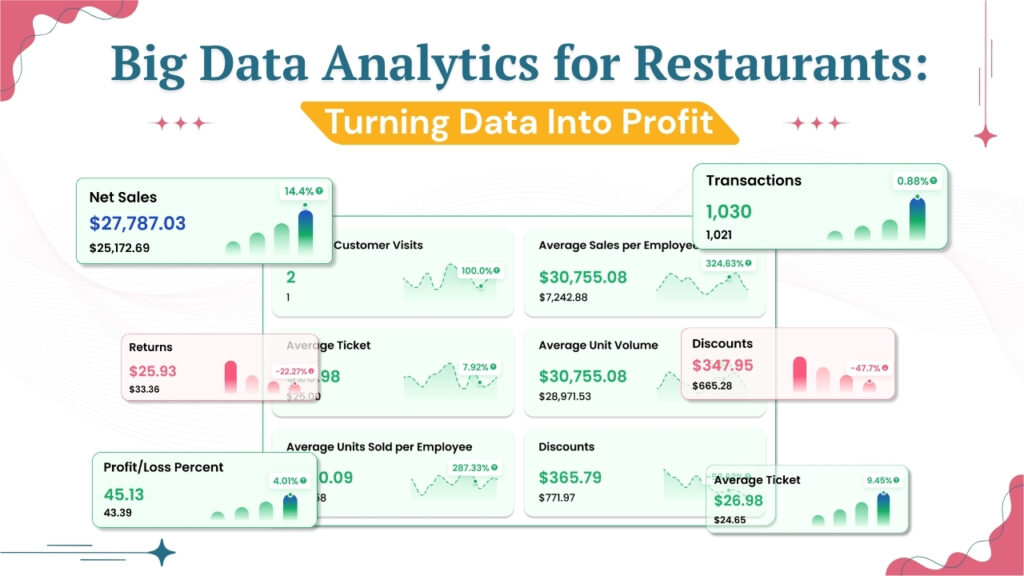

In today’s highly competitive market, restaurants can no longer depend on just intuition to make business decisions. Rather, Big Data Analytics for restaurants is an essential tool that drives growth, operational efficiency, and increased profits.
Because of the rise in the use of digital ordering platforms, POS platforms, and customer engagement tools, restaurants today generate large amounts of data everyday.
Today the restaurants are not facing challenges by collecting data but converting it into impactful insights that improve restaurant performance and improve profits.
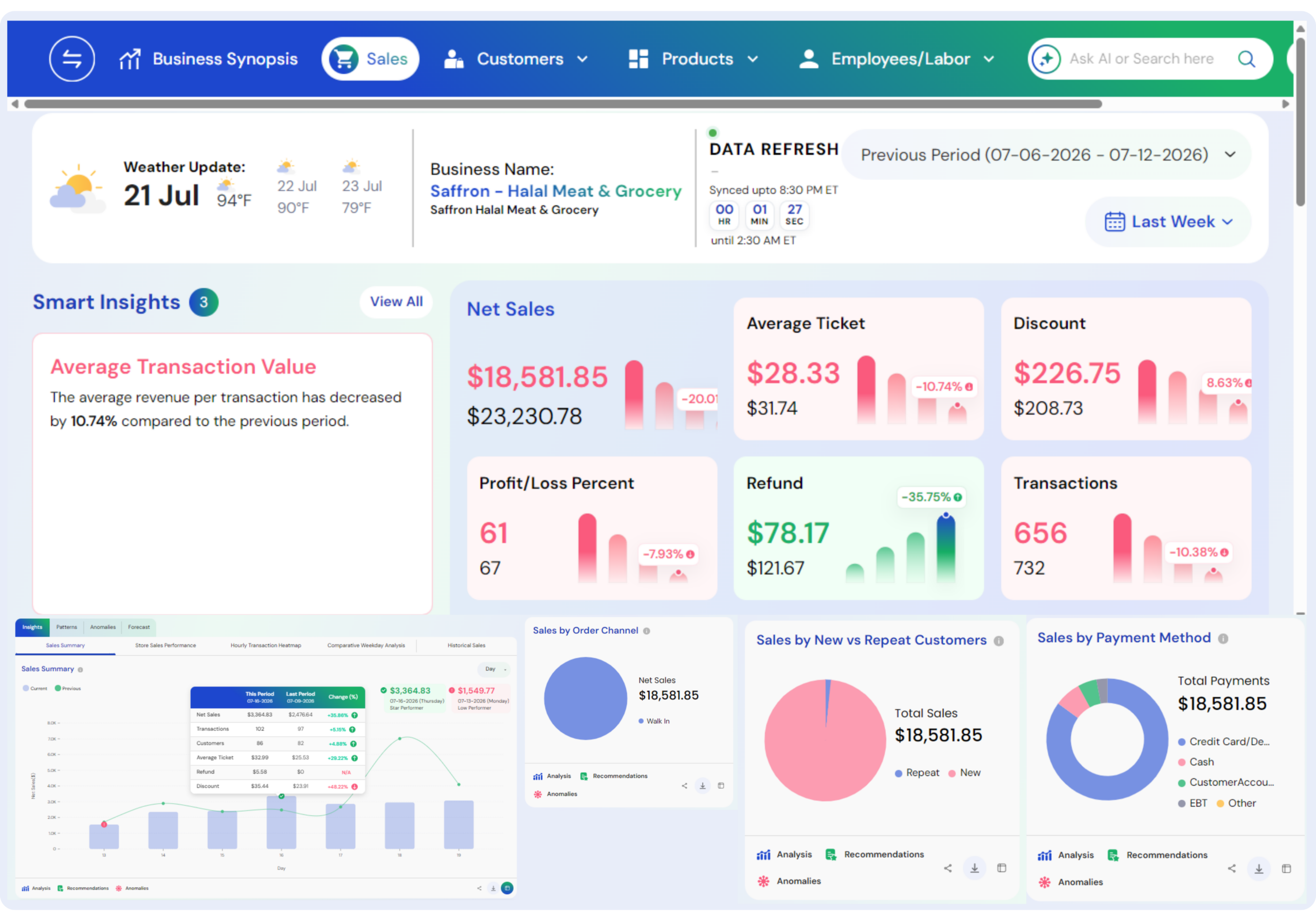
Restaurant data analytics helps restaurant owners to understand their customer behavior, track sales patterns, optimize menu performance, and manage inventory effectively.
Analyzing real-time data and historical data, helps restaurants to identify the dishes which are more profitable to them, busy dining hours, and change customer preferences over time. This data-driven approach helps businesses to make smarter businesses instead of simply guessing.
The biggest advantage of implementing big data analytics in restaurants is its ability to improve operational efficiency. Whether reducing food waste, optimizing staff schedules, data analytics provides clear insights that helps to streamline daily operations.
It also helps to improve the customer experience by providing personalized offers, targeted marketing campaigns, and better service.
Additionally, restaurant analytics tools help businesses to predict demand, control expenses, and increase profit margins. Whether through predictive analysis, sales reporting, customer segmentation, data has become the foundation of modern restaurant management.
Through this blog, we will explore how Big Data Analytics for restaurants can turn raw data into actionable strategies which helps restaurants to achieve new profits, maximize profits, and stay ahead in a highly competitive market.
Also Read: Restaurant Data Analytics Helps Increase Profit Margin
What is Big Data Analytics in Restaurants?
Big data analytics in restaurants is the process of collecting, analyzing large amounts of structured, unstructured data to get impactful business insights.
Unlike traditional reporting which only analyzes basic metrics like sales totals, big data analytics often goes even beyond by identifying patterns, trends, and customer behaviors. Such analytics help restaurants to understand not just what is happening but also why it is happening.
Every day restaurants generate high amounts of data every day. When this data is properly analyzed, then this data gives a complete picture of business performance which helps owners to make smarter, data-driven instead of simply guessing.
Key data sources include:
- Sales transactions
- Customer preferences and ordering habits
- Inventory usage and stock levels
- Staff performance and productivity
- Marketing campaign results
- Online reviews and customer feedback
When these analytics tools combine and analyze data from different data sources, it helps restaurants to find insights such as best-selling items, peak business hours, and customer trends.
This helps businesses to optimize operations, improve customer experience, and increase profits. Ultimately big analytics helps restaurant businesses to operate effectively and stay competitive in a quickly changing restaurant industry.
Also Read: A Complete Guide for Data Analysis for Restaurants
Why Big Data Matters for Restaurants
Big data has become essential for restaurants to stay competitive and expand in a constantly changing industry. Instead of only guessing or reacting to problems after they happen, big data analytics helps restaurants to take a proactive approach.
When current trends and patterns of restaurants are analyzed, it helps businesses to predict customer needs, optimize operations, and make smarter strategic decisions.
When restaurants shift from reactive to data-driven approach it helps them to stay ahead of their challenges and have a competitive advantage.
In this highly competitive market, where customer expectations keep changing, using data insights makes quite a difference in operations.
Big data gives deeper visibility into every restaurant operation which helps owners to make informed decisions that improve performance and profitability.
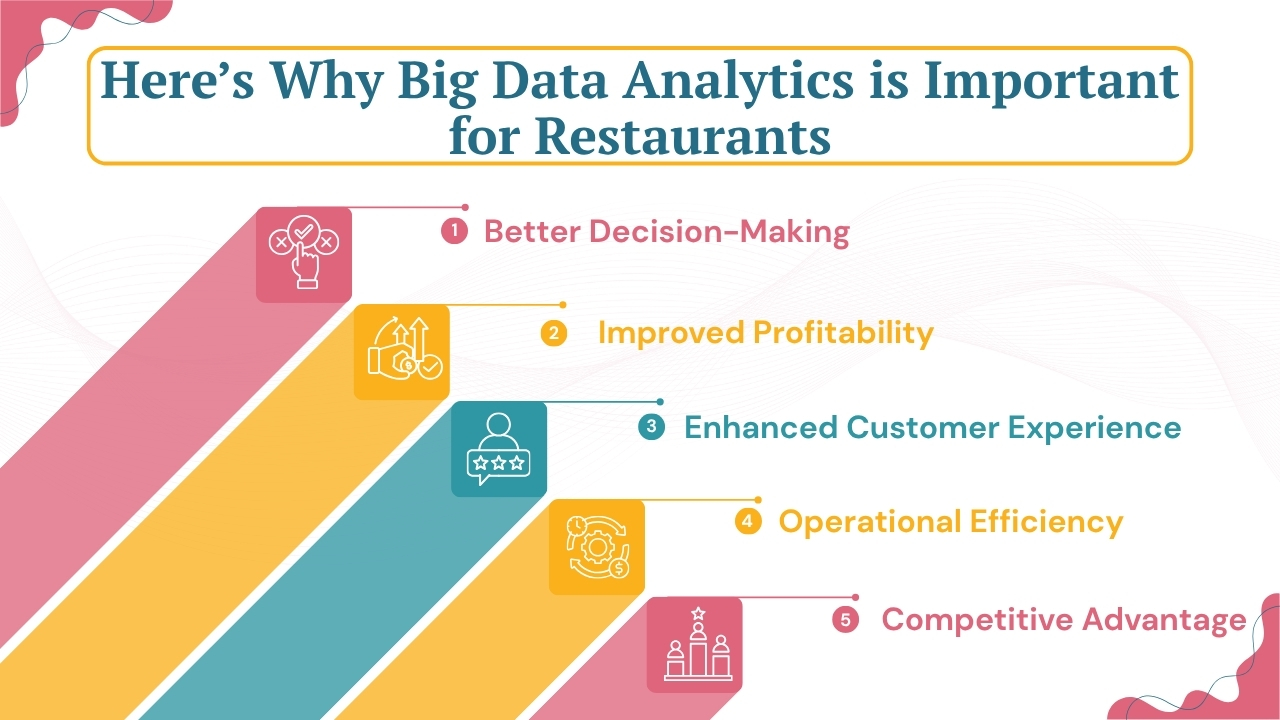
Here’s Why Big Data Analytics is Important for Restaurants
1. Better Decision-Making
Data gives clear, actionable insights which removes chances of any guessing while operating a restaurant. When the owners have the right information, owners can make smarter decisions about menu updates, pricing strategies, staffing levels, and promotional efforts. It leads to better operational efficiency, stronger profits, and more customer satisfaction with time.
Also Read: Benefits of Data-Driven Decision Making
2. Improved Profitability
Using big data leads to improved profitability as it reveals the menu items that generate the highest profits and the areas which are leading to unwanted expenses.
It helps restaurant owners to reduce food waste, manage inventory efficiently, control expenses, and make smarter operational decisions that support stronger, consistent financial success.
Also Read: Restaurant Profit Margin Analytics tool to Boost Profits
3. Enhanced Customer Experience
Improving customer experience involves analyzing customer behavior, customer preferences, and dining patterns. Restaurants use this data to develop personalized offers, targeted promotions, and improve service quality.
These personalized experiences improve customer satisfaction, increase loyalty, encourage repeat visits, and build long-term relationships with customers.
Also Read: How AI Revolutionizes Customer Experience in Restaurant Industry
4. Operational Efficiency
Operational efficiency of restaurants increases when restaurants use data insights to improve daily tasks, better staff scheduling, and allocate resources effectively.
It helps restaurants to reduce waste, delays, and identify process challenges which can reduce inefficiencies, improve service flow, and build smoother and productive operations.
Also Read: The Blind Spots Costing Your Business More than You Think
5. Competitive Advantage
Restaurants using data analytics will have a competitive advantage as these tools help them to identify market trends early, understand customer demand, and make smarter business decisions.
It helps restaurants to adapt to changes quickly, perform better than competitors, improve performance, and build foundation for consistent long-term and continued success.
Ultimately restaurants that adopt big data analytics have more chances to innovate, improve their performance, and become successful in a highly competitive restaurant market.
Also Read: How AI Helps in Boosting Restaurant Revenue and Profits
Key Sources of Restaurant Data
To benefit fully from big data analytics, it is essential for restaurants to understand where their data comes from. Every interaction from customers placing an order, leaving a review, or responding to a promotion provides valuable data about current customer patterns.
When such data is collected and analyzed properly, this data helps restaurants to gain deeper insights about operations, customer behavior, and overall performance.
By collecting and analyzing data from multiple data sources, it helps restaurants to make smarter, data-driven decisions that improve efficiency, profitability, and customer satisfaction.
1. POS Systems
Point-of-sale(POS) systems are important sources of data for restaurants. They capture transaction information details such as the customer’s order, their order, their average expenses, and the payment methods which they use.
This data is essential for restaurants to identify best-selling menu items, busy dining hours, and revenue patterns. With these insights, restaurants can optimize menus, adjust pricing, and improve staffing during busy hours.
Also Read: POS Report Vs Real Time Analytics
2. Online Ordering Platforms
Online ordering platforms which include mobile apps and websites provide valuable data on digital customer behavior. Restaurants can track the items that customers frequently order online, understand customer preferences, and find busy ordering times.
This data is essential for improving the online ordering experience, optimizing delivery operations, and customized digital menus to meet customer demand.
Also Read: Choosing the Right AI Data Platform for Your Business
3. Customer Feedback
Customer feedback like reviews, ratings, and surveys offers insights about whether customers are satisfied or not. This feedback is essential as it helps restaurants to understand the strategies which work well and know about the strategies which require improvement.
Customer feedback about food quality, service speed, or restaurant ambiance provides the insights that are essential for restaurants to provide excellent service and build customer loyalty.
Also Read: How AI Revolutionizes Customer Experience in Restaurant Industry
4. Inventory Systems
Inventory management systems monitor usage of ingredients, stock levels, and wastage. This data is essential for controlling food expenses and also reducing waste.
Analyzing inventory data, helps restaurants to ensure that they have the right ingredients while reducing overstocking of ingredients and food spoilage.
Also Read: AI for Restaurant Inventory
5. Marketing Platforms
Marketing platforms generate data from email campaigns, social media ads, and promotional offers. This data is essential as it shows the campaigns which attract the most customers and leads to maximum engagement from customers.
Restaurants can use these insights to develop their marketing strategies and focus on the strategies that deliver excellent results.
Also Read: Social Media Marketing for Restaurants
6. Loyalty Programs
Loyalty programs offer valuable information regarding repeat customers, customer spending habits, and customer preferences. This data helps restaurants to develop personalized offers, reward loyal customers and encourage them for repeat visits.
Integrating data from all these data sources, helps restaurants to gain a complete view of their business which helps them to make better decisions and ensures long-term success.
Also Read: Leveraging AI to Collect Customer Insights in the Restaurant Industry
How Big Data Drives Profit in Restaurants
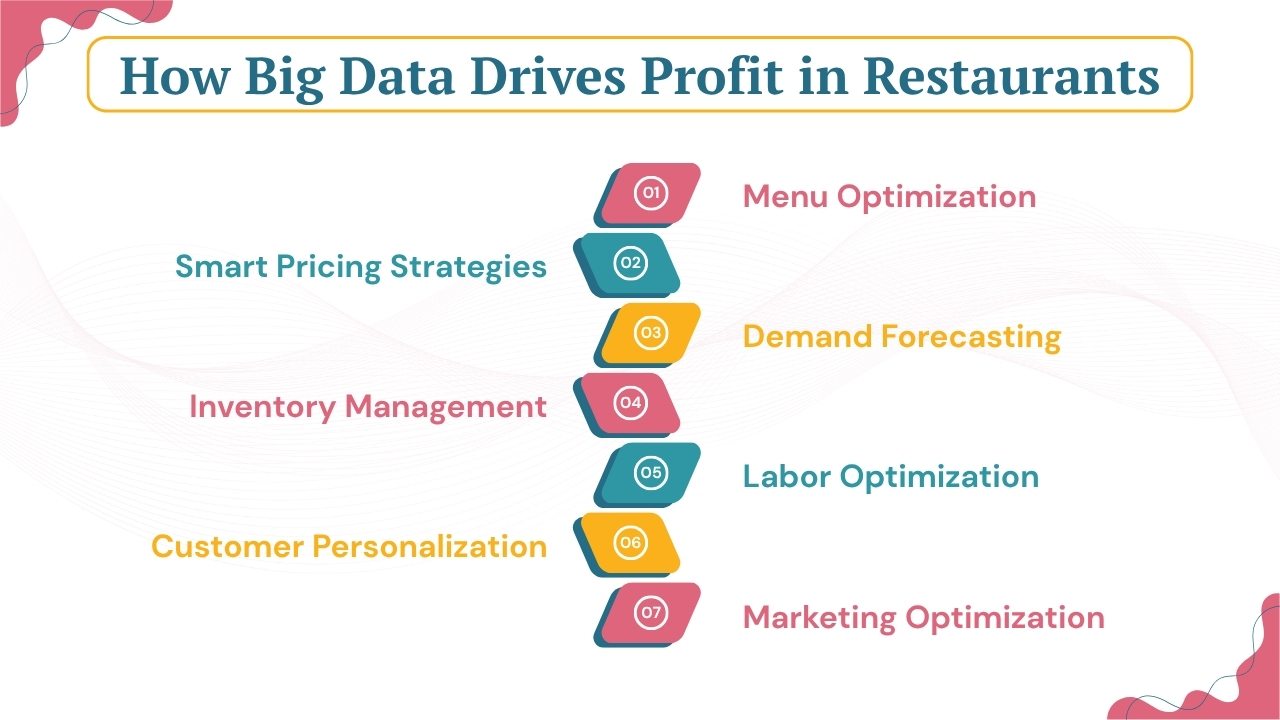
Big data analytics has changed the way restaurants operate, which shifts their decision making from guessing to clear data-driven strategies. Operating in a highly competitive restaurant industry where profit margins are low, using data effectively will help to improve profits.
Analyzing large amounts of operational, customer, and financial data helps restaurants to identify patterns, predict trends, and optimize business operations.
Below are seven powerful ways big data drives profit in restaurants.
1. Menu Optimization
Menu optimization is one of the impactful applications of big data in restaurants. By analyzing sales data, restaurants can identify their best-selling food items, low-performing dishes, and high-margin food items.
It helps owners to know about the menu items which are the most profitable and the menu items that are underperforming. With these insights, restaurants can promote high selling dishes, adjust recipes to reduce food costs, or reprice items to improve profit margins.’
Menu engineering powered by data ensures that every item of the menu is essential. Instead of offering a lot of menu items to customers that may not sell well, restaurants can focus on dishes which provide maximum profits and customer satisfaction. It leads to better inventory management, reduced waste, improved profits.
Also Read: Optimizing Restaurant Menu With AI Powered Data Analytics
2. Smart Pricing Strategies
Pricing plays an important role in restaurant profits, and big data helps restaurants to make smarter, more strategic pricing decisions. By analyzing customer behavior, demand patterns, and cost fluctuation, restaurants can determine the best pricing for each menu item.
Big data helps to identify the items which hardly get sold and also those menu items that the customers are willing to pay more for. It allows restaurants to adjust prices without affecting customer demand.
For instance, popular items which have high demand may have high prices while less popular items may benefit from promotions.
Restaurants can also implement dynamic pricing such as offering discounts during slow hours or creating bundled deals to increase average order value. Seasonal and local demand patterns may also impact pricing decisions.
Using data-driven pricing helps restaurants to achieve maximum profits while ensuring customer satisfaction, that helps restaurants to maintain balance between profits and value perception.
Also Read: Retail Pricing Strategy
3. Demand Forecasting
Accurate demand forecasting is essential for efficient restaurant operations. Big data helps restaurants to predict customer traffic, busy hours, and seasonal patterns with a high degree of accuracy. This helps restaurant owners prepare in advance rather than reacting to unexpected demand fluctuations.
By analyzing historical sales data, weather patterns, holidays, and local events, restaurants can forecast how many customers they are likely to serve at different times. This enables better planning in terms of food preparation, staffing, and inventory.
With accurate demand forecasts, restaurants can avoid overproduction that leads to food waste, and underproduction which can result in lost sales. It also helps to ensure that popular items are always available when customers want them.
Demand forecasting not just improves operational efficiency but also reduces costs and improves the overall customer experience, ultimately leading to higher profitability.
4. Inventory Management
Essential inventory management is crucial for controlling expenses of the restaurant. Big data offers valuable insights about the ingredients used, levels of stock, and food wastage.
Whenever there is poor inventory management, then the restaurants may overstock inventory, have food wastage, or may run out of important ingredients which may affect the overall profits of the restaurants.
Big data helps restaurants to track the ingredients that are used across different dishes, and identify patterns of consumption. This allows restaurants to order the ingredients accurately and better stock management.
It ensures that the restaurants have the right amount of inventory and that they are not over purchasing.
Additionally, data analytics can reveal the reasons which are causing food wastage that helps restaurants to take betterment actions like adjusting food portions or improving stock storage. It helps restaurants to negotiate better deals with suppliers by understanding customer purchasing patterns.
Effective inventory management reduces unwanted expenses, reduces waste, and ensures that menu items are available that directly contribute to improved profits.
Also Read: AI for Retail Inventory Management
5. Labor Optimization
Labor costs are one of the highest expenses for restaurants and manage labor effectively which is essential for profits. Big data helps to analyze staff performance, labor schedule patterns.
When restaurants understand busy hours and patterns of customer traffic, it helps restaurants to schedule staff more effectively. This helps restaurants to avoid overstaffing during slow hours and understaffing during busy hours which can affect profits and customer experience.
Data can be used to evaluate performance of staff, identify their training requirements, and improve profits. For instance, tracking staff service times and customer feedback helps to identify the areas where staff require improvement.
Optimizing labor not just reduces expenses but also ensures that customers receive quick and efficient service. When the cost control and service quality is well aligned it ensures long-term success of the restaurants.
6. Customer Personalization
Implementing big analytics helps restaurants to understand customer behaviors. These analytics tools help restaurants to track customer preferences, ordering habits, visit frequency, and spending habits which helps restaurants to develop personalized experiences.
Such data insights helps restaurants to provide targeted promotions, personalized offers, loyalty rewards which even customers can relate to. For instance, a customer who regularly orders a specific dish may receive special offers linked to that item.
Offering personalized offers helps restaurants to increase customer satisfaction by making customers feel valued which increases repeat visits and higher spending from customers.
When restaurants build stronger relationships with customers helps restaurants to increase retention rates and create consistent profit over time. Personalized customer experiences help restaurants to increase sales and increase brand loyalty.
7. Marketing Optimization
Marketing is crucial where big data plays an important role in driving profits. Big data analytics helps to analyze the performance of marketing campaigns, customer response, and return on investment that helps restaurants to find most effective marketing strategies.
Data-driven marketing helps restaurants to promote successful marketing campaigns and remove those campaigns which are not successful. This ensures that marketing budgets are used effectively and generate maximum impact.
Restaurants can segment their audience based on customer demographics, preferences, and behavior that helps them to develop targeted and valid marketing campaigns.
For instance, promotions can be customized for customer groups such as for frequent diners or new customers.
Additionally, real-time data helps restaurants to adjust marketing campaigns instantly based on campaign performance. Such flexibility ensures that marketing remains effective and aligned with business goals.
By optimizing marketing strategies using data, restaurants can attract more customers, increase engagement, and drive higher revenue with lower costs.
Also Read: Business Intelligence for Marketing
Role of Technology in Big Data Analytics
Technology plays a crucial role in making big data analytics practical and effective for restaurants.
Modern technologies further simplify this process because they automate data collection, organize information, and deliver actionable insights in real time. For restaurants it leads to better decision making, improved operational efficiency, and stronger profits.
1. POS Systems
Point-of-sale(POS) systems are the foundation of restaurant data analytics. These systems collect structured data from every transaction like the items ordered, time of purchase, payment methods, and total expenses.
Such data is valuable as it provides a complete view of sales performance and customer behavior. Advanced POS systems can be integrated with inventory management and customer management tools that help restaurants to track their every day operations easily.
POS data helps managers and owners to identify the best selling food items, track busy hours, and adjust pricing or promotions.
2. AI and Machine Learning
Artificial intelligence(AI) and machine learning tools do deeper data analysis by identifying customer patterns and predicting future forecasts. These tools help restaurants to analyze past data to predict customer demand, recommend menu changes, and automatically develop marketing decisions.
For instance, AI tools help restaurants to predict the dishes which will be popular during specific times or suggest personalized offers to customers on the basis of their past orders. Machine learning makes accurate predictions which helps restaurants to stay ahead of changing customer preferences.
Also Read: Artificial Intelligence Vs Machine Learning
3. Real-Time Dashboards
Real-time dashboards give instant visibility into restaurant performance. Instead of waiting for reports at the end of the day or for weekly reports, real-time dashboards help restaurant owners to access live data on sales, orders, inventory levels, and customer activity.
This allows restaurants to make quick decisions and immediate problem solving. For instance, if a popular item gets sold out quickly, then it can be restocked in real time. If sales are slow during certain times, promotions can be introduced instantly. Real time insights help restaurants to remain quick and responsive.
Also Read: Generative AI for Real time Restaurant and Retail Intelligence
4. Integration Tools
Integration tools connect several systems such as POS, inventory management, online ordering platforms, and marketing software into a single system. This ensures that all the information is centralized and consistent.
When systems are integrated, restaurants can analyze data effectively and get a complete view of their operations. It helps to reduce manual work, reduce errors, and improves overall efficiency.
Technology helps restaurants to convert raw data into impactful insights. By using POS systems, AI, real-time dashboards, and integration tools, restaurants can simplify data analysis, make smarter decisions, and drive long-term growth.
Conclusion
Big data analytics has become an essential for restaurants who are aiming to improve performance and increase profits. Operating in a restaurant industry where profit margins are often low but competition is high, simply depending on intuition is no longer enough to achieve success.
Using data helps restaurants to gain a clear understanding of their daily operations, customer behavior, and market patterns, which allows them to make smarter and strategic decisions.
Whether menu optimization, pricing strategies, inventory control, and customer personalization. Big data analytics helps to optimize every aspect of restaurant management.
This helps restaurants to reduce expenses, waste, improve service quality, and create impactful customer experiences. With modern technologies like POS systems, AI tools, and real-time dashboards, every type of business can utilize the power of data effectively.
Though there are challenges like data integration, costs, and expertise, it can be overcome with the right approach and planned implementation. Ensure that you start small, focusing only on important data and scaling over time which helps restaurants to unlock value without unwanted complexity.
Ultimately, big data analytics helps restaurants to convert information into insights. Those restaurants who adopt this approach can adapt, innovate, and grow. In the long run, data-driven restaurants are not just surviving rather they are flourishing in a competitive restaurant market.
If you still have a query with how big data analytics for restaurants turns data into profit then you may book a free demo at Livelytics and we are more than happy to assist you.