In today’s quickly changing business market, companies need to have more visibility into their operations and need to make smarter decisions while managing complex supply chains.
Whether sourcing raw materials, managing inventory, logistics, and fulfilling customer orders, every phase of the supply chain creates valuable data. But for converting this data into actionable insights requires advanced Supply Chain Analytics.
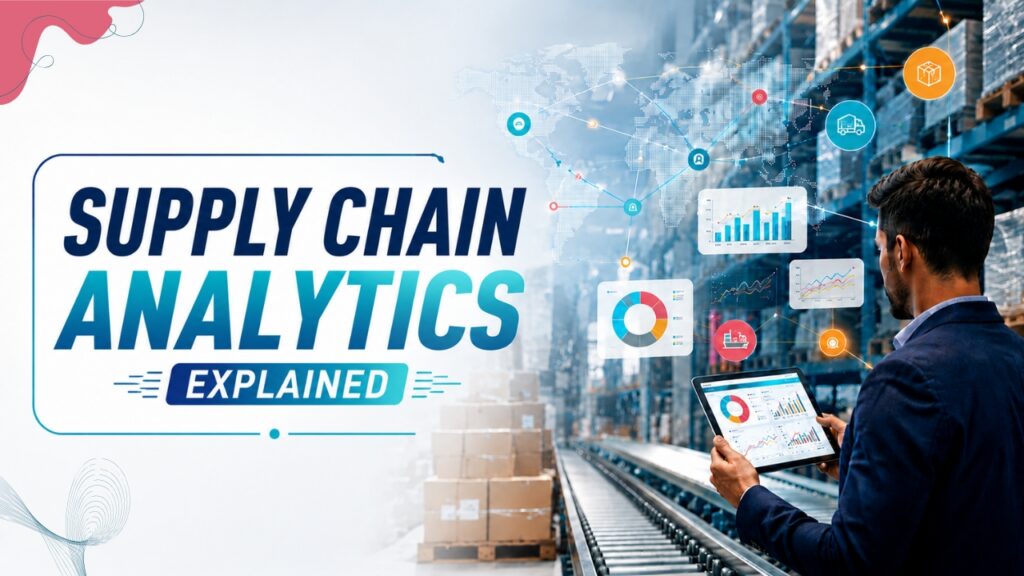
Supply Chain Analytics involves collecting, analyzing, and interpreting operational data helps businesses to identify inefficiencies in operations, predict customer demand, optimize inventory, reduce expenses, and improve overall performance of supply chains.
While today global markets are becoming more competitive, Supply Chain Analytics has become an important business tool rather than being a reporting tool.
Using technologies like artificial intelligence(AI), machine learning(ML), cloud computing, and real-time dashboards, helps organizations to track crucial performance indicators(KPIs), predict disruptions, improve supplier performance, and make faster and data-driven decisions.
This helps businesses to build resilient supply chains while improving customer satisfaction and operational efficiency.
Using modern analytics platforms like Livelytics helps organizations to convert complex supply chain data into impactful business insights.
With interactive dashboards, automated reporting, predictive analytics, and real-time performance monitoring, Livelytics helps businesses to gain visibility into procurement, manufacturing, warehousing, transportation, and distribution operations.
Such insights help businesses to identify opportunities, prevent risks, and improve every phase of the supply chain.
Through this detailed blog, we will walk you through Supply Chain Analytics, different types of Supply Chain Analytics, its important components, advantages, implementation best practices, future trends, and how Livelytics helps organizations to build smarter, data-driven supply chains that cause business success for the long-term.
Also Read: Benefits of Supply Chain Optimization for Businesses
What Is Supply Chain Analytics?
Supply Chain Analytics involves the process of collecting, analyzing, and interpreting supply chain data. Such analysis helps organizations to get more visibility into operations, improve efficiency, and decision-making across all business operations.
This lets businesses use real-time insights instead of just assuming to improve their operations, reduce expenses and operational risks, and improve overall supply chain performance.
Implementing modern analytics platforms like Livelytics help organizations to transform complex operational data into insights through dashboards and automated reporting.
Key benefits of Supply Chain Analytics include:
- Provides end-to-end visibility : It helps organizations to gain visibility into procurement, manufacturing, inventory, logistics, and distribution.
- Improves demand forecasting : It helps organizations to use past data and predictive analytics to predict customer demand.
- Optimizes inventory levels :It helps organizations to reduce stock shortages and excessive stocking.
- Identifies operational bottlenecks and risks : It helps organizations to identify operational challenges and risks.
- Supports data-driven decision-making : With real-time dashboards and actionable insights through Livelytics helps organizations to make data-driven decisions.
Also Read: What is Business Intelligence for Supply Chain Optimization
How Supply Chain Analytics Works
Supply chain analytics works by gathering data from every phase of the supply chain. Then the collected data is transformed into meaningful insights that support smarter business decisions.
This data is collected from various business systems which are involved in procuring, manufacturing, inventory management, warehousing, transportation, supplier operations, and customer order processing to provide a detailed view of the supply chain.
Then the data is cleaned, standardized, and integrated to a centralized analytics platform which ensures that data is consistent, accurate, and reliable.
Then the data is organized using the most advanced technologies such as artificial intelligence(AI), machine learning(ML), predictive analytics, and statistical models which helps organizations to identify patterns, measure performance, find operational inefficiencies, and predict customer demand in the future.
With interactive dashboards and visual reports managers can track key performance indicators(KPI), that includes inventory turnover, order fulfillment, supplier performance, transportation costs, and delivery times.
With platforms like Livelytics, organizations can simplify this process by providing real-time dashboards, automated reporting, and actionable insights.
Such platforms convert complex operational data into understandable dashboards which helps businesses to respond instantly to any disruptions, improve inventory and logistics, improve efficiency of customer demand forecasting, reduce operational costs, and consistently improve overall supply chain performance through rapid, data-driven decisions.
Also Read: How Restaurant Data Analytics Helps Increase Profit Margins
Why Supply Chain Analytics Is Important
In modern supply chains multiple suppliers, warehouses, logistics providers, and distribution networks are involved that makes operations more complex.
Supply Chain Analytics helps organizations to gain more visibility into these processes by converting operational data into actionable insights.
This analytics process involves analyzing both past and real-time data that helps businesses to improve demand forecasting, optimize inventory, reduce operational expenses, make stronger collaboration with suppliers, and respond proactively to possible disruptions.
With advanced analytics platforms like Livelytics provide real-time dashboards, and automated reporting which enable organizations to make faster, data-driven decisions which improve overall supply chain performance.
Why Supply Chain Analytics matters:
- Improves end-to-end visibility : It provides organizations with visibility into procurement, manufacturing, warehousing, logistics, and distribution.
- Enhances demand forecasting: It helps organizations to reduce any chances of stock shortages and excess inventory.
- Supports proactive decision-making : It helps organizations to make proactive decisions in operations.
- Optimizes supplier and transportation performance: It helps organizations to improve operational efficiency and reduce unnecessary expenses.
Also Read: Business Intelligence and Data Analytics Services
Types of Supply Chain Analytics
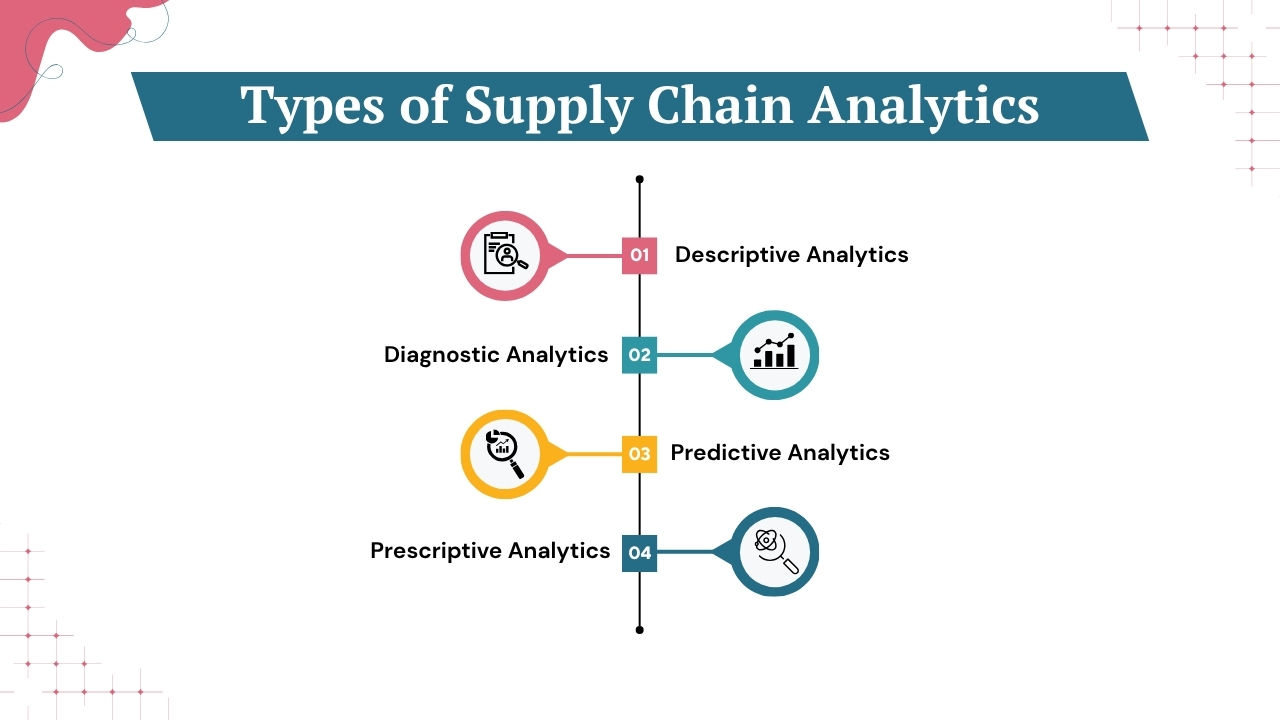
Supply chain analytics consists of four important types. All these types help organizations to understand past performance of organization, identify operational issues, predict future customer demand patterns, and recommend the best action.
Using all these analytics helps businesses to improve decisions, improve resources, reduce costs, and build a more resilient and efficient supply chain.
Platforms like Livelytics helps organizations to use all four analytics types through real-time dashboards, automated reporting, and actionable insights.
1. Descriptive Analytics
This type of analytics analyzes past and real-time data to provide answers to the question, “What happened?”. Such analytics provide valuable insights through reports, dashboards, and important key performance indicators(KPIs).
Businesses use descriptive analytics to track inventory, order fulfillment, check supplier performance, and analyze logistics operations. With livelytics, organizations can visualize operational data in real time and find performance trends more effectively.
Also Read: How to Set Up Key Performance Indicators (KPIs) for Your Business?
2. Diagnostic Analytics
This type of analysis analyzes “Why did it happen?” by finding the important causes of operational challenges like delayed shipments, stock shortages, product challenges, or supplier issues.
Such insights help businesses to resolve problems instantly and improve operational workflows, and avoid similar disruptions in the future. Livelytics helps organizations to analyze data across different departments to reveal performance challenges and operational inefficiencies.
Also Read: How Does Data Analytics Help Restaurants Grow
3. Predictive Analytics
This type of analytics uses past data, artificial intelligence(AI), and machine learning(ML) to predict future demand of customers, inventory requirements, supplier performance, and possible supply chain risks.
Such analytics help businesses to make proactive decisions, improve accuracy of planning, and reduce disruptions. Platforms like Livelytics deliver predictive insights which support smarter demand forecasting and to allocate resources efficiently.
Also Read: How Predictive Intelligence Transforms Retail
4. Prescriptive Analytics
Such analytics recommends the best actions to achieve desired business outcomes. By using AI and optimization models, prescriptive analytics suggests solutions for optimizing inventory, planning production, transportation routing, and resource allocation.
With Livelytics, businesses receive data-driven recommendations which help them to improve operational efficiency, reduce expenses, and improve overall supply chain performance.
Also Read: How Restaurant Can Predict Trend With Analytics
Key Components of Supply Chain Analytics
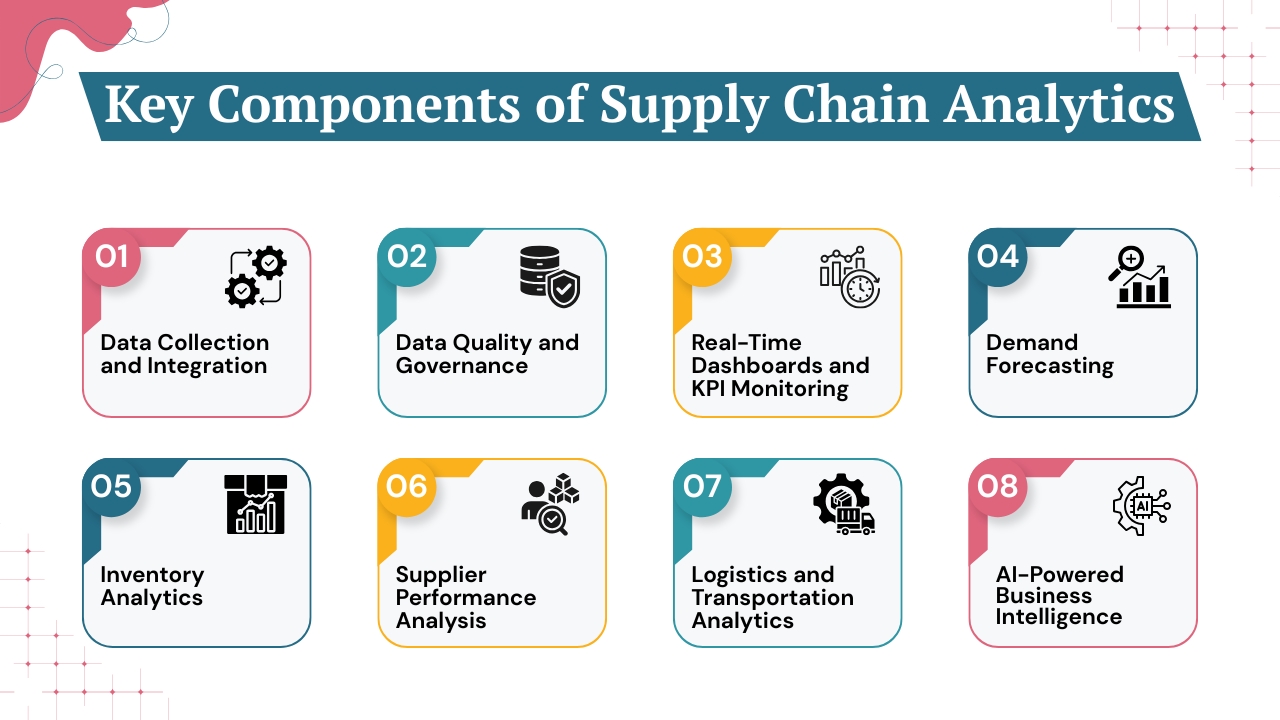
An effective supply chain analytics strategy depends on several interconnected components that transform raw operational data into valuable business insights.
1. Data Collection and Integration
Supply chain data is collected from ERP systems, warehouse management, software, transportation platforms, procurement systems, supplier portals, CRM applications, and IoT devices.
Integrating all these data sources creates a centralized view of operations and improves accuracy of decision-making.
Also Read: Leveraging AI to Collect Customer Insights
2. Data Quality and Governance
For reliable data analytics, organizations require clean, consistent, and accurate data. Organizations must establish strong data governance practices to remove duplicate records, correct mistakes, and maintain standardized information across systems.
Also Read: Big Data Analytics for Restaurants Turning Data into Profit
3. Real-Time Dashboards and KPI Monitoring
Using dashboards allow managers to track important metrics such as inventory turnover, order fulfillment rates, transportation expenses, supplier performance, and customer service levels. With visibility into key metrics in real-time enables organizations to quickly respond to operational challenges.
Also Read: Real-time Analytics Why Does Your Business Need it
4. Demand Forecasting
Demand forecasting tools analyze past sales data, seasonal trends, and market conditions to predict future customer demand. With accurate demand forecasting businesses can improve schedules of production and maintain the right inventory levels.
Also Read: How Restaurants Can Predict Trend With Analytics
5. Inventory Analytics
Such analytics ensures businesses maintain the right stock levels by reducing excess inventory, preventing stockouts, and improving efficiency of warehouses. With better inventory management, organizations can reduce storage expenses and increase working capital.
Also Read: AI for Restaurant Inventory
6. Supplier Performance Analysis
Analyzing reliability of suppliers helps organizations to measure performance of delivery, lead times, quality standards, and contract compliance. These insights support stronger relationships with suppliers and reduce procurement risks.
Also Read: Two Way Data Analytics is Shaping Retail Business
7. Logistics and Transportation Analytics
Such analytics measure shipping performance, route efficiency, freight expenses, delivery accuracy, and carrier reliability. Improving logistics operations improves customer satisfaction while reducing transportation expenses.
8. AI-Powered Business Intelligence
Modern analytics platforms like Livelytics use both AI-based reporting, automated dashboards, and interactive visualizations which help organizations to identify their opportunities, track KPIs, and make faster, data-driven decisions across the entire supply chain.
Also Read: What is Business Intelligence and Why Does it Matter
Top Benefits of Supply Chain Analytics
Supply chain analytics helps organizations to make informed decisions by converting operational data into actionable insights. It gives complete visibility across the supply chain that helps businesses to improve efficiency, reduce expenses, strengthen supplier relationships, and respond quickly to market changes.
Using advanced analytics platforms like Livelytics, organizations can track performance of each operation in real-time, automate reporting, and improve every phase of the supply chain for sustainable growth.
Key benefits of Supply Chain Analytics include:
- End-to-end visibility: It helps organizations to gain complete insights into procurement, inventory, warehousing, transportation, and distribution activities.
- Accurate demand forecasting: It helps organizations to predict customer demand effectively to reduce stock shortages and prevent excessive stocking.
- Optimized inventory management: It helps to maintain optimal inventory levels, reduce storage expenses, and improve cash flow.
- Faster issue detection: It helps organizations to identify operational challenges, supplier delays, and supply chain disruption before they escalate.
- Improved supplier performance: It helps organizations to continuously track supplier reliability, delivery times, and overall service quality.
- Reduced logistics costs: By optimizing transportation routes and shipping operations to improve efficiency and reduce expenses.
- Better risk management: It helps to identify potential chain risks early and take proactive measures to reduce disruptions and business risks.
- Enhanced customer satisfaction: It improves organizations to ensure timely deliveries, product availability, and consistent service quality.
- Data-driven decision-making: Use real-time dashboards, AI-powered analytics, and automated reports from Livelytics to make faster and smarter business decisions.
- Higher productivity and profitability: It helps organizations to make operations smooth, improve resource utilization, and build a more competitive supply chain.
Also Read: Benefits of Data-Driven Decision Making
Common Challenges in Supply Chain Analytics
While supply chain analytics has many benefits, implementing it successfully comes with several challenges. Because organizations often have to deal with large volumes of data from several sources that makes it difficult to generate accurate and timely insights.
Addressing these challenges is essential for getting maximum value of analytics and improving supply chain performance.
1. Poor Data Quality
If data collected is inaccurate, incomplete, or outdated, then it can lead to unreliable forecasts and poor business decisions. So it is essential for businesses to establish strong data governance practices, regularly clean their datasets, and standardize information across all their systems.
Also Read: How AI Unlocks Business Insights that Drive Required Results
2. Data Silos
Most organizations store supply chain data across separate ERP, CRM, warehouse, and logistics systems. By integrating all these platforms into a centralized analytics solution improves visibility and enables them to make informed decisions.
Also Read: Big Data Analytics For Restaurants Turning Data Into Profit
3. Legacy Systems
Older technologies usually do not have the flexibility to support modern analytics tools. Upgrading legal infrastructure or adopting cloud-based analytics platforms helps organizations to get real-time insights and improve operational efficiency.
Also Read: A Complete Guide to Data Analytics for Restaurants
4. Skills and Resource Gaps
For implementing supply chain analytics successfully needs professionals who are experts in data analysis, business intelligence, and supply chain management.
So, organizations by providing employee training and user-friendly analytics platforms can help them to overcome skill gaps and improve the use of supply chain data effectively.
Also Read: How to Fix Store to Store Performance Gaps With Data
5. Cybersecurity and Data Privacy
As businesses collect and share high amounts of supply chain data, securing sensitive data becomes more crucial. Organizations then have to implement strong security measures, access controls, and regulatory compliance practices to secure business data.
Proactively addressing all these challenges helps organizations to build a reliable, agile, and data-driven supply chain that is capable of adapting to changing market conditions.
Also Read: Why Data Analytics is the New Secret Weapon for Successful Restaurants
How Livelytics Enhances Supply Chain Analytics
Livelytics is an advanced business intelligence platform that helps organizations to convert complex supply chain data into actionable insights.
It integrates data from ERP, CRM, warehouse management, procurement, logistics, and other business systems, giving a centralized view of supply chain operations.
It removes data silos and helps organizations to track inventory, supplier performance, transportation, and order fulfillment through real-time dashboards.
Livelytics with automated reporting, predictive analytics, and intuitive data visualizations helps businesses to predict customer demand, optimize inventory levels, find potential disruptions, and improve resource planning.
Rather than using manual reports, Livelytics helps restaurant owners to gain quick access to accurate insights that support rapid, data-driven decisions.
Whether you are managing local operations or global supply chains, Livelytics improves operational efficiency, reduces expenses, strengthens supply chain resilience that helps organizations to achieve sustainable business growth.
Also Read: What is Business Analytics as a Service
Supply Chain Analytics Explained: Step by Step
Step 1: Collect Data
Supply chain analytics process begins by collecting data from different supply chain systems that includes procurement, manufacturing, inventory management, warehousing, transportation, sales, and customer orders. This creates a complete view of supply chain activities.
Also Read: Business Intelligence Dashboard for Data Collection
Step 2: Integrate and Clean Data
The collected data is then integrated into a centralized platform. Then the duplicate, incomplete, inaccurate data are cleaned and standardized to ensure reliable analysis.
Also Read: How Can Small Business Can Get the Most Out of Data Analysis
Step 3: Analyze the Data
With advanced technologies such as artificial intelligence(AI), machine learning(ML), and statistical models organizations can analyze data to identify patterns, measure operational performance, and find operational challenges.
Also Read: Automating Data Analysis Using Artificial Intelligence
Step 4: Generate Actionable Insights
The analytics platform converts complex data into dashboards, reports, and key performance indicators(KPIs). Having these insights businesses can predict customer demand, improve inventory, evaluate supplier performance, and improve logistics.
Also Read: Business Intelligence for Marketing
Step 5: Make Data-Driven Decisions
Then the business owners can use such insights to reduce operational costs, improve operational efficiency, manage operational risks, and improve customer satisfaction.
Best Practices for Implementing Supply Chain Analytics
Organizations, for successfully implementing Supply Chain analytics need to use the right technology, reliable data, and a well-defined strategy.
Companies that follow best practices can achieve more visibility into their operations, improve operations, and make faster, data-driven decisions.
Adopting advanced analytics platforms such as Livelytics, businesses can maximize the value of their supply chain data and achieve sustainable business growth.
1. Define Clear Business Objectives
First, it is essential to establish measurable goals which align with business strategy. While business objectives help organizations to improve demand forecasting, reduce stock expenses, improve supplier performance, or improve logistics operations.
Though having clear goals helps to give direction to their operations and measure the success of their initiatives.
Also Read: Choosing the Right AI Data Platform for Your Business
2. Ensure High-Quality Data
For gaining accurate insights, it is essential for organizations to have accurate data. Hence, it is essential for organizations to regularly clean, validate, and standardize data that is gathered from procurement, inventory logistics, manufacturing, and sales systems.
With high-quality data organizations can improve reporting accuracy and support them to make reliable decisions.
Also Read: How AI Revolutionizes Customer Experience in Restaurant Industry
3. Integrate Data Across Business Systems
Then organizations must integrate data from different business systems into centralized analytics platforms like ERP, CRM, warehouse management, transportation, procurement, and inventory systems into a centralized analytics platform.
Integrating data helps organizations to remove data silos, improve visibility into operations, and gain a complete view of supply chain operations.
4. Monitor Key Performance Indicators (KPIs)
Organizations must track important supply chain metrics. Some important supply chain metrics include inventory turnover, order fulfillment rates, supplier lead times, transportation expenses, predicted accuracy, and customer satisfaction.
By regularly tracking KPIs organizations can identify performance gaps and support continuous improvement of operations.
Also Read: How to Setup Key Performance Indicators KPIs for Your Business
5. Leverage Real-Time Dashboards
They must use interactive dashboards to track supply chain activities instantly while they happen. Because real-time visibility into operations helps managers to respond instantly to operational issues, reduce disruptions, and make informed decisions on the basis of the most recent business data.
6. Invest in Employee Training
It is also essential to give regular training to employees which help them to understand analytics tools, interpret reports, and apply gained insights effectively.
Because having skilled employees helps to get the maximum value of supply chain analytics and encourages a culture of making decisions based on data.
7. Adopt Scalable Analytics Solutions
Must adopt flexible and cloud-based platforms that can grow with your business. Platforms like Livelytics provide real-time dashboards, automated reporting, and advanced analytics helps organizations to scale efficiently while maintaining security, accuracy, and performance.
8. Continuously Evaluate and Improve
Supply chains must consistently evolve because of changing customer demands, market conditions, and emerging technologies.
It is essential to regularly review analytics performance, update customer forecasting models, improve business processes, and adopt new innovations to ensure continuous improvement, improve operational efficiency, and have a competitive advantage for a long-term.
Conclusion
Supply chain analytics has become essential for organizations to improve efficiency of supply chains, reduce operational costs, and remain competitive in rapidly changing business markets.
Businesses by transforming raw operational data into actionable insights, helps them to make smarter decisions, improve inventory, improve supplier relationships, improve customer demand forecasting, and respond proactively to possible disruptions.
Using artificial intelligence, machine learning, cloud computing, and the Internet of Things is changing supply chain management. Organizations that adopt advanced analytics have high chances to navigate any uncertainty and sustainable business growth.
With a data-driven approach organizations can not just improve operational performance but also improve customer satisfaction and long-term business growth.
Platforms like Livelytics further simplify this transformation by integrating data from multiple systems, providing real-time dashboards, automated reports, and providing impactful insights which support faster, more informed decisions.
Whether your organization has just started implementing analytics or wants to improve their existing capabilities, then investing in modern supply chain analytics solutions can provide high operational and strategic benefits.
With reliable data, advanced analytics, and consistent improvement, businesses can build agile, resilient supply chains that support businesses for the long-term in highly competitive global markets.
If you still have any query about supply chain analytics then you may book a free demo at Livelytics and we are more than happy to assist you.