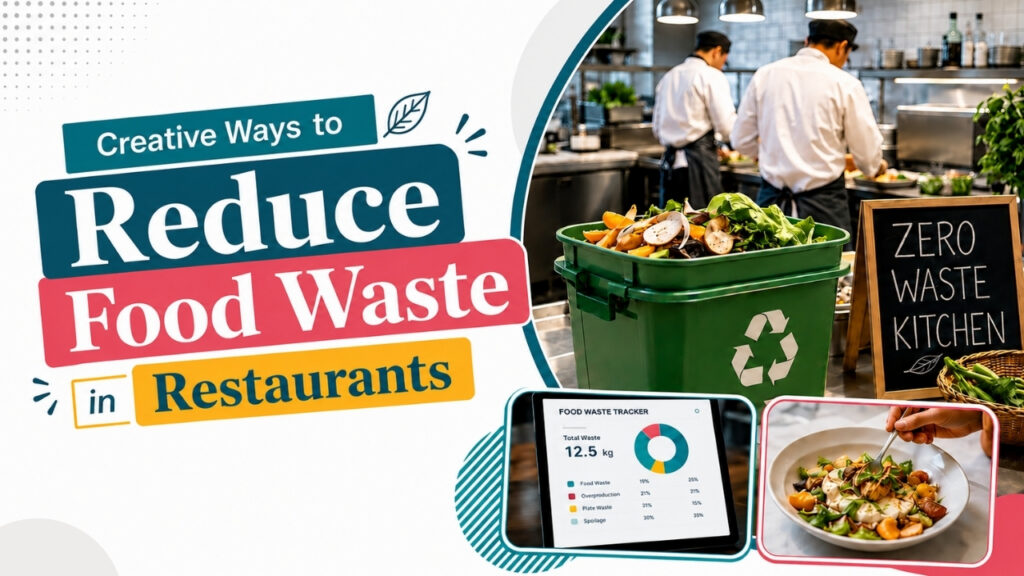

One of the biggest challenges for the restaurant industry is food waste that affects business profits and also affects environmental sustainability.
Every day restaurants all over the world dispose of large amounts of edible food due to overproduction of food, poor management of inventory, inaccurate demand forecasting, large food portion sizes, and inefficient kitchen operations.
Due to the rise in food waste has compelled restaurants to implement sustainable food management practices that help restaurants to reduce unnecessary revenue losses and improve efficiency in operations.
Today restaurant owners are adopting food waste reduction strategies, smart inventory management systems, predictive analytics, and sustainable restaurant practices to reduce food waste generation.
Modern technologies like AI-powered forecasting tools, data analytics platforms, and automated inventory tracking systems help restaurants to improve their ingredient purchasing decisions, and manage use of ingredients, and thereby reduce food spoilage effectively.
Other creative food waste reduction strategies like zero-waste cooking, dynamic pricing, food donation programs, and portion control strategies are transforming the way restaurants handle surplus food.
Now reducing food waste is not just a responsibility towards the environment but also a smart business strategy which reduces operational expenses, improves customer satisfaction levels, and improves brand reputation.
Today people will support restaurants that follow sustainable practices. Additionally reducing food waste reduces greenhouse gas emissions, protects natural resources.
This blog will walk you through creative and practical ways restaurants can reduce food waste through technology, innovation, operational improvements, and sustainable food management strategies while establishing more profitable and environmentally responsible businesses.
Also Read: Reducing Food Waste in Restaurants Using Data And Analytics
Understanding Food Waste in Restaurants
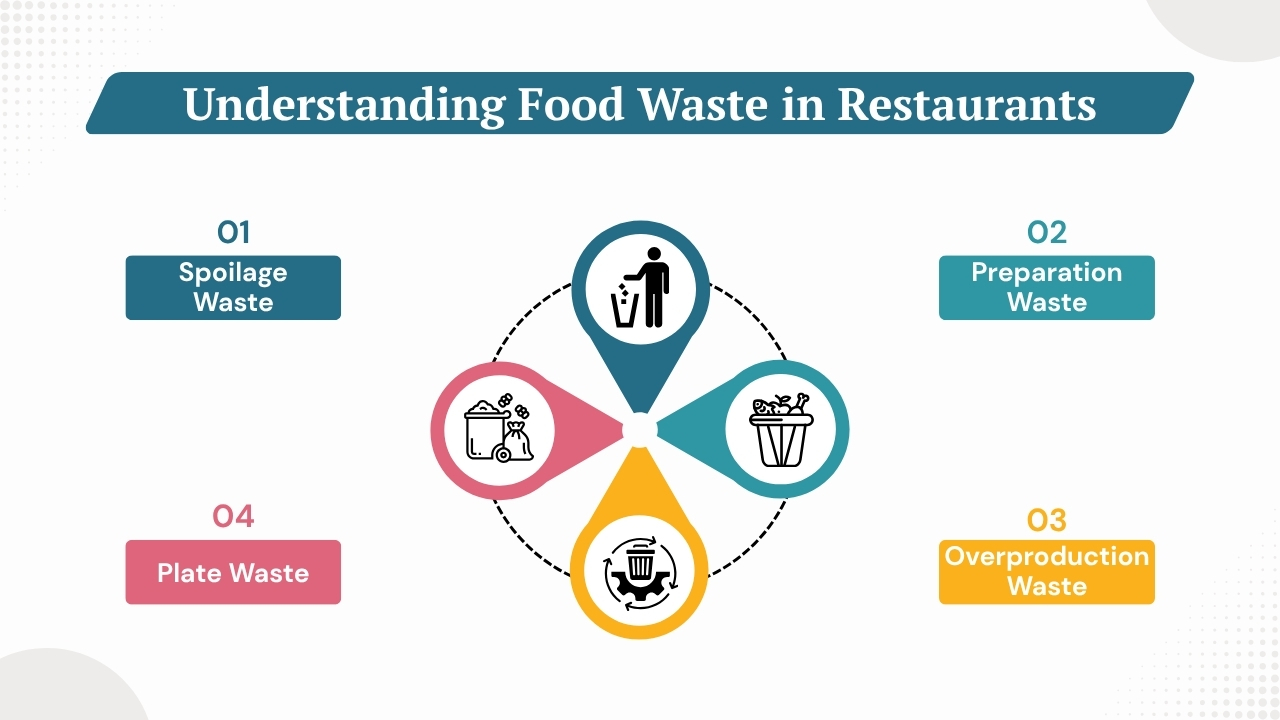
Before implementing waste reduction strategies, it is essential to understand the reasons that are causing food waste in restaurant operations. Food waste usually comes under four major categories:
1. Spoilage Waste
Spoilage waste occurs when the ingredients used in food either expire or become unusable before the food is prepared. Such waste happens due to poor management of inventory, over-purchasing of ingredients, improper food storage, and inaccurate demand forecasting.
Restaurants often lose dairy products, meat, and seafood if these products are not stored at the right temperature or when not used within its shelf life. Reducing food waste requires better rotation of stock, smart inventory systems, and regular tracking of expiry dates of ingredients.
Also Read: AI Solution for Reducing Restaurant Waste
2. Preparation Waste
Preparation waste means the edible food discarded during cooking or while preparing food. This includes vegetable peels, excessive food trimming, overcooked dishes, and due to mistakes during meal preparation.
In many restaurants, any inefficient kitchen practices or improper staff training often lead to food preparation waste. By implementing proper cutting, food portion control, and proper staff training programs helps to reduce food waste during preparation processes.
Also Read: Restaurant Demand Forecasting Reduce Wastes and Increases Profits
3. Overproduction Waste
Overproduction waste happens when restaurants prepare more food than the actual demand of their customers. In order to prevent running out of menu items during busy hours, most restaurants overestimate customer demand and prepare more food that results in unsold meals, buffet leftovers.
Accurate demand forecasting, predictive analytics, and sales trend analysis help restaurants to reduce unnecessary food production and reduce food waste.
Also Read: Proven Solution to Food Waste in Restaurants
4. Plate Waste
Plate waste includes food left unwanted by customers after meals are served. It happens due to oversized food portions, unpopular side dishes.
Restaurants can reduce these problems by providing customizable food portions, smaller serving sizes, and customizable meal options that align well with customer preferences.
Also Read: The Role of Data Analytics in Reducing Restaurant Waste
Creative Ways to Reduce Food Waste in Restaurants
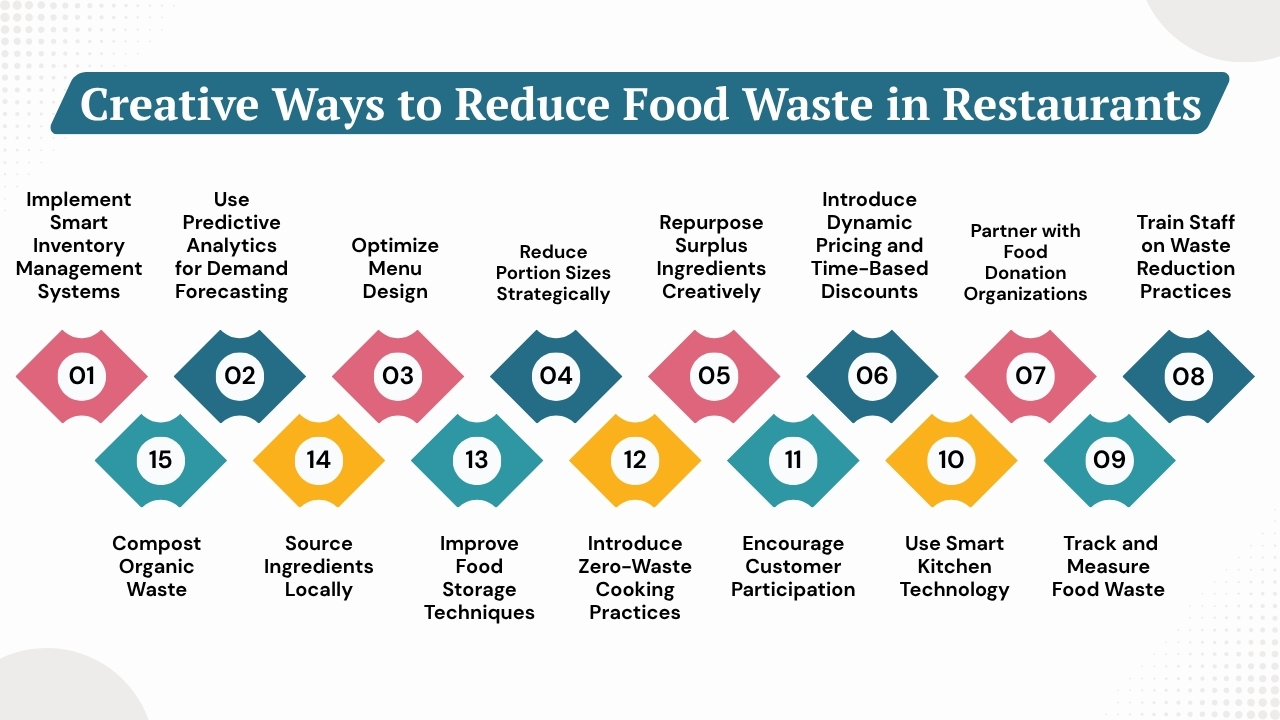
Restaurants can reduce food waste with smart inventory management, predictive analytics, food portion control, and zero-waste cooking practices.
Creative ways to reduce food waste strategies include converting surplus food ingredients into new food dishes, using AI forecasting tools to reduce food waste and thereby improve profits.
Sustainable food waste management also improves operational efficiency, environmental conservation, and customer satisfaction in modern restaurant businesses.
1. Implement Smart Inventory Management Systems
Implementing smart inventory management systems is one of the effective ways for restaurants to reduce food waste and optimize their operations.
Modern inventory management systems help restaurants to track usage of ingredients, expiry dates of ingredients, and maintain the right quantity of stock levels in real time.
Such systems use AI-based analytics tools that analyze past sales data to forecast customer demand in future. This helps restaurants to prevent any type of overstocking of ingredients and avoid any unnecessary purchasing of ingredients.
Automated inventory tools simplify order of purchasing and improve control over stock level across restaurant operations.
Best Practices for Smart Inventory Management
- Use the FIFO(First In,First Out) strategy to use older ingredients first and then use new ingredients.
- Conduct regular stock audits to identify if there is any excessive or expired inventory.
- Label ingredients clearly with purchase and expiration dates.
- Use digital inventory tracking systems for real-time monitoring and forecasting.
- Analyze sales trends to improve ingredient purchasing decisions.
When restaurants maintain accurate inventory levels and improve rotation of stock, they can highly reduce food waste, lower food costs, and improve efficiency of kitchen operations.
Also Read: How Inventory Software for Restaurants Reduces Food Cost
2. Use Predictive Analytics for Demand Forecasting
Predictive analytics analyzes past sales data, weather patterns, holidays, local events, and customer purchasing patterns and accurately predicts the future demand of customers.
These tools help restaurants to prepare the right amount of food and avoid unnecessary overproduction of food. For instance, less customers may visit restaurants during rainy days, while during sports events or festivals can increase food delivery orders.
Machine learning models can consistently enhance forecasting accuracy of demand with time which help restaurants to make smarter operational decisions and reduce food waste due to incorrect planning.
Benefits of Predictive Analytics in Restaurants
- Forecast customer demand using real-time and historical data.
- Reduce overproduction of food and minimize high amounts of food waste.
- Optimize ingredient purchasing and inventory planning.
- Analyze customer preference patterns and seasonal buying patterns.
- Increase operational efficiency and reduce unnecessary expenses.
Using predictive analytics and AI forecasting systems help restaurants to improve the accuracy in planning operations, reduce operational expenses, and reduce food waste across kitchen operations.
Also Read: Predictive Analytics in Restaurants a Game Changer
3. Optimize Menu Design
Menu engineering is also crucial for reducing food waste and improving efficiency of restaurant operations. By regularly evaluating best-selling dishes, low-selling dishes, customer preferences, and use of ingredient patterns.
Low-selling dishes can lead to spoilage of ingredients as certain ingredients remain unused for long durations. While by designing a menu well restaurants can control use of inventory, improve kitchen operations, and reduce unnecessary food waste during preparation while maintaining high customer satisfaction levels.
Effective Menu Optimization Strategies
- Menu optimization strategies help to remove low-demand dishes which cause excessive inventory and food spoilage.
- Use shared ingredients in several dishes to reduce unused stock.
- Introduce seasonal food dishes using fresh, affordable, and locally sourced ingredients.
- Provide side dishes and customizable food portion sizes to reduce plate waste.
- Evaluate customer ordering patterns to improve menu planning decisions.
- Simplify menu items to improve kitchen efficiency and reduce preparation errors.
For instance, ingredients such as tomatoes can be used in pasta, salads, sauces, and sandwiches, which helps restaurants for maximum utilization of ingredients and thereby reducing food waste effectively.
Also Read: Optimizing a Restaurant Menu With AI Powered Data Analytics
4. Reduce Portion Sizes Strategically
Large food portion sizes are one of the reasons causing plate waste in restaurants. Because most customers are unable to finish oversized meals that cause high amounts of edible food being wasted.
Offering flexible serving food portion sizes, helps restaurants to better align customer appetite levels and dietary preference while reducing food waste.
While offering smaller and customizable food portion sizes helps restaurants to control ingredient usage, improve cost efficiency, and improve the overall dining experience.
Effective Portion Control Strategies
- Offer half food portions for customers with smaller appetites
- Offer multiple food serving sizes as per customer needs
- Provide customizable food portions and optional side dishes
- Allow customizable food portions and optional side dishes.
- Introduce small plates
- Offer “light meal” options for health-conscious customers.
- Must charge separately for additional toppings, sauces, or extras
These approaches help restaurants to reduce plate waste, leftover food, and increase customer satisfaction.
Offering customizable food portion sizes provides a more personalized dining experience while supporting sustainable restaurant practices and improving food expenses management.
Also Read: How to Improve Restaurant Operations
5. Repurpose Surplus Ingredients Creatively
Converting surplus food ingredients into new dishes is an effective way for restaurants to reduce food waste. It involves rather than simply disposing food scraps of excessive ingredients, chefs can convert them into new food dishes.
This approach not just reduces food waste but also improves efficiency of kitchen operations as it encourages chefs to experiment with new dishes.
When restaurants reuse ingredients thoughtfully may help restaurants to reduce food costs, maximize use of resources, or create new dishes that attract customers.
Examples of Ingredient Repurposing
- Vegetable scraps can be used to prepare rich soup stocks.
- Overripe fruits can be converted into smoothies, desserts, or sauces.
- Leftover rice can be reused in fried rice or stuffed dishes.
- Herb stems can be infused into oils, sauces, or marinades.
Creative kitchens can often create new dishes using repurposed ingredients by converting food waste into profitable new dishes which also supports sustainable restaurant practices.
Also Read: Why Restaurant Needs Food Inventory Management System
6. Introduce Dynamic Pricing and Time-Based Discounts
Dynamic food pricing or applying discounts on a timely basis are strategies to reduce food waste that help restaurants to sell surplus inventory before it becomes unsellable.
By using modern analytics systems, restaurants can adjust prices instantly based on customer demand, availability of inventory, and time of day.
This approach ensures that excessive food is sold at low prices instead of completely discarding food which helps restaurants to recover revenue and protects the environment.
It encourages customers to purchase discounted items during slow hours through which restaurants can match with customer demand throughout the day.
Effective Dynamic Pricing Strategies
- Offer happy hour discounts during low-demand periods.
- Introduce combo deals to utilize surplus ingredients.
- Use delivery app promotions for unsold meals.
- Offer discounts on bakery items after busy hours like evening time.
For instance, restaurants may offer lunch specials while nearing their close time or reduce buffet prices before food is wasted, effectively reducing waste while increasing revenue.
Also Read: Retail Pricing Strategy
7. Partner with Food Donation Organizations
Restaurants by partnering with food donation organizations is an effective way for restaurants to reduce food waste while supporting communities in need.
Instead of discarding unsold edible food, restaurants can partner with food banks and nonprofit organizations can safely distribute surplus food meals.
This strategy not just reduces food waste but also strengthens social responsibility of restaurants and sustainability efforts. By properly handling surplus food and following storage guidelines ensures food safety during the donation process.
Key Benefits and Donation Practices
- Reduces expenses for disposing food and overall waste management costs.
- Supports local communities through food donations to people who are in need.
- May get tax benefits in certain regions or countries.
- Improves corporate social responsibility and brand reputation
Through food donation partnerships, restaurants can convert surplus food into an impactful social impact while promoting sustainable business practices.
Also Read: How Multi-location Restaurants Use BI Tools to Improve Performance
8. Train Staff on Waste Reduction Practices
For restaurants it is crucial to train staff on waste reduction practices to improve efficiency and sustainability in restaurants. When staff is much aware about food waste reduction practices can reduce unnecessary food waste while also improving profits and kitchen operations.
By regularly training staff on food waste ensures that they follow the right processes while storing, food portioning, and preparation while also understanding the importance of reducing waste.
- Portion control training ensures that the staff serve right portion sizes and reduces excessive food waste during daily service.
- Proper storage method helps restaurants to maintain freshness, prevent food spoilage, and extend shelf life of ingredients effectively.
- Proper rotation of inventory ensures older stock is used first and also highly reduces expired ingredients and losses.
- Waste tracking allows restaurants to monitor food losses and identify areas for operational improvement
- Efficient food preparation reduces overproduction and ensures optimal use of ingredients in kitchen operations
- Incentive programs motivate employees to reduce waste, improve performance, and support sustainability goals across restaurant operations consistently and more effectively overall.
Also Read: How Data Analytics Improve the Measurement of Employee Performance
9. Track and Measure Food Waste
Tracking and measuring food waste is crucial for improving efficiency of operations. Because if food waste is tracked then it cannot be managed.
When restaurants systematically track food waste data, restaurants can know how much food is wasted, reasons behind food waste and the financial impact that it can create.
This information helps managers make informed decisions and reduce unnecessary losses while improving sustainability practices.
- Types of waste include preparation waste, spoilage, and plate waste which help identify key problem areas in kitchens
- Quantity of discarded food helps restaurants track daily losses and compare performance over time
- Waste sources highlight where inefficiencies occur such as storage, preparation, or serving stages
- Digital systems provide real time analytics dashboards reports and trend analysis for better decisions
- Data insights help reduce overproduction improve portion control and enhance long term sustainability
- Continuous monitoring supports early correction of recurring waste problems in kitchens
Also Read: Reducing Food Waste in Restaurants Using Data and Analytics
10. Use Smart Kitchen Technology
Using smart kitchen technology involves improving restaurant sustainability by improving accuracy, efficiency, and waste control. Advanced systems have features like sensors and artificial intelligence that helps kitchens to operate effectively which reduces the chances of any human error.
These tools help restaurants to track ingredients, improve cooking processes, and manage storage conditions in real time, thereby reducing food spoilage and improving food preparation processes consistently.
- AI-powered ovens ensure the right cooking temperature and reduce energy use in daily kitchen operations.
- Smart refrigerators track freshness of ingredients and send alerts before the items either expire or spoil.
- IoT inventory sensors track stock levels and reduce the risk of overstocking or shortages of ingredients.
- Automated portion dispensers ensure consistent food serving sizes and help to reduce food waste during preparation.
- Temperature tracking systems help to maintain safe storage conditions and prevent spoilage due to improper cooling.
- automation improves efficiency by reducing chances of human errors and supports sustainable restaurant operations effectively.
Also Read: How to Use AI in Restaurant Business
11. Encourage Customer Participation
Encouraging customers to participate in food waste reduction helps restaurants to build a culture of sustainability and shared responsibility.
When diners are aware of the impact that food waste can have on the environment , then they are more likely to make mindful ordering choices and reduce plate waste.
For supporting customers, these restaurants can offer flexible food portion sizes, offering takeaway options, and educating customers about the importance of reducing food waste.
By implementing simple communication strategies and incentives can highly improve engagement with customers and overall outcomes on the environment.
- Offering takeaway containers lets customers save leftovers and reduce unnecessary food waste effectively.
- Offering small portion sizes helps diners to place orders appropriately and avoid leaving behind uneaten food.
- Educating customers about sustainability encourages responsible eating habits and reduces overall plate waste.
- Offering customizable meal options ensures that customers can take only what they actually need
- Offering incentives and loyalty rewards further encourage diners to adopt sustainable eating behaviors often.
Also Read: Customer Analytics for Restaurants
12. Introduce Zero-Waste Cooking Practices
Zero-waste cooking practices involve maximum utilization of every part of an ingredient that helps restaurants to reduce food waste and improve sustainability.
This approach encourages chefs to be creative while preparing food and also reduce ingredient costs and impact on the environment.
When restaurants use peels, stems, and leaves in innovative ways, kitchens can create unique dishes that match with modern eco-friendly dining patterns and customer expectations for sustainable food choices.
- Beet greens used in salads methods
- Citrus peels used in syrups
- Broccoli stems used in soups
- Lowers ingredient costs and improves efficiency
- Encourages creativity and unique menu offerings
- Reduces environmental impact and food waste
- Supports sustainable kitchen practices and modern dining trends
- Improves overall restaurant profits through better utilization of ingredients.
- Helps chefs design innovative recipes using discarded food parts for new dishes creatively.
Also Read: How Inventory Software for Restaurant Reduce Food Costs
13. Improve Food Storage Techniques
Improper food storage is one of the main reasons that causes food spoilage or food waste in restaurants. Improving storage techniques, helps restaurants to extend the shelf life of ingredients and thereby maintaining food quality and reduce unnecessary expenses due to food disposal.
Proper storage of ingredients helps restaurants to improve kitchen efficiency and also improve food safety standards.
Restaurants should regularly track temperatures of the refrigerators and humidity levels to ensure that the perishable items remain fresh for longer duration.
Using high-quality storage containers and clear labeling systems helps staff to identify the products that are about to expire and prevent any food from getting expired. Organizing storage areas properly helps restaurants to avoid any chances of contamination and product damage.
Proper Storage Practices
- Store fruits and vegetables separately to prevent premature ripening
- Vacuum-seal perishable items to maintain freshness
- Use airtight containers for dry and prepared foods
- Track freezer performance regularly
- Label items with preparation and expiration dates
Implementing the right storage methods help restaurants to reduce food waste, improve inventory management, and increase profits.
Also Read: How Does Data Analytics Help Restaurants Grow
14. Source Ingredients Locally
Source ingredients locally helps restaurants to reduce transportation time and increases ingredient freshness for restaurants. Local sourcing helps kitchens to receive the ingredients quickly that extends shelf life and reduces the risk of food spoilage.
This also supports environmental sustainability by reducing carbon emissions due to long transport and also strengthens relationships with local farmers.
Many restaurants using farm to table strategies benefit from higher quality ingredients, more flexibility in purchasing ingredients, and stronger brand value among eco-conscious customers and thereby improving overall dining experiences.
- Longer shelf life improves ingredient usability in kitchens
- Reduced spoilage risk because farm delivers are efficient and quick
- Lower carbon emissions due to shorter transportation distances significantly
- Support for local farmers strengthens community economy locally
- Better ingredient quality improves taste and freshness consistency
- Flexible purchasing improves restaurant supply management
- Stronger sustainability branding attracts eco-conscious customers audience
15. Compost Organic Waste
Composting organic waste helps restaurants to manage vegetable scraps from food preparation effectively. Rather than sending food waste to landfills, restaurants can convert organic materials into compost which can be used again in agriculture/.
Common ingredients that can be used for compost include fruit peels, vegetable scraps, eggshells. This practice of converting organic waste into compost helps restaurants to reduce environment pollution and reduce expenses because of food waste disposal, and lets them to transfer the nutrients back to the soil.
This helps restaurants to show strong responsibility towards the environment.
- Fruit peels, vegetable scraps, and eggshells are commonly used materials for compost.
- Restaurants can partner with composting facilities to ensure proper waste processing.
- On-site composting systems help kitchens to convert food waste directly into compost.
- Compost can be supplied to local farms supporting sustainable agriculture practices.
- This reduces landfill waste, lowers environmental impact, and improves sustainability efforts.
Conclusion
Reducing food waste in restaurants requires smart planning, staff training, technology, and customer engagement. When all these strategies are implemented together, it not just reduces impact on the environment but also improves profits and efficiency in restaurant operations.
Whether food portion control, inventory management, zero-waste cooking, composting, every step in the food lifecycle provides restaurants an opportunity to reduce unnecessary food waste.
Modern strategies like smart kitchen technologies and food waste apps further improve efficiency of food waste management by offering real-time data and giving new ways to repurpose excess food.
At the same time, it is also essential to educate staff and encourage customers to participate in food waste reduction through which sustainability becomes a shared responsibility across the overall dining experience.
Ultimately reducing food waste not just protects the environment but also is an advantage for business profits. Restaurants that adopt sustainable practices often establish stronger brand value, attract eco-conscious customers, and positively protect the environment.
Small, consistent actions can lead to significant long-term change. If you still have any query about creative ways to reduce food waste in restaurants can book a free demo at livelytics and we are more than happy to assist you.