
The restaurant industry usually operates on narrow margins. So even if restaurants make small improvements in efficiency or decision-making can highly impact overall profits.
In today’s highly competitive restaurant industry, restaurant owners cannot do just guesswork or intuition to achieve long-term success. Restaurant owners have access to advanced digital tools that provide operational insights into daily operations and business performance.
Using restaurant data analytics, helps businesses to convert their raw data into actionable strategies which improves overall restaurant performance, reduces expenses, and increases revenue.
Every day, restaurants produce large volumes of data from different data sources like POS systems, online ordering platforms, reservation systems, inventory software, and customer feedback.
By properly analyzing this data, these analytics tools reveal deep insights about customer behavior, menu performance, sales trends, and operational efficiency.
It helps restaurant owners rather than simply guessing the menu items which are profitable or the marketing campaigns are effective can rely on data-driven decision making which guide their operational strategies.
One of the benefits of restaurant analytics helps restaurants to identify the trends which lead to profits. For instance, analytics can reveal the busy dining hours, popular menu combinations and underperforming items.
These insights help restaurants to implement better pricing, improve menus, and optimize staffing. Additionally, analyzing inventory data helps to minimize food waste, control ingredient expenses that leads to stronger restaurant profit margins.
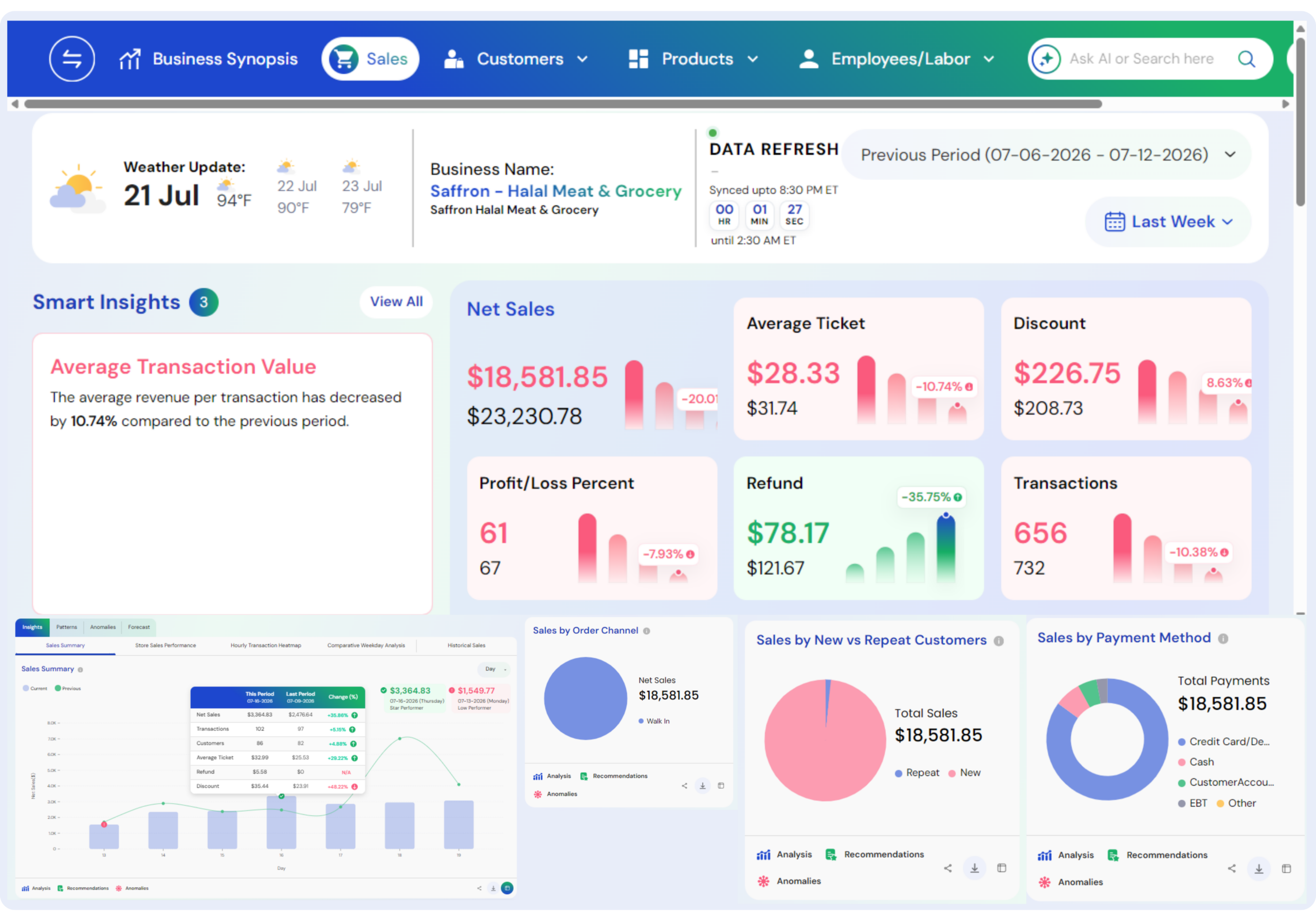
Modern restaurant management systems offer real-time dashboards that help managers to monitor important performance indicators like sales trends, average order value, and customer preferences.
This real-time visibility helps restaurants to instantly respond to changing customer demand and make smarter adjustments in operations.
While the restaurant industry keeps continuously evolving, leveraging data analytics in restaurants has become an important tool that helps to improve efficiency, increase revenue, and build sustainable growth.
Understanding these insights effectively can make a difference that helps restaurants to run a profitable restaurant business.
Also Read: How to Choose the Right Restaurant Data Analytics Solution
How Restaurants Use Restaurant Data Analytics to Reduce Costs and Increase Sales
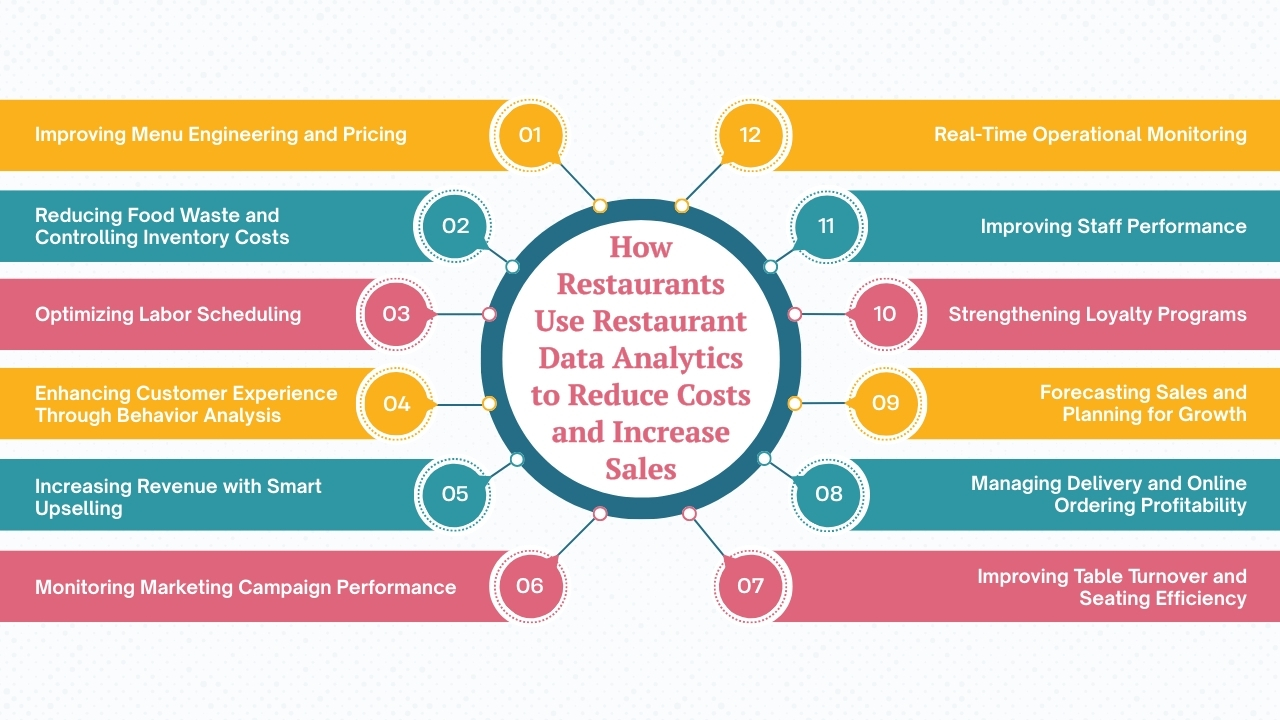
1. Improving Menu Engineering and Pricing
One of the most effective ways restaurant data analytics helps increase profit margins is through menu engineering and strategic pricing. Menu engineering involves analyzing the performance of menu items based on their popularity and profitability.
By evaluating sales data and customer ordering behavior, such tools help to identify the dishes that generate the most revenue and those dishes which are not generating any revenue.
Restaurant analytics tools provide insights by monitoring several important metrics. These insights help restaurant owners to understand how each item performs and know about the areas that require improvements.
Key metrics restaurants analyze include:
- Sales volume of each menu item to determine popularity
- Food cost percentage to understand ingredient expenses
- Contribution margin to measure profitability per item
- Customer ordering patterns to identify frequently paired items
Using this data, restaurants can categorize menu items into four main groups:
- Stars: Highly popular items with strong profit margins
- Plowhorses: Popular items but with lower profitability
- Puzzles: High-profit items that customers rarely order
- Dogs: Items with low popularity and low profitability
This classification helps restaurants refine their menus strategically. For instance, high-profit items which are not selling well can be repositioned on the menu, highlighted as chef’s special dishes, or promoted through attractive descriptions. Meanwhile, popular but low-margin items may require portion adjustments or ingredient substitutions.
Using analytics tools helps restaurants to determine best pricing. Implementing even small price changes driven by insights, helps restaurants to improve overall profit margins without affecting customer demand.
Also Read: Optimizing Restaurant Menu With AI Powered Data Analytics
2. Reducing Food Waste and Controlling Inventory Costs
Food waste is one of the important hidden expenses in restaurant operations. And when restaurants do not properly manage their inventory then there are high chances that they may purchase more ingredients than necessary or may fail to use the inventory before they expire.
This leads to unnecessary losses and impacts overall profits of restaurants. While using restaurant data analytics, businesses can track inventory levels, ingredient usage, and make smarter buying decisions.
These analytics tools help restaurants to identify patterns in ingredient usage and highlight the areas due to which food wastage occurs. When managers have access to inventory data, it helps managers to plan better purchasing decisions and ensure that ingredients are used efficiently.
Key data points restaurants can analyze include:
- Ingredient usage patterns to understand which ingredients are used most frequently
- Daily and weekly demand patterns to predict how much inventory is needed
- Supplier pricing changes to manage purchasing costs effectively
- Spoilage rates to identify items that frequently go to waste
- Portion control data to ensure consistent serving sizes
Analyzing this data helps restaurants to implement better inventory management and reduce unnecessary inventory stocking. For instance, analytics might reveal the ingredients which are ordered frequently or those ingredients which expire before being used.
It helps restaurants to adjust their order quantities or redesign menu items to better use available ingredients. Enhanced inventory control helps to reduce food waste, ingredient costs, and helps restaurants to increase their profit margins.
Also Read: AI Solution for Reducing Restaurant Food Waste
3. Optimizing Labor Scheduling
Labor is one of the largest expenses for restaurant owners. Inefficient scheduling can highly impact profitability.
Because when restaurants schedule too many staff during slow periods, labor expenses consistently increase without adding more additional revenue.
On the other hand, if restaurants schedule less staff during busy hours then it can often cause slower service, poor customer experiences, and lost sales.
Using restaurant data analytics helps restaurant owners to implement smarter staffing strategies which align labor expenses with customer demand.
Restaurant analytics tools evaluate past sales data and customer traffic patterns that helps to predict the days or hours when they will have peak business hours.
Evaluating this data helps managers to understand how staffing requirements change throughout the day, week, or season.
Key insights from labor analytics include:
- Peak hours during the day, when customer traffic is highest
- Busy days of the week, such as weekends or special promotion days
- Seasonal demand patterns, including holidays or tourist seasons
- Staffing requirements by shift, ensuring that they have the right number of staff available as per their requirements.
For instance, if analytics reveal that Tuesday evenings have lower customer traffic, then restaurant owners can schedule less staff during that day. While it reveals that weekends regularly bring higher demand, additional staff can be scheduled and provide effective service.
Aligning staff levels with actual staff demand, helps restaurants to control spending on labor while also maintaining service quality and improving overall profitability.
Also Read: How Data Analytics Improve the Measurement of Employee Performance
4. Enhancing Customer Experience Through Behavior Analysis
Understanding customer behavior is crucial for restaurants to build strong relationships with their customers and encourage them to regularly visit your restaurant.
Leveraging the restaurant data analytics helps businesses to understand customer habits, their dining preferences, and buying patterns in detail.
Rather than depending on assumptions, restaurant owners can use real data to know the dishes which they love, how frequently they visit, and the factors that influence their ordering decisions.
Restaurants can analyze several important customer behavior patterns such as:
- Popular menu combinations that customers frequently order together
- Average order value to understand their usual spending patterns
- Frequency of visits to identify loyal customers
- Preferred dining times of customers such as lunch, dinner, or late-night visits
These insights help restaurants to customize their menus and develop more personalized dining experiences for customers.
For instance, if analytics reveal the customers who order certain appetizers then they often additionally order specific beverages to their orders. Restaurants can use this data to create combo meals or special promotions which encourage higher spending.
Additionally, restaurants can build personalized marketing campaigns and targeted promotions based on customer preferences.
When customers receive food offers which align with their interest, then they are most likely to engage with the brand and return more regularly. Improving customer experience and building loyalty, restaurants can increase repeat business and also support long-term revenue growth.
Also Read: AI Revolutionizes Customer Experience in The Restaurant Industry
5. Increasing Revenue with Smart Upselling
Smart upselling is an effective way for restaurants to increase revenue without needing to attract more customers. Leveraging data analytics from POS systems, helps restaurant owners to understand ordering patterns and identify the items that are ordered together.
This helps businesses to make informed decisions regarding how to encourage customers to add extra items to their orders.
For instance, analytics may reveal that guests who are ordering burgers are often adding fries but hardly selecting a beverage. This insight helps restaurants to train staff to recommend drinks during checkout.
With time, these small improvements can often increase the average order value and also develop a noticeable increase in daily sales.
With time, these small improvements can raise the average order value and create a noticeable increase in daily sales.
Restaurants can use upselling strategies in several ways:
- Suggest premium beverages with meals
- Recommend desserts after main courses
- Create bundled meal deals for better value
- Offer limited-time upgrades or add-ons
These techniques are more effective when these strategies are implemented based on real customer data rather than simply guessing. Even a small rise in spending per order can cause high revenue growth when multiplied across hundreds of many other transactions.
Restaurant analytics tools like Livelytics help restaurants to find these opportunities quickly and use them to improve both customer experience and profits.
Also Read: How AI Helps in Boosting Restaurant Revenue and Profits
6. Monitoring Marketing Campaign Performance
Marketing is essential which helps restaurants to attract new customers and keep existing customers consistently engaged. However, every campaign does not perform equally well.
Some promotions may generate strong traffic and sales, while other promotions may bring little return. This is where it becomes essential to implement restaurant analytics.
It helps businesses to track marketing performance clearly and make smarter decisions based on results and not by simply guessing.
Restaurants can gather data from several marketing channels and analyze that data. These marketing channels include email campaigns, social media promotions, loyalty programs, online advertisements, and delivery platform promotions.
Reviewing such data helps restaurant owners to understand the campaigns that reach the most people, encourage more visits, and generate the highest profits.
Analytics also helps restaurant owners to identify customer behavior once they interact with a promotion, whether they place an order, return again, or redeem a special offer.
Key marketing sources restaurants can track include:
- Email campaigns
- Social media promotions
- Loyalty programs
- Online advertisements
- Delivery platform promotions
For instance, analytics may reveal the email offers that bring in more repeat customers than paid social media ads. These insights help restaurants to put their most budget into email marketing and improve return on investment.
By tracking campaign performance helps to reduce unwanted expenses, improve promotions, and ensure marketing efforts support long-term growth and profits.
Also Read: Business Intelligence Dashboard for Data Collection
7. Improving Table Turnover and Seating Efficiency
Table turnover and seating efficiency are important factors determining restaurant profitability. Even when customer demand is high, profits can be less if tables are not used effectively.
It is essential for restaurants to align both effectively serving guests and providing a comfortable dining experience.
So that even if the guests feel rushed, customer satisfaction may reduce, but if tables remain occupied for a long time without good customer flow then the restaurants may miss good sales during busy hours.
Restaurant analytics helps managers to understand the way dining space is used throughout the day. Tracking average dining time, table occupancy rates, reservation patterns, and waitlist data helps restaurants to understand why these delays or operational inefficiencies are occurring.
Important data points restaurants can track include:
- Average dining duration
- Table occupancy rates
- Reservation patterns
- Waitlist data
For instance, analytics may reveal that table sizes are underused during busy hours, poor seating.
This data helps manage to redesign the seating flow, combine tables strategically, and improve booking management. Restaurants may use this data to reduce customer wait times and provide seating to customers quickly while maintaining service quality.
Better seating efficiency helps restaurants to serve more guests during busy hours, increase overall profitability, and improve customer satisfaction without requiring them to expand their physical shops.
Also Read: Optimizing Table Turnover Using Analytics
8. Managing Delivery and Online Ordering Profitability
Online ordering and food delivery are important revenue streams for modern restaurants. These channels help to increase reach and convenience but often have high commission fees that highly impact profit margins.
Simply checking total sales is not enough, restaurants must understand the actual profitability of each platform. This is where advanced analytics tools like Livelytics play an important role by providing clear insights into delivery performance and costs.
Restaurant data analytics tools such as livelytics helps restaurants to track and compare different ordering channels at one place. This helps managers to identify the platforms which generate the most profits.
Rather than depending on assumptions, data-driven insights help businesses to make smarter decisions about where to focus their efforts.
Key delivery performance metrics include:
- Revenue generated from delivery orders
- Platform commission costs
- Customer acquisition rates
- Order volume by platform
For instance, analytics may reveal the third-party apps which bring high order volume but lower profits due to commissions, while direct website orders deliver good profit margins.
Using these insights, helps restaurants to promote direct ordering with special discounts or loyalty rewards.
Leveraging these livelytics helps restaurants to improve profitability, and build stronger direct relationships with customers while improving overall profit revenue.
Also Read: Restaurant Profit Margin Analytics Tools to Boost Profits
9. Forecasting Sales and Planning for Growth
Forecasting sales is a strong way for restaurants to remain prepared and grow strategically. Instead of reacting to daily changes, predictive analytics helps businesses to predict future demand on past data.
Understanding these past trends helps restaurants to make smarter decisions around staffing, inventory, and promotions, ensuring that restaurants are ready for both busy and slow periods.
Predictive analytics analyze patterns with time to identify recurring trends and external factors that influence customer behaviors. This helps restaurants to plan before time rather than simply guessing.
It helps managers to avoid common problems like overstaffing, stock shortages, or missed revenue opportunities during busy hours.
Key forecasting factors restaurants can analyze include:
- Seasonal sales patterns
- Holiday demand spikes
- Weather-related customer behavior
- Local event traffic increases
For instance, a restaurant located near a sports stadium may see an increase in the number of customers during major games or concerts. Using these predictive insights, the restaurants can prepare by increasing staff, stocking more inventory, and launching targeted promotions.
Similarly, slower periods can be managed by adjusting schedules or offering special deals to attract customers.
Accurate forecasting reduces chances of uncertainty and improves operational efficiency. This helps restaurants to remain proactive, deliver better service, and increase revenue opportunities.
Over time, this data-driven approach supports consistent growth and ensures that the business is always prepared for changing demand.
Also Read: How Restaurant Can Predict Trends With Analytics
10. Strengthening Loyalty Programs
Loyalty programs are one of the effective ways for restaurants to build good relationships with customers and increase repeat visits. But every reward or incentive does not deliver the same results.
Some offers may attract customer attention but are unable to drive repeat business. This is why data analytics is essential that helps restaurants to understand the factors that motivate their customers to revisit.
Analyzing this loyal program data, helps restaurants to understand deeper insights about customer behavior and preference. Instead of offering generic rewards, businesses can personalize their loyalty programs to align with the customer demand.
This improves engagement and ensures that loyalty efforts can lead to measurable results rather than wasting promotions.
Key loyalty metrics restaurants can track include:
- Loyalty member spending patterns
- Redemption rates
- Visit frequency after promotions
- Reward effectiveness
For instance, analytics may reveal the customers who respond positively to free appetizers rather than simple discount coupons.
These insights help restaurants to redesign their rewards and focus on experience which encourage customers for repeat or regular visits. It helps to identify the most loyal customers and offer personalized incentives to build stronger relationships with customers.
A well-optimized loyalty program not just increases customer retention but also increases overall revenue. Using data-driven insights, helps restaurants to develop impactful rewards, improve customer satisfaction, and drive long-term profits through regular repeat business.
Also Read: Boosting Brand Loyalty With Customer Sentiment Analysis
11. Improving Staff Performance
Staff performances play an important role in achieving restaurant success. Whether customer service, order accuracy, or upselling, employees influence guest experience and overall profits.
These analytics tools provide insights about how each staff member is performing, helping managers to find the strengths and weaknesses and enhance overall staff efficiency.
Tracking the data of employees helps restaurants to go beyond guessing and analyze staff performance on the basis of real metrics. This helps managers to recognize the top staff performers and understand the qualities that make them successful.
At the same time, it reveals areas where additional training is required or support may be needed, ensuring that all staff members perform their tasks consistently.
Key staff performance metrics restaurants can track include:
- Sales per server
- Order accuracy
- Table service times
- Upselling success rates
For instance, analytics may reveal that certain staff members regularly deliver higher sales by recommending add-ons or premium items. Managers can use these insights to train other staff members on effective upselling.
Similarly, identifying delays in service times or frequent order helps restaurants to implement targeted improvements in communication and workflow.
Improving staff performance often leads to better customer experiences, faster service, and increased sales. Using data-driven insights helps restaurants to build a stronger and efficient team which leads to long-term profitability.
Also Read: Real-time analytics Why Does Your Business Needs it
12. Real-Time Operational Monitoring
Tracking real-time operations is essential for modern restaurants. Instead of waiting for reports at the end of the day, restaurant owners have direct access to live dashboards which reveal key performance metrics throughout the day.
This helps restaurants to remain informed about the operational patterns and react instantly to customer problems and instantly make adjustments to run operations smoothly.
Having real-time insights helps restaurants to gain instant visibility into the trends happening in the restaurants which involves tracking sales trends, staff performance, and inventory use in real time.
Such awareness helps restaurants to avoid small restaurant concerns from turning into major problems which ensures services are consistent during busy hours.
Key real-time metrics restaurants can track include:
- Hourly sales
- Average order value
- Labor cost percentage
- Inventory levels
For instance, if sales suddenly decrease during a shift, managers can quickly identify whether the concern happened because of slow service, staffing shortages, or unavailable menu items.
Similarly, if labor costs are high, then restaurants can adjust staff schedules in real time to maintain profits. Also tracking inventory levels helps to avoid any inventory stockouts which may otherwise affect customer experience.
Having real-time insights helps restaurants to remain quick, make instant decisions, and maintain operational efficiency. Implementing operations on the basis of real-time data helps businesses to improve their restaurant performance, reduce losses and offer a better dining experience for customers.
Conclusion
Restaurant data analytics helps restaurants to improve profits by converting everyday operational data into actionable insights. Rather than depending on guesswork, restaurant owners can use data to determine where they are gaining profits or the factors that are leading to loss.
This helps restaurants to make smarter decisions which impacts profit margins directly.
Restaurant analytics helps to identify high-performing menu items and those items with low profits. Restaurants by optimizing menu pricing, promoting high-margin dishes and removing underperforming items helps restaurants to increase overall profit margins.
It helps to control costs by tracking inventory usage, reducing food waste, and avoiding over-ordering.
Additionally, data analytics helps restaurants to operate efficiently. Restaurants can optimize staff scheduling on the basis of busy hours, reducing unwanted staff expenses and also maintaining service quality.
Having insights about customer behaviors helps to create targeted marketing and effective loyalty programs which leads to repeat business.
Furthermore, analytics tools can track delivery platform performance and reduce their dependence on high-commission channels.
With better control over costs, improved efficiency, and smarter decision-making, restaurant data analytics helps maximize revenue while minimizing expenses, ultimately leading to stronger and more sustainable profit margins.
If you still have any query about how restaurant data analytics helps increase profit margins then you may book a free demo at Livelytics and we are more than happy to assist you.