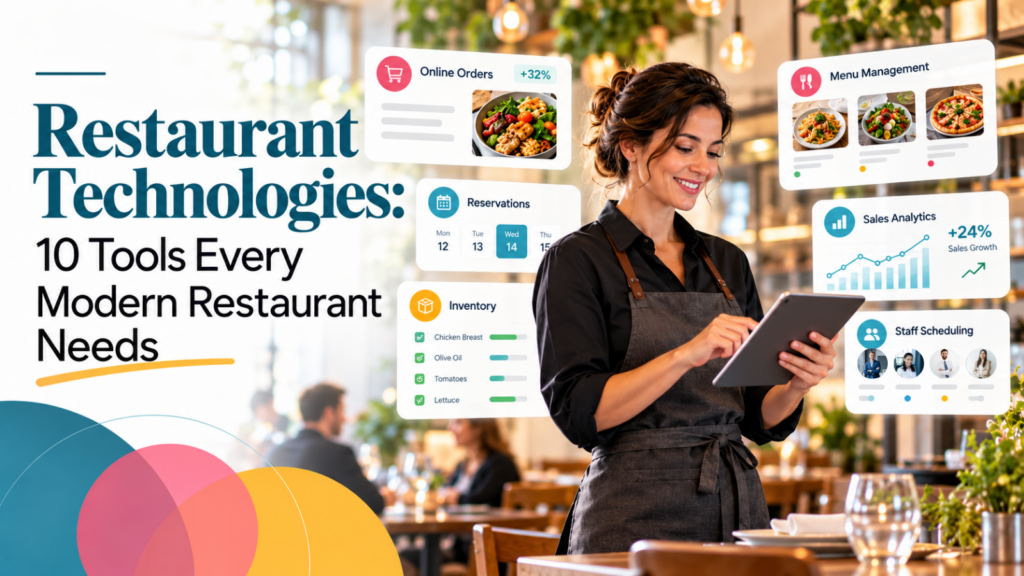
To succeed in a highly competitive market like restaurants, it is essential for modern restaurants to offer beyond tasty food and excellent services. Restaurants also require reliable restaurant technologies that help to manage daily operations, control expenses, improve efficiency, and offer memorable customer experiences.
Whether restaurant POS systems, online ordering platforms, inventory management software, and workforce management tools, technology helps restaurant owners to simplify their task management and make informed business decisions.
Selecting the right restaurant technology tools help restaurants to reduce any manual errors, monitor food costs, manage employee schedules, and improve customer relationships.
Using kitchen display systems, display systems, reservation software, and customer loyalty programs support restaurants to make smoother operations and encourage customers for repeat visits.
However, restaurants should choose the technology that aligns with their needs, budget, and long-term goals instead of investing in unnecessary software.
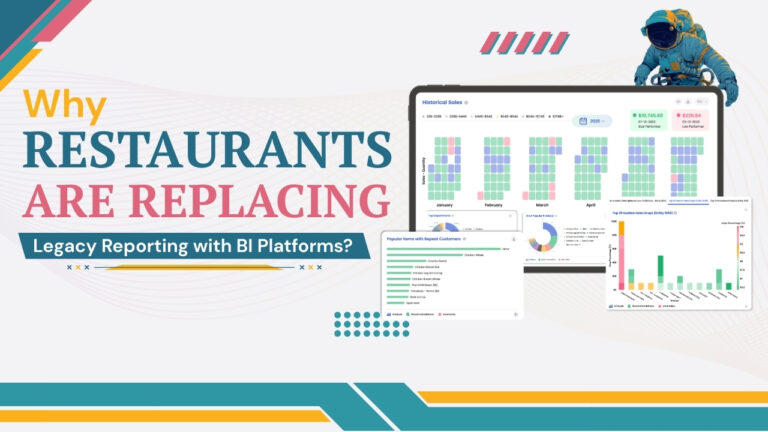
Using business intelligence and analytics are equally important as it help restaurant managers to understand sales patterns, customer feedback, and operational performance.
Platforms like Livelytics can help to connect supported business data and provide insights that enable restaurant leaders to identify performance gaps and explore improvement opportunities. By combining suitable technology with effective management, restaurants can make smarter decisions and to remain competitive.
This blog will walk you through 10 essential restaurant technologies that every modern restaurant should consider, explaining their important benefits and how they can support operational efficiency, customer satisfaction levels, and sustainable business growth.
Also Read: AI For Restaurant Marketing
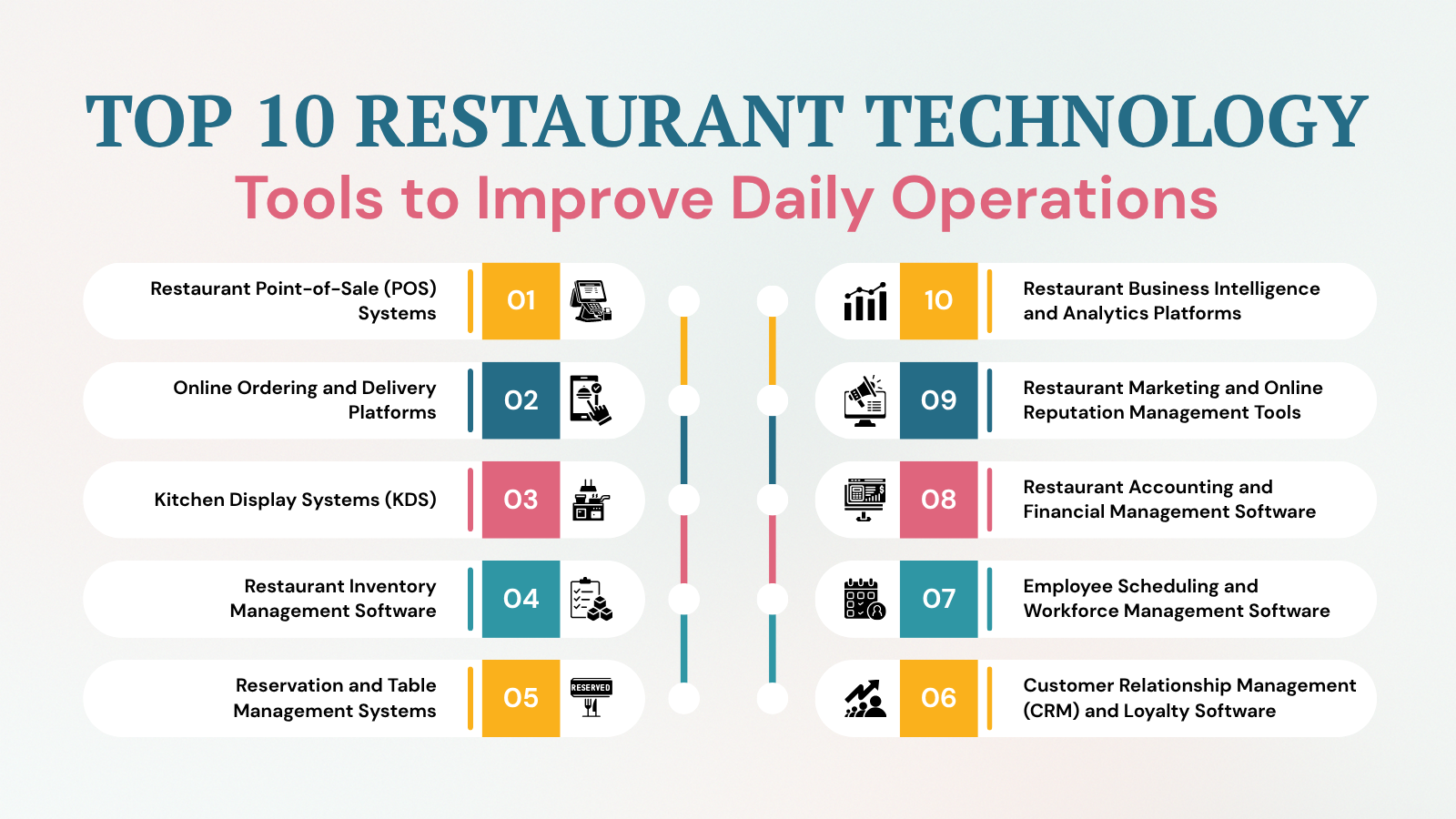
Top 10 Restaurant Technology Tools to Improve Daily Operations
1. Restaurant Point-of-Sale (POS) Systems
These systems are one of the most important technologies for managing orders and transactions. It lets staff members take orders, calculate bills, process payments, apply discounts, and record sales.
Depending on the system, additional features included in these systems include inventory tracking, menu management, customer loyalty programs, employee permissions, and sales reporting.
Without a good POS system, restaurants may use handwritten tickets, manual calculations, and spreadsheets to manage orders and sales. While it can increase the risk of billing mistakes, incorrect orders, and also delays during busy hours.
Benefits of restaurant POS software
- Faster order processing: It helps staff members to take orders online and send them to the right kitchen station.
- Accurate billing: It automates billing which helps restaurants to reduce manual errors.
- Sales tracking: It helps managers to track revenue, popular menu items, and transaction patterns.
- Payment flexibility: It enables restaurants to support different payment options.
- Business reporting: Sales records help restaurant owners to check performance and to plan improvements.
While choosing a POS solution, it is essential for restaurants to consider ease of use, payment processing fees, hardware requirements, offline capabilities, reporting features, and integration options.
For instance, a restaurant by reviewing POS reports can identify its best-selling dishes and peak sales hours. Using this data helps managers to plan staffing, prepare food ingredients, and create valid promotions.
Integrating POS data to a business intelligence platform like Livelytics helps restaurant leaders to analyze sales with other available business indicators. Having a broader view may help restaurants to understand change in performances and identify aspects that need attention.
Also Read: Types of POS System for Restaurants
2. Online Ordering and Delivery Platforms
Through online ordering and delivery platforms restaurants can browse menus, place food orders, and also make payments through a website, mobile apps, or third-party delivery platform.
These platforms give restaurants more ways to serve customers who prefer takeaway, pickup, or delivery. Online ordering and delivery platforms can make order management simple when it is integrated with POS or kitchen systems of the restaurant.
It helps staff members to spend less time taking or transferring order details manually, while customers can review their menu selections or transferring order details manually, while customers can review their menu selections before submitting an order.
Why online ordering matters
- Customer convenience: It lets guests place orders online directly without reaching out to the restaurant.
- Additional sales opportunities: Restaurants can reach out to customers who prefer to dine at home or work.
- Clearer order details: Online forms let customers to gather clearer order details and any modifications and special instructions from customers.
- Improved preparation planning: Online orders can help kitchen teams to organize kitchen teams for upcoming work.
- Useful customer insights: Reports may provide useful insights about popular dishes and peak customer ordering hours.
For instance, a restaurant that receives many lunch orders can use order reports to identify its peak hours. Managers can then accordingly instruct the kitchen team to prepare ingredients in advance and adjust employee staff whenever it is appropriate.
Before choosing an online ordering platform, it is essential for restaurants to check subscription costs, delivery commissions, payment processing, delivery coverage, menu synchronization, and customer data access.
They must also check whether orders automatically reach your POS system or need staff members to enter them manually.
Restaurants should also keep prices, item availability, descriptions, and estimated food preparation times consistent across channels. Providing a convenient ordering experience can quickly become frustrating if customers repeatedly experience their preferable dishes to be unavailable or if there are any unexpected charges.
Also Read: Mobile Marketing for Restaurants
3. Kitchen Display Systems (KDS)
A Kitchen Display Systems(KDS)uses screens to show orders and food preparation instructions to kitchen staff. Such systems can replace printed tickets and allow teams to track orders when they move through different food preparation phases.
In a busy restaurant, it is essential to maintain coordination among kitchen staff members and front office staff. Because if they miss to take an order, or overlook a menu modification, or prepare food dishes at different speeds can slow down service. These systems make it easier for restaurants to access and organize orders.
Important KDS features
- Digital order routing: It involves sending orders to the appropriate food preparation stations.
- Preparation timers: Track how long customers have been waiting for the order.
- Order status updates: Mark orders as being prepared or ready when supported.
- Special instructions: Display modifications and customer requests clearly.
- Order prioritization: It helps kitchen teams to identify tickets that require attention.
Consider a restaurant serving burgers, salads, and desserts. Having an integrated KDS system can route each item to the correct food stations and also help staff members to coordinate food preparation for the same order.
While comparing different kitchen display systems, restaurants must consider the system that provides screen reliability, hardware durability, POS integration, features for menu modifiers, and backup for equipment or network failures.
A KDS system does not quickly ensure faster service. While kitchen layout, staffing, menu complexity, and employee training still affect performance. The main purpose is to reduce avoidable confusion and help kitchen teams to work more consistently.
Also Read: AI Solutions for Reducing Restaurant Waste
4. Restaurant Inventory Management Software
Food wastage, shortage of ingredients, and changing supplier prices can highly affect restaurant profits. Restaurant inventory management software helps businesses to track ingredient levels and usage, organize ingredient purchasing, and understand food expenses.
Depending on the platform, features provided by the software may include stock counts, supplier records, purchase orders, recipe expenses, food waste tracking, invoice management, and low-stock alerts. While some systems may also connect inventory data with POS sales to estimate the levels of ingredient use.
How inventory technology helps
- Stock monitoring: Track available ingredients and supplies.
- Reordering: Identify products that need replenishment.
- Food-cost control: Review ingredient costs in relation to menu prices.
- Waste reduction: Record spoilage and unnecessary food disposal.
- Purchasing management: Maintain supplier information and review price changes.
- Menu planning: Identify dishes with high ingredient costs.
For instance, a cafe may sell more iced beverages during the summer season. Reviewing past sales and use of inventory help restaurant managers to estimate the requirements of coffee, milk, syrup, and other ingredients.
While the right inventory details is based on regular procedures. Employees should track deliveries, follow standardized recipes, measure food portions appropriately, and also document food waste. Incorrect inventory reports can lead to unwanted inventory purchasing or unexpected food shortages.
Restaurants should also theoretical food costs with actual costs. Theoretical costs show ingredient consumption based on recipes and recorded sales, while actual costs show inventory consumption over a certain period.
Differences in both expenses indicates food waste, food portion inconsistencies, reporting mistakes, or other problems that need investigation.
With reliable inventory data helps restaurants to make better purchasing decisions, reduce avoidable losses, and protect profit margins.
Also Read: AI For Restaurant Inventory
5. Reservation and Table Management Systems
Restaurant reservation software helps restaurants to manage bookings, walk-in guests, waiting lists, seating arrangements, and availability of seats. These systems are essential for full-service restaurants and locations that experience high customer demand during weekends, holidays, or special events.
It enables restaurants to use a centralized system to review reservations and organize seating instead of managing bookings through notebooks, phone calls, or messages.
Benefits of reservation technology
- Booking management: It helps to manage reservations from a centralized system.
- Table utilization: It helps to track table availability and seating arrangements.
- Waitlist coordination: It helps to record waiting guests and convey availability of seats.
- Guest personalization: It stores valid guest preferences and special guest requests whenever appropriate.
- Demand planning: It helps to review booking trends to estimate busy hours.
- Automated communication: It helps to send supported booking confirmations and reminders.
For example, a restaurant expecting several large groups on Saturday evening can use reservation reports to manage seating arrangement and predict service requirements.
While choosing reservation software, it is essential for restaurants to review booking fees, cancellation management, deposits, guest messaging, and integration with other restaurant systems.
Technology should support hospitality instead of replacing it. Even if the restaurants implement these systems, it is essential to welcome guests warmly, handle special requests, and convey delays honestly. A reservation system organizes information, while attentive staff create a positive dining experience.
Also Read: Optimizing Table-Turnover Using Analytics
6. Customer Relationship Management (CRM) and Loyalty Software
It is essential for restaurants to build long-term relationships with customers to ensure business growth. Restaurant CRM and loyalty software that helps businesses to organize customer data, manage rewards, personalize conversations, and encourage repeat visits.
Based on the platform, such tools may integrate data from loyalty programs, online orders, reservations, customer feedback, and marketing campaigns.
What CRM and loyalty tools can do
- Recognize returning customers: It helps to recognize returning customers of your restaurant.
- Manage rewards: It helps managers to manage rewards by tracking points, discounts, memberships, and reward redemption.
- Personalize promotions: It helps managers to personalize promotions and send valid offers to suitable customer groups.
- Encourage repeat visits: It helps to create campaigns for returning or inactive customers.
- Measure marketing performance: It helps restaurants to review customer engagement and sales.
- Improve service: These systems allow valid customer preferences available to authorized staff members.
For instance, a restaurant could provide a birthday reward to customers who have agreed to receive their promotional messages. This might also promote a new menu to customers who have expressed interest in similar dishes.
While restaurants should avoid high numbers of messages or collecting unnecessary personal data. Marketing conversations should respect customer preferences and applicable privacy requirements.
Whether current systems can be integrated to current systems is another important consideration. Because if loyalty balance, customer profiles, and transaction records do not synchronize properly then staff members may struggle to apply rewards correctly.
The goal is not just to gather customer information. Rather it is to use appropriate data to improve services, provide valid offers, and encourage customers to return.
Also Read: Boosting Brand Loyalty With Customer Sentiment Analysis
7. Employee Scheduling and Workforce Management Software
Staff members of restaurants influence everything from order accuracy or service speed. Because insufficient staffing can cause long queues and delayed orders, while high numbers of staffing during quiet hours can increase labor expenses.
Restaurant workforce management software helps managers to create their schedules, record working hours, coordinate shift changes, manage time-off requests, and track labor expenses. Some systems support tracking attendances, payroll preparation, and conversations with employees.
Key workforce management benefits
- Simplified scheduling: It helps to create and update employee shifts online.
- Demand-based staffing: They must align staffing levels with expected customer traffic.
- Time tracking: It helps to track staff attendance and working hours.
- Team communication: It helps to share changes in schedules and important updates.
- Labor-cost visibility: It helps to compare staffing costs with sales.
- Reduced administration: It helps to organize workforce tasks more efficiently.
For instance, a restaurant may experience high customer demand during Friday dinner service but lower customer traffic on Monday afternoons. Managers can review past sales and expected bookings to create more suitable schedules.
Some workforce platforms offer forecasting tools, but managers should review recommendations against availability of employees, training requirements, service standards, and local employment rules.
Livelytics helps restaurant managers connect workforce data with sales, customer experience, and operational insights to make more informed staffing decisions.
It may help managers to analyze whether staffing levels are causing service delays or customer complaints.
However, scheduling software and business intelligence platforms serve different purposes. Workforce tools manage staff shifts and administration, while analytics platforms help to interpret performance data. When used appropriately, this software can support better operational decisions.
Also Read: How Can Data Analytics Can improve the Measurement of Employee Performance
8. Restaurant Accounting and Financial Management Software
Restaurant owners must track aspects beyond daily sales. It is essential for them to manage suppliers in voices, payroll, rent, taxes, payment fees, operating costs, and cash flow.
Restaurant accounting software helps restaurants to manage financial records and offers information for budgeting and business planning.
Based on the platform, such software may provide features like bookkeeping, cost tracking, invoice processing, bank reconciliation, financial statements, and integration with payroll or POS systems.
What financial software can support
- Income and expense tracking: It helps to track income and expenses.
- Invoice management: It helps to record supplier bills and payment deadlines.
- Cash-flow monitoring: It helps to review expected income and outgoing payments.
- Financial reporting: It helps to prepare profit and loss statements.
- Budgeting: It helps to compare actual expenses with planned costs.
- Reconciliation: It helps to match recorded transactions with bank records.
Assume if a restaurant’s sales are increasing, but its available cash remains limited. Reviewing supplier payments, labor expenses, food expenses, rent, and transaction costs may explain why increased revenue has not led to stronger cash flow.
Restaurant owners should understand the difference between revenue, gross profit, and net profit. Revenue is the income generated through sales. Gross profit shows revenue after the valid cost of goods sold is deducted. Net profit represents additional costs and other applicable terms.
The right financial reporting is based on complete records and suitable accounting practices. While it is also essential for businesses to consult qualified professionals whenever necessary for tax compliance and financial reporting.
For restaurant groups, having consolidated reports can help them to compare costs and profits across locations. This makes it easier for restaurants to analyze why one location performs differently from another location.
Also Read: Choosing the Right AI Data Platform for Your Business
9. Restaurant Marketing and Online Reputation Management Tools
Customers often find restaurants through search engines, social media, online reviews, and recommendations. Restaurant marketing and reputation management tools help businesses to promote their offerings, communicate with customers, track customer feedback, and evaluate marketing performance.
Marketing software may support email campaigns, social media scheduling, audience segmentation, and promotional reporting. Reputation tools can help restaurants to track reviews and identify recurring problems.
Essential marketing and reputation features
- Campaign management: Organize promotional messages across supported channels.
- Audience segmentation: Tailor communications to appropriate customer groups.
- Review monitoring: Track feedback across supported platforms.
- Sentiment analysis: Identify common positive and negative themes.
- Campaign reporting: Review engagement and attributable results where available.
- Reputation insights: Understand recurring comments about food, service, pricing, and waiting times.
For example, a restaurant may receive repeated complaints about slow service during weekend evenings. Rather than treating every review as an isolated incident, managers can investigate whether the feedback reflects a recurring operational issue.
This is the aspect where Livelytics can be essential. Its business intelligence capabilities are designed to help organizations to analyze customer experience information and connect feedback with other available business indicators. Restaurant operators can use these insights to compare locations, check recurring problems, and focus areas on improvement.
Consider a restaurant group notices a decline in customer satisfaction at one branch. Managers could review customer reviews along with sales, staffing, and service-based data, where supported, to analyze possible explanations.
Such combined information may reveal patterns that are worth exploring, although correlation alone does not prove the cause of a problem.
Restaurants should respond to reviews professionally, protect customer privacy, and avoid misleading promotional practices. Marketing technology is essential as it supports genuine conversations and helps businesses to act on customer feedback.
Also Read: Artificial Intelligence Vs Machine Learning
10. Restaurant Business Intelligence and Analytics Platforms
Everyday restaurants generate information through POS transactions, online orders, reservations, inventory systems, staff scheduling, accounting software, marketing campaigns, and customer reviews.
When this information remains separated across different applications, it can be difficult to understand the performance of overall businesses.
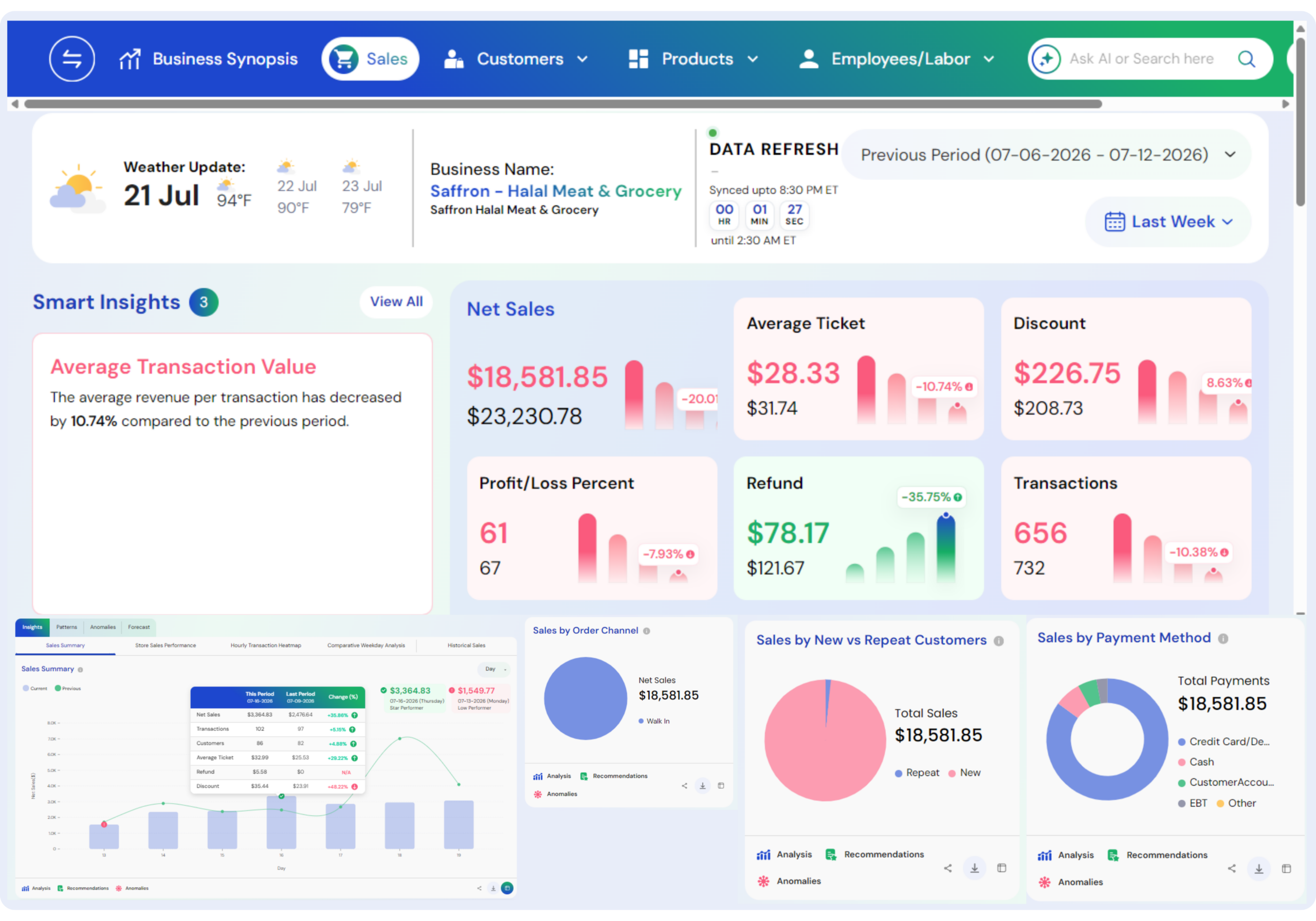
Restaurant business intelligence (BI) and analytics platforms help to bring information from supported sources into dashboards, reports, and analytical views. Certain platforms can also use AI to summarize patterns, identify unusual changes, and suggest aspects for further investigation.
Why restaurant analytics matters
- Performance monitoring: It helps to review sales, expenses, customer experience, and operational metrics.
- Location comparisons: It helps to identify differences in performances between different restaurant locations.
- Trend analysis: It helps to track changes over time.
- Anomaly detection: It helps to identify unusual results that may require attention.
- Root-cause investigation: It helps to evaluate several indicators to understand root causes of certain patterns or problems.
- Decision support: It helps to convert complex information into actionable questions.
For example, a basic sales report may show that revenue was reduced during last month. A centralized analytics platform helps managers to analyze the changes along with customer traffic, menu performance, labor expenses, marketing results, and guest feedback, only if the valid data is available.
Conclusion
The right restaurant technologies can help modern restaurants improve efficiency, manage expenses, enhance customer experiences, and make informed decisions.
POS systems, online ordering platforms, kitchen displays, inventory software, reservation tools, CRM systems, workforce management, accounting applications, marketing tools, and analytics platforms each technology can support a different aspect of restaurant operations.
The best approach is to connect these tools. Sales data becomes more useful when management compares it with food expenses, staffing levels, customer feedback, and financial performance.
This wider perspective helps restaurant owners to go beyond identifying problems and start investigating possible causes.
Livelytics supports this data-driven approach by helping businesses analyze supported customer experience, sales, workforce, financial, marketing, and operational information. Its business intelligence capabilities can help restaurant leaders compare performance, identify potential improvement opportunities, and prioritize action.
Before investing in new software, it is essential to identify biggest challenges, verify integration options, and establish measurable goals. Start with the tools that address your immediate needs and expand as your business grows. With a thoughtful technology strategy, restaurants can simplify daily work, strengthen decision-making, and deliver more consistent experiences for customers and employees.
If you still have any query about restaurant technologies about top 10 tools that every modern restaurant needs then you may write to us at Livelytics and we are more than happy to assist you.