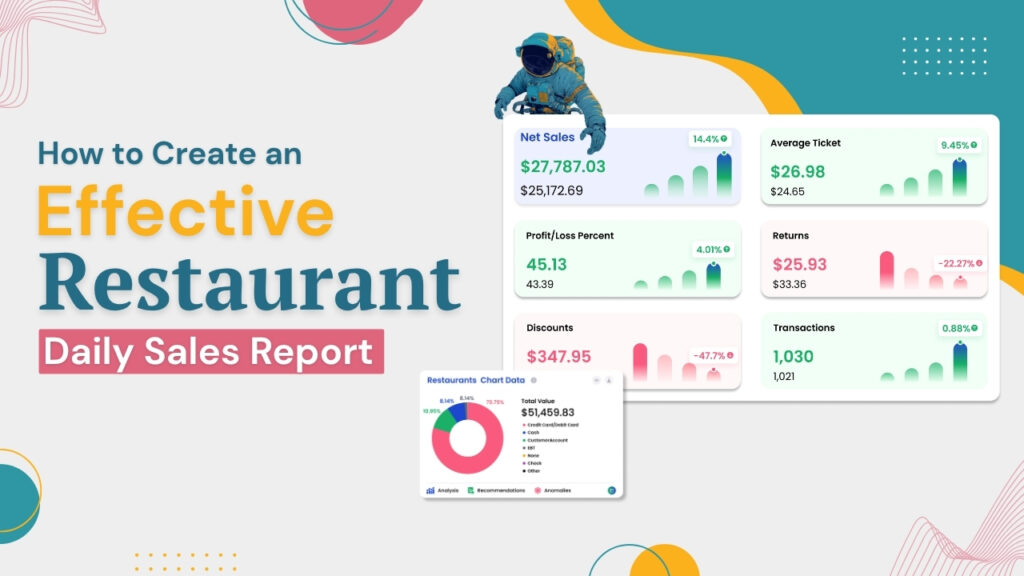

Today running a restaurant successfully requires not just great food and service rather it requires smart, data-driven decisions. One of the most crucial tools for achieving this is through a well designed Restaurant Daily Sales Report.
Such reports act as the foundation of your daily restaurant operations, offering a clear overview of their revenue, expenses, and overall business performance.
Whether you are running a small cafe or a multi-location dining chain, it is essential to maintain an accurate Daily Sales Report to stay profitable and competitive.
An effective Restaurant Sales Report not just records total sales. Rather these reports provide detailed insights about food and beverage sales, number of transactions, average order value, and peak hours.
Analyzing these metrics helps restaurant owners and managers to understand customer behavior, improve menu performance, and optimize staffing.
Additionally, tracking daily expenses like labor costs, inventory usage, and operational expenses ensures that restaurants have better control over profit margins.
In a quickly changing and competitive restaurant industry, just guessing while making decisions is not enough.
With the help of modern POS systems and advanced restaurant reporting tools, generating and managing a Daily Restaurant Sales Report has become faster and more efficient.
These reports not just support daily operational decisions but also help restaurants to identify long-term patterns which drive growth.
Through this blog, we will walk you through an effective Restaurant Daily Sales Report that has the important components to include and how to use this data to improve efficiency, revenue, and maximize overall profits.
Also Read: Restaurant Analytics and Reporting Drive Better Business Decisions
What is a Restaurant Daily Sales Report?
A Restaurant Daily Sales Report is a structured document or digital document. This report collects the financial and operational activities of a restaurant for a certain day.
These reports provide a complete overview of the way the business is performing which helps restaurant owners to make informed and timely decisions.
When restaurants review such reports daily, you can identify patterns, spot problems early, and maintain better control over restaurant operations.
This report usually includes several crucial components that provide detailed insights into your business.
- Total Sales: Total Sales shows the total revenue generated for a day
- Number of Transactions: It shows the number of orders that were processed reflecting customer traffic.
- Payment Methods: It breaks down payments like cash, credit or debit cards, and digital wallets.
- Discounts and Refunds: It tracks any deductions from sales that helps restaurants to track losses or promotional impact.
- Staff Performance: It shows employee productivity and staff contribution to sales.
- Inventory Usage: Track stocks being used to avoid inventory shortages or wastage.
A Restaurant Daily Sales Report works as a daily performance check which offers clear insights about your operations that helps to evaluate results which helps restaurants to make better business decisions.
This report helps restaurants to quickly understand their performance, which helps them to improve efficiency, and make data-driven decisions which support long-term growth and profits.
Also Read: How to Increase Restaurant Sales Without Advertising
Why Daily Sales Reports Are Important
1. Real-Time Decision Making
A Restaurant Daily Sales Report helps restaurants to make quick and informed decisions on the basis of real-time data rather than waiting for weekly or monthly reports.
In a quickly changing restaurant industry, even if there is a small delay in decision-making can lead to missed opportunities or increased losses.
With daily insights, restaurants can instantly adjust pricing, offer limited-time offers, manage inventory shortages, or optimize staffing for upcoming changes.
For instance, if sales are less than expected during lunch hours, then restaurants may quickly launch a promotion to improve traffic. Such a level of responsiveness helps restaurants to stay quick and competitive in a constantly changing market.
Also Read: How Real-time Decisions Drive Smarter Business Decisions
2. Track Performance Trends
Daily reports help restaurants to consistently track and analyze important business patterns with time. When restaurants review data every day, then you can easily identify peak business hours, best-selling items, and slower days of the week.
Such insights are crucial for improving operations which helps business to plan ahead. For instance, if weekends generate higher revenue, then you can stay prepared by increasing staff or stock levels.
Similarly, when restaurants identify underperforming menu items, it helps restaurants to refine their offerings. Tracking such trends through a Daily Sales Report helps them to make smarter, data-backed decisions which improve overall efficiency.
Also Read: 12 Performance Restaurant Metrics Every Owner Must Track
3. Control Costs and Reduce Losses
One of the biggest benefits of daily reports is that restaurants will have better cost control. A Restaurant Sales Report helps to track their expenses like labor expenses, discounts, and refunds on a daily basis.
Such visibility helps restaurants to quickly identify unusual trends such as high discounts or inventory shrinkage. When restaurants resolve these problems instantly then it helps to avoid revenue loss and ensure stronger and more sustainable profit margins for your business.
Additionally, tracking inventory usage daily helps restaurants to avoid any overstocking or inventory spoilage that ensures that resources are used efficiently.
Also Read: Cost Effective AI Solution for Restaurants
4. Improve Staff Accountability and Boost Profitability
Daily sales reports help to improve staff accountability. Tracking individual staff or shift-based performance, ensures that employees are handling orders, cash, and customer orders responsibly.
Maintaining transparency in staff accountability reduces the risk of mistakes, fraud, or mismanagement. At the same time, these insights often cause increased profits.
With better staff performance, controlled expenses, and data-driven decisions helps restaurants to operate more efficiently.
Ultimately, a well maintained Restaurant Daily Sales Report works as an important tool that drives consistent growth and maximizes profits.
Also Read: How Data Analytics Improve the Employee Performance
Key Components of an Effective Daily Sales Report
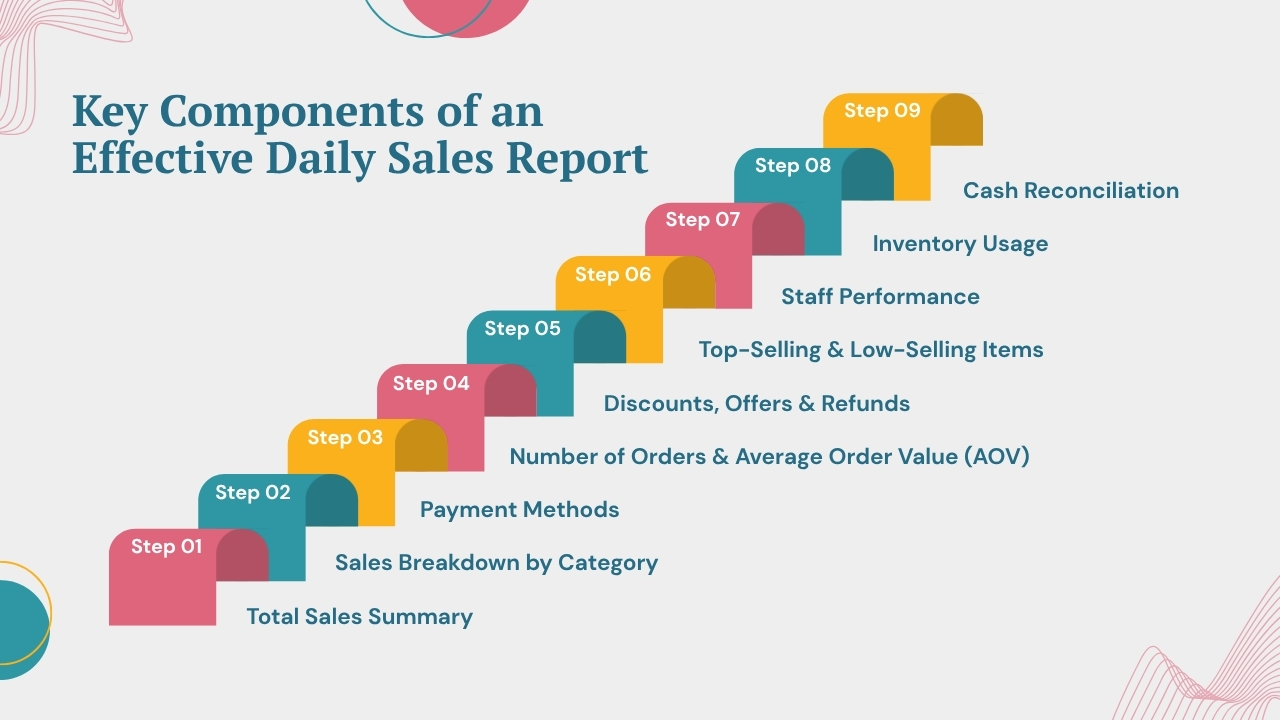
For creating a powerful Restaurant Daily Sales Report, it is essential to include the right data points that give a complete overview of the daily performance of restaurants.
Below are the key components explained in detail:
1. Total Sales Summary
Total Sales Summary is an important section of your report that gives a clear overview of the financial performance of the restaurant for the day. It should include:
- Gross Sales: Gross Sales is the total revenue earned before any deductions.
- Discounts: Discounts include all reductions applied through offers, promotions, or coupons.
- Net Sales: Net sales is the final amount after subtracting discounts.
- Taxes: Applicable GST or other government taxes collected.
- Service Charges: Any additional charges added to the bill.
For example, if your Gross Sales are ₹50,000 and Discounts are ₹5,000, your Net Sales would be ₹45,000. This section helps restaurants to instantly check daily income, revenue losses, and make better pricing or promotional decisions.
This summary helps restaurants to know about the revenue that the restaurant earned and the revenue which got reduced through discounts or taxes.
Also Read: How AI Unlocks Business Insights the Drive Required Results
2. Sales Breakdown by Category
Restaurants by segmenting their sales into different categories helps them to identify top-performing menu items and know where their revenue is actually coming from.
Common categories include:
- Food
- Beverages
- Desserts
- Combos or Meal Deals
This data is extremely valuable for menu optimization. For instance, if they are able to generate high revenue through beverages then the restaurants may introduce more drink options or premium pricing. Similarly, low performing food items can be improved or replaced.
Also Read: How to Increase Restaurant Sales Without Advertising
3. Payment Methods
Restaurants may have to track how customers pay is crucial for both operational and financial accuracy. Your report should include:
- Cash
- Credit/Debit Cards
- UPI / Digital Wallets
- Online Orders (Swiggy, Zomato, etc.)
It helps to reconcile accounts accurately at the end of each day, identify any mismatch between POS records, and actual revenue collections, and also understand about the payment methods that the customers prefer most.
As a result, your restaurant can improve financial accuracy, reduce errors, and plan better payment handling.
Also Read: POS Reports Vs Real-time Analytics
4. Number of Orders & Average Order Value (AOV)
This section shows customer activity and their spending habits that helps to understand how efficiently your restaurant generates revenue from each other.
Some crucial metrics are total orders that represent the number of transactions processed during the day, and Average Order Value(AOV) that show the amount that each customer spends on an average.
The Average Order Value(AOV) is calculated by dividing the total sales by the number of orders processed.A higher Average Order Value indicates better upselling and customer spending.
Also Read: Restaurant Data Analysis
5. Discounts, Offers & Refunds
Tracking all deductions from revenue after implementing discounts, offers and refunds is essential to avoid unnecessary revenue loss.
This section should include:
- Promotional Discounts
- Staff Discounts
- Coupons and Offers
- Refunds or Voided Transactions
Tracking these metrics regularly helps restaurants to check whether they are misusing or overusing any discounts and evaluate how effectively your promotions are increasing sales, and also helps them to maintain strong control over their revenue that ensures that profits are secured while providing value to customers.
Also Read: How AI Helps in Boosting Restaurant Revenue Profits
6. Top-Selling & Low-Selling Items
Understanding your menu performance is crucial to increase profits. This section should identify:
- Best-Selling Items: Popular, high-demand dishes that consistently generate strong revenue and attract customers.
- Low-Selling Items: Underperforming dishes with low demand that may require improvement, repositioning, or removal to optimize your menu and improve overall profits.
Then restaurants must use this data to:
- Promote high-margin and popular items
- Improve recipes or presentation of low-performing items
- Remove items which consistently underperform
Also Read: Business Intelligence Dashboard for Data Collection
7. Staff Performance
Your staff is crucial in daily sales so tracking their performance is essential for improving efficiency and revenue.
- Sales per Staff Member: It measures individual staff contribution to total sales.
- Number of Orders Handled: Tracks workload of each staff member and service efficiency of each team member.
- Upselling Performance: Evaluates whether staff is effectively promoting add-ons, combos, or premium items to increase overall sales.
This helps in:
- Improving accountability
- Identifying top performers
- Providing targeted training whenever needed
Also Read: How Can Data Analytics Improve the Measurement of Employee Performance
8. Inventory Usage
Inventory management directly impacts your food costs and profits due to which it is crucial to track regularly. This section should track:
- Raw Material Consumption: Helps understand the stock which is being used daily.
- Wastage Levels: Identifies inventory wastage because of spoilage, over-preparation or mistakes.
- Current Stock Levels: Current Stock levels ensure that restaurants maintain the right inventory instead of overstocking or inventory shortages that support efficient kitchen operations.
With this data, you can:
- Reduce food wastage
- Avoid overstocking or shortages
- Maintain better control over kitchen operations
Also Read: AI for Restaurant Inventory
9. Cash Reconciliation
Cash reconciliation is one of the most crucial financial checks in your report which ensures accuracy and avoids any losses. It is one of the most crucial financial checks in your report which ensures financial accuracy and avoids any losses.
- Cash Matches POS Records: Confirms that the total cash collected aligns well with POS system data.
- No Discrepancies: It helps to identify and resolve any differences between expected and actual cash which reduces errors, prevents fraud, and maintains financial transparency.
Regular cash reconciliation helps:
- Prevent fraud or errors
- Maintain financial accuracy
- Build trust in your reporting system
When all these components are included in your Restaurant Daily Sales Report, then you may create a detailed system which not just tracks daily performance but also offers actionable insights.
Such an organized approach helps restaurants to improve efficiency, control expenses, optimize your menu, and ultimately drive higher profits for your restaurant.
Also Read: How AI Helps in Boosting Restaurant Revenue and Profits
Step-by-Step Guide to Creating a Daily Sales Report
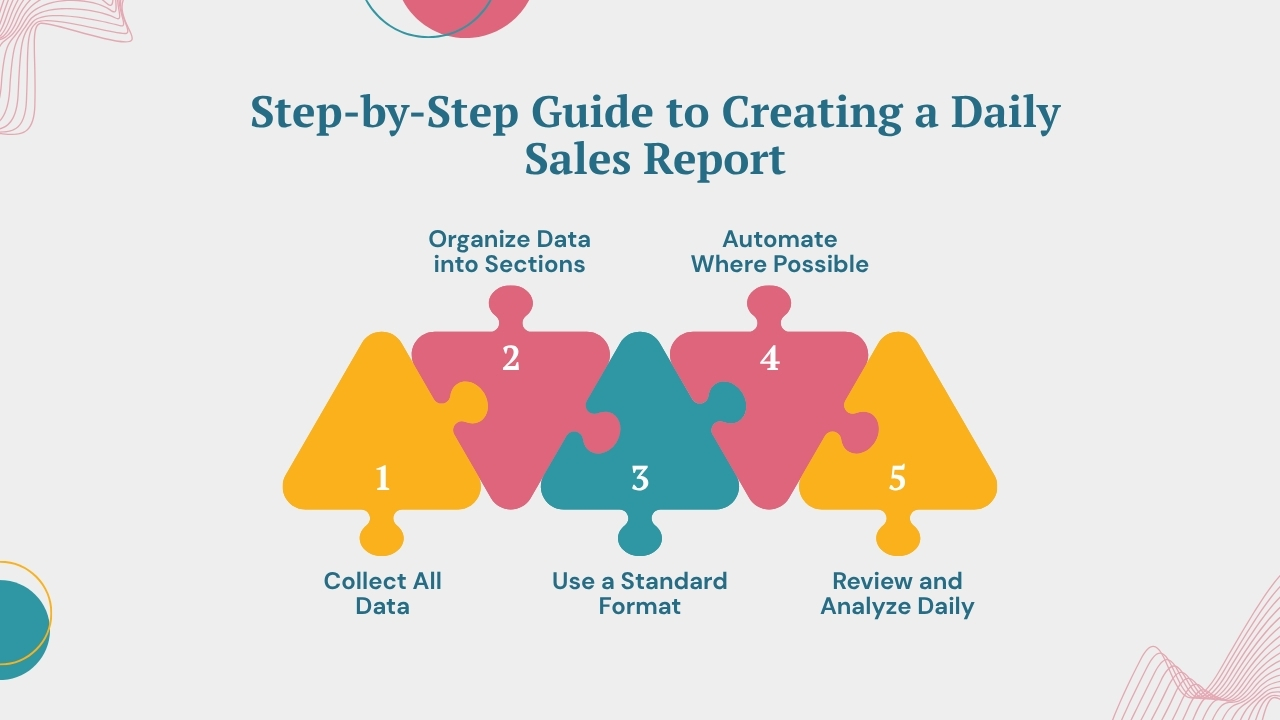
Creating an accurate and efficient Restaurant Daily Sales Report is crucial for managing your restaurant’s performance and making data-driven decisions. When restaurants follow an organized process, it helps them to ensure that reports are consistent, reliable, and actionable.
Below are five key steps explained in detail:
1. Collect All Data
The foundation of a strong Daily Sales Report begins with gathering and complete data from all relevant sources. This includes:
- POS System: POS system is the primary source for sales data that includes total revenue, number of orders, and item-wise performance.
- Online Delivery Platforms: Orders from platforms like Zomato, Swiggy, or your own website
- Payment Gateways: Transactions made through credit/debit cards, UPI, and digital wallets
Restaurants must collect data from every channel where sales happen. Even if a small data is missed then it can lead to inaccurate reporting and poor decision making.
Develop the daily routine of verifying all systems are properly synced and updated each day before preparing your report.
Also Read: Automating Data Analysis Using Artificial Intelligence
2. Organize Data into Sections
Once the data is collected, the next step is to organize data into sections. When restaurants have a well organized report it becomes easier for users to read, analyze, and act upon.
Key sections to include are:
- Sales Summary: Sales summary includes gross sales, net sales, taxes, and service charges.
- Payment Breakdown: Categorizes payments into cash, card, UPI, and online orders
- Staff Data: Tracks employee performance, orders handled, and sales contribution
- Inventory Details: Tracks inventory usage, wastage, and remaining inventory.
When the report is well organized in different sections it helps to bring clarity and makes it easy for restaurants to identify patterns, compare their performance, and instantly check any information whenever required.
Also Read: AI for Retail Inventory Management
3. Use a Standard Format
For effective reporting, one of the essential aspects is consistent reporting. Ensure you use a standard format for your Restaurant daily sales report which indicates data remains uniform and easy to compare over time.
It helps to track patterns, measure growth, and identify recurring problems.
You can create your report using tools such as:
- Microsoft Excel: Ideal for customized reports with formulas and charts
- Google Sheets: Great for real-time collaboration and cloud access
- POS Dashboards: Many modern POS systems provide built-in reporting features
Also Read: How Real-time Dashboards Drive Smarter Business Decisions
4. Automate Where Possible
Manual reporting operational patterns will be time-consuming and also increases the risk of human errors. When restaurants automate the daily sales reporting processes, it helps to highly improve efficiency and accuracy.
With the right tools, restaurants may generate reports automatically without spending hours combining data.
Consider using:
- POS Software: POS Software automatically tracks and compiles sales data.
- Integrated Reporting Tools: Such tools combine data from different sources into one dashboard.
- Automation Systems: Schedule daily reports to be generated and shared automatically
Also Read: Two Way Data Analytics in Shaping Retail Business
5. Review and Analyze Daily
The final and most important step is to both review and analyze your report everyday. Creating a report without any review and interpreting the data makes it less valuable and reduces its usefulness for decision-making.
Take time to go through the data and ask key questions such as:
- Why were sales higher or lower than expected?
- Which menu items performed the best or worst?
When restaurants analyze operations daily, it helps them to identify opportunities and resolve the problems quickly. For instance, if an item is selling, restaurants can promote it more, while if sales of an item drop during certain hours, then restaurants may give special offers or adjust staffing.
By consistently reviewing Restaurant Daily Sales Report, restaurants may gain insights that help them to improve operations, improve customer experience, and increase profits.
Tools to Create Daily Sales Reports
Creating an effective Restaurant Daily Sales Report becomes easy when you use the right tools. Based on the size and budget of your restaurant operations, you may either choose basic tools or advanced systems.
Below are the three most effective options explained in detail:
1. POS Systems (Point of Sale Systems)
POS systems are the most efficient tools for creating automated Daily Sales Reports in restaurants. They offer real-time tracking of sales, orders, and transactions while generating instant daily, weekly, or monthly reports.
Since every transaction is recorded automatically, manual entry errors are reduced. POS systems can also be integrated with card, UPI, and online payments, which makes reporting more accurate.
It helps to track sales by category, menu item, and staff performance, while reducing fraud, enhancing cash reconciliation, and supporting business growth.
Also Read: Optimizing Restaurant Menu With AI Powered Data Analytics
2. Excel / Google Sheets
For small restaurants or startups, Excel or Google Sheets can be a budget friendly option to start creating daily sales reports. Such tools are flexible, customizable, and also allow you to add formulas, charts, and categories based on requirements.
Restaurants may use Excel or Google Sheets initially for basic reporting instead of using expensive software. However users have to enter data manually into excel sheets, have a higher risk of errors, and provide less automation. While when your restaurant expands, you may need more advanced reporting tools.
3. Restaurant Analytics Tools
Restaurant analytics tools are essential for businesses who require deeper insights and want to make decisions smartly. Such advanced platforms such as Livelytics often go beyond basic reporting by analyzing customer behavior, sales trends, and overall performance.
Such tools can also predict future sales, forecast demand, and help restaurants to manage their inventory more efficiently.
Also Read: Choose the Right AI Data Platform for Your Business
Best Practices for Effective Reporting
Creating a Restaurant Daily Sales Report is only valuable if it is clear, consistent, and actionable. Following the right practices ensures your reporting system actually improves decision-making and business performance.
Here are five essential best practices:
1. Keep It Simple
For effective reporting, ensure that you keep your reports simple. Avoiding overloading your Daily Sales Report with unnecessary data or complex details which make it difficult to understand.
Instead focus on important metrics like total sales, number of orders, average order value, and crucial expenses.
A clean and simple report allows every team member to understand the information without any confusion. The goal is to make decisions faster rather than spending time to understand complicated reports. Remember clarity always
Remember, clear reports are always better than complex reports when it comes to business reporting.
2. Be Consistent
It is essential for restaurants to remain consistent in reporting which ensures accurate tracking. Ensure that you always use the same format, structure, and categories in your Restaurant Sales Report every day. It ensures that your data remains the same and easy to analyze with time.
Because when your reports have the same format, you can easily compare performances across different weeks, days, or months. This helps your team to become familiar with the report layout that makes it easy for them to read and interpret the data without any confusion.
3. Automate Reporting
Manual reporting may cause errors, delays, and unnecessary work. Automating your daily sales reporting process helps to improve accuracy and efficiency. Using POS systems or reporting tools, you can generate reports automatically without manually entering data.
Automation ensures that the data is gathered in real time and also reduces the risk of human errors. It saves time which can be used for important tasks such as analyzing data or improving customer experience. In this highly competitive market, automation is not just an option instead it has become a necessity.
Also Read: How Restaurant Data Analytics and Reporting Drive Better Business Decision
4. Analyze, Don’t Just Record
One of the biggest errors that businesses make is considering reports as just records instead of valuable insights. A Restaurant daily sales report should not just store data instead it should help you understand the daily operational patterns in your business.
Ensure you take time to analyze your report daily. Search for patterns, identify problems, and also uncover opportunities. For instance, if sales drop on certain days, research about the reason behind it.
5. Share with Team
Effective reporting is not just for owners or managers rather it must be shared even with your team as well. When managers and important staff are informed about daily performance, it helps to create transparency and accountability.
When your team understands the daily sales numbers, they can match their efforts with business goals. For instance, staff can focus on upselling, improving service, or reducing waste.
Conclusion
In today’s highly competitive restaurant industry, running a restaurant successfully requires not just great food and excellent service rather it requires accurate tracking and smart decision making.
One of the effective tools for achieving this is a well designed Restaurant Daily Sales Report. Such a report provides a clear overview of your restaurant’s daily performance, which helps to track revenue, control expenses, and identify areas which require improvement.
A Daily Sales Report collects important data like total sales, number of orders, payment methods, discounts, and staff performance. By reviewing such information regularly, restaurant owners and managers can quickly understand the areas that require working and the areas that require attention.
It helps to identify trends such as peak business hours, popular menu items, and slow periods which allows restaurants to make better operational decisions.
Due to the rise in the use of modern POS systems and digital tools, creating and managing daily reports has become easier and more efficient. Such systems automate data collection and offer real-time insights which reduces manual effort and errors.
If you still have any query about how to create an effective restaurant daily sales report, you may book a free demo at livelytics and we are more than happy to assist you.