Introduction
There was a time when businesses relied on historical reports, gut instincts, and a few spreadsheets to make significant decisions. It worked until the market started moving faster than reports could keep up.
Customers changed overnight. Competition became global. And data? It started pouring in from every direction. So, businesses needed something smarter.
That’s where machine learning quietly stepped in.
You’ve probably seen it in action already, even if you didn’t realize it. That product recommendation that felt oddly accurate? The dynamic pricing that adjusted without warning? The sudden drop in churn rates after a campaign tweak? Behind the scenes, machine learning is becoming the brain that guides today’s business moves and tomorrow’s strategy.
In this blog, let’s break down how machine learning is reshaping business analytics. And uh, huh, it’s not just buzzwords, but driving practical shifts, real examples, and the kind of changes you can apply.
Did you know, companies leveraging AI‑powered predictive analytics are 12% more profitable and 75% report increased sales and better customer satisfaction.
Also Read: Artificial Intelligence Vs Machine Learning
But, What is Machine Learning?
Machine learning is a way for computers to learn from data and make decisions — without being told exactly what to do every time. Instead of following fixed rules, the system finds patterns in data and uses those patterns to predict what’s likely to happen next.
At its core, it’s about using historical data to train algorithms to recognize relationships, so they can make accurate predictions or automate decisions when new data comes in.
Also Read: How do Machine Learning and Artificial Intelligence Help Businesses
How does Machine Learning Work?
For example, let’s say an e-commerce brand wants to know which customers might stop buying. Instead of manually sorting through past orders and guessing, a machine learning model can look at past behavior. It looks at how often they shop, how much they spend, and when they last ordered and flags the ones who seem likely to leave. The brand can then take action before it’s too late.
In short, machine learning helps businesses move from reacting to problems to predicting and preventing them. And that’s a big shift.
Also Read: Business Intelligence Vs Machine Learning
What is Machine Learning for Business Analytics?
Machine learning for business analytics means leveraging the right tools for intelligent algorithms to analyze data, find patterns, and make predictions that support smarter business decisions. Instead of relying only on past reports or static dashboards, businesses use ML models to uncover insights they might miss, so they can act on them faster, reduce risk, and power up growth.
For example, rather than just looking at last month’s sales, ML can predict next month’s demand based on past trends, seasonality, customer behavior, and even external factors like weather or pricing changes.
In business analytics, machine learning helps answer questions like:
- Which customers are most likely to churn?
- What product should we recommend to this buyer?
- Where should we allocate our marketing budget for the best ROI?
- How can we forecast sales more accurately?
By turning raw data into forward-looking insights, machine learning transforms analytics from descriptive to predictive, making it easier for businesses to make timely, data-driven decisions.
Also Read: The Role of Machine Learning in Business Analytics
Fresh Bowl’s Unreal Transformation, Ft. Machine Learning!
One great example of machine learning transforming a small business comes from Fresh Bowl, a New York–based restaurant chain specializing in healthy grab-and-go meals. With just a few locations and a limited budget, they struggled with overstocking fresh ingredients, unpredictable customer footfall, and profit leakage due to spoilage.
By adopting a machine learning-based demand forecasting model, Fresh Bowl started analyzing historical sales data, weather patterns, day-of-week trends, and nearby event schedules.
This helped them predict daily demand with much greater accuracy. As a result, they saw an 18% increase in profit margins, a 25% reduction in food waste, and a 12% improvement in customer satisfaction.
Most impressively, they saved nearly $240,000 annually, simply by letting the data guide their inventory and pricing decisions. Their success was documented in a 2025 case study by TajBrains, which shows how even small businesses can turn things around with practical ML-driven business analytics.
Also Read: What is Business Intelligence and Why Does it Matter
The Top Machine Learning Use-Cases You Should Know!

1. Spot Who’s About to Leave, Before They Actually Do:
(Use Case: Customer Churn Prediction)
Customer retention is cheaper than acquisition; we all know that. But how do you know who might be slipping away before it’s too late? That’s where machine learning becomes a game-changer. By analyzing behavioral data like purchase frequency, product usage, time since last activity, support interactions, and even sentiment from emails or reviews, ML models can flag customers who are likely to churn.
Instead of taking a broad approach, businesses can act early and precisely, whether it’s sending a personalized retention offer, assigning a rep to reach out, or adjusting the customer journey altogether.
Impact:
- Subscription businesses have reduced churn by up to 25%
- Increases customer lifetime value and reduces marketing costs
- Enables targeted retention campaigns instead of guesswork
Real-world example: Streaming platforms like Netflix and Spotify use churn prediction models to tailor retention offers and content, keeping millions of users engaged month after month.
Also Read: Boosting Brand Loyalty With Customer Sentiment Analysis
2. Never Be Out of Stock (Or Stuck with Extra Stock) Again:
(Use Case: Demand Forecasting)
Overstocking drains your cash flow. Understocking loses you sales. The sweet spot lies in accurate forecasting, and machine learning makes that possible by learning from your past data. ML models consider historical sales, seasonal trends, regional behavior, local events, and even external factors like weather and holidays to forecast demand more precisely.
This allows businesses to plan inventory, staffing, and logistics proactively, not reactively. It means fewer emergency stockouts, less waste, and happier customers.
Impact:
- Retailers and restaurants report 15–30% improvement in inventory efficiency.
- Reduces storage and spoilage costs.
- Optimizes supplier coordination and fulfillment timelines.
Real-world example: Fresh Bowl, a small food chain in NYC, used ML-driven forecasting to reduce food waste by 25% and improve profits by 18% by syncing purchases with predicted daily demand.
Also Read: How Restaurants Can Predict Trend With Analytics
3. Price Smart, Sell More with Real-Time Pricing That Moves With the Market:
(Use Case: Dynamic Pricing Optimization)
Pricing can make or break a sale, but fixed pricing strategies often fall short in today’s fast-moving market. Machine learning brings dynamic pricing to the table by analyzing multiple variables in real-time: customer demand, competitor pricing, stock levels, time of day, buying behavior, and even weather or location data to predict the right pricing.
Once the model understands what influences buying behavior, it can dynamically adjust prices across channels, online stores, apps, and POS systems without manual intervention.
Impact:
- 10–20% boost in revenue reported by eCommerce and travel platforms using ML-based pricing
- Improves profit margins without relying on discounts
- Helps move slow-moving inventory faster and capture demand peaks in real-time
Real-world example: Uber uses dynamic pricing to adjust fares based on traffic, demand, and rider patterns, allowing better resource allocation and higher customer conversion during peak hours.
A tip before moving on to the next point: It’s not just for tech giants. Even small retailers and restaurants are using dynamic pricing models to adjust daily specials, clear excess stock, or optimize bundle offers.
Also Read: Real-Time analytics Why Does Your Business Needs it
4. Catch the Red Flags Early Without Slowing Down Good Customers:
(Use Case: Fraud Detection and Risk Management)
Fraud doesn’t just lead to financial loss; it also chips away at customer trust and can damage your brand reputation overnight. The challenge? Spotting fraud fast enough to stop it without making your genuine customers jump through hoops. That balance is exactly where machine learning shines.
- Machine learning learns to recognize suspicious behavior by analyzing patterns through historical data to understand what normal looks like and what doesn’t. After the analysis, it alerts instantly.
- The more data it sees, the smarter it gets. ML systems keep learning from new fraud attempts and legitimate customer behavior to reduce false positives over time.
- Also, ML assigns a risk score. High-risk actions can trigger added security, while low-risk ones proceed smoothly, keeping the experience frictionless for most users.
Why it matters:
- Reduces financial fraud losses by up to 30–40%
- Cuts down on false positives that frustrate real customers
- Speeds up approval for trusted transactions
- Works 24/7, even when your team’s offline
Real-world example: Square, a popular POS system for small businesses, uses machine learning to detect fraudulent chargebacks. As a result, many vendors see fewer disputed transactions and faster resolutions, without needing large fraud teams.
Why businesses love machine learning? Businesses no longer have to choose between strong security and a smooth customer experience. You get both, and you stay one step ahead of the bad actors.
Also Read: How Livelytics Can Help Restaurants Boost Revenue
5. Predict What Your Customers Will Buy Next, Before They Do:
Everyone wants to grow and achieve an edge over competitors, but still follows the same rigid patterns of acting after things happen. Understanding customer behavior is one thing, but anticipating it? That’s where Machine Learning shines.
It helps businesses stay ahead by analyzing patterns in past purchases, browsing habits, demographic data, and even customer sentiment from reviews or social media to predict what a customer is most likely to buy next.
This predictive capability helps businesses:
- Upsell and cross-sell smarter, not harder.
- Retain customers by staying one step ahead of their needs.
- Create personalized shopping experiences that feel intuitive rather than pushy.
For example, let’s say you run an online pet store. A customer regularly buys dog food every 30 days. Machine Learning notices this pattern and, before the customer even remembers, it can send a reminder or offer a small discount around day 28. But it doesn’t stop there.
Maybe this customer also looked at chew toys a few times but didn’t buy them. The ML system sees that other customers who buy this same dog food often purchase those chew toys too. So, it suggests the toy in a personalized email or during checkout.
The result? Businesses can recommend the right product at the right time without feeling intrusive, making it a powerful way to increase revenue and build trust.
How Willow Tree Boutique Increased Average Order Value & Reduced Repeat Purchases?
Willow Tree Boutique, a small fashion retailer in the U.S., turned to machine learning to improve customer retention and inventory efficiency. By analyzing past purchase behavior, ML tools identified patterns—like customers who bought winter coats often returned within weeks to buy matching scarves or gloves. Using this insight, the boutique launched personalized bundle offers and email campaigns.
As a result, they saw a 25% increase in average order value, a 15% reduction in unsold inventory, and a 20% rise in repeat purchases. What once felt like guesswork became a data-driven strategy that helped them stay competitive without needing a massive tech team.
Also Read: How Predictive Intelligence Transforms Retail
6. Smarter Marketing Campaigns That Actually Convert:
Today’s businesses use significant business resources in marketing, but the ROIs are significantly lower. That’s where machine learning comes in to the rescue.
Machine learning makes your marketing work harder and smarter. With ML, your system continuously learns from customer behavior, preferences, timing, and engagement patterns to deliver the right message to the right person at the right time.
Here’s how it works:
- It analyzes customer data, purchase history, browsing patterns, cart activity, device type, email interactions, and even time spent on a product page.
- Then it predicts behavior, like which customers are likely to churn, who is ready to buy, or who might respond to a limited-time offer.
- Based on these predictions, ML tools automatically trigger personalized messages, discounts, product recommendations, or even the timing of emails or push notifications.
This level of real-time personalization increases engagement, conversions, and even customer loyalty.
How did Adidas, the global sportswear giant, achieve a 35% increase in online sales with AI?
Adidas introduced an AI-driven recommendation engine on its e-commerce platform that leverages browsing history and purchase data to offer tailored product suggestions. The results were impressive: a 35% increase in online sales and a 28% boost in engagement during promotional campaigns. This shows how machine learning can help even massive brands create highly personalized shopping journeys that resonate with each customer.
Also Read: Best Marketing Strategies for Restaurants
7. Smarter A/B Testing: Let Machines Tell You What Works:
Traditional A/B testing often involves manually setting up variations, waiting weeks for data, and then analyzing results. Machine Learning (ML) changes the game by making A/B testing faster, smarter, and more dynamic.
With ML, businesses can automatically test multiple variables, not just A vs. B, but A through Z, and let algorithms identify which combinations drive the best results in real-time.
ML-powered A/B testing can adapt on the fly, prioritizing winning variants and reducing exposure to underperformers. This helps businesses get quicker insights, reduce wasted resources, and continuously optimize without waiting for a “final” result.
For example, let’s say a mid-sized eCommerce company uses machine learning to run smarter A/B tests across the business. Here’s how it helps and works.
- In marketing, the ML system tests different ad creatives and instantly shifts budget toward the ones with the highest click-through rates.
- In the product team, it experiments with homepage layouts, one with a static banner and one with a video, and quickly identifies which version drives more purchases.
- HR uses ML to compare onboarding flows. It finds that new hires who go through interactive sessions are 25% more likely to stay beyond 6 months.
- In pricing, the model tests different price points for premium users and adapts in real-time to maximize revenue without hurting conversion.
Also Read: How AI Helps in Boosting Restaurant Revenue and Profits
8. Streamlining Operations Through Intelligent Automation:
Machine learning plays a major role in helping businesses optimize daily operations by automating repetitive and time-consuming tasks. Machine learning collects and analyzes historical data to identify inefficiencies and makes real-time decisions without human input.
From inventory management to administrative workflows, ML-driven automation reduces manual workload, minimizes errors, and increases speed and accuracy across departments.
Example:
Imagine a retail chain that operates across multiple cities. Earlier, its store managers manually reviewed sales reports and stock levels to place orders with suppliers, a time-consuming process prone to delays and inconsistencies.
Now, with machine learning, the system analyzes historical sales, local trends, weather patterns, ongoing promotions, and even public holidays to forecast product demand for each store. It then automatically generates restocking orders and aligns them with delivery schedules. This not only ensures the right products are always in stock but also reduces excess inventory and storage costs.
The result? Faster operations, fewer human errors, better use of manpower, and more time for staff to focus on strategic activities, like customer service and business growth.
Also Read: Automating Data Analysis Using Artificial Intelligence
9. Turning Customer Feedback into Actionable Insights:
Customer feedback, whether through surveys, reviews, support tickets, or social media, is a goldmine for understanding needs, frustrations, and desires. And, raw feedback is often scattered, overwhelming, and inconsistent. But Machine learning helps businesses streamline everything, cut through the clutter, and act on those insights effectively.
How Machine Learning Helps?
- Aggregates feedback from multiple channels, pulling in survey responses, online reviews, emails, and social posts into a single stream.
- Applies sentiment analysis and NLP to detect tone, flag urgency, and surface recurring themes.
- Prioritizes issues by impact, so teams can act on the most critical or widespread pain points first.
- Automates alerts and dashboards that highlight trends, whether rising complaints about a feature, confusion over pricing, or praise for a service.
By doing this, ML transforms raw feedback into structured, actionable insights, making it easier to respond quickly, improve products, and delight customers.
Case Study: Zaxby’s — From Feedback to Fixes
Zaxby’s, a fast-food franchise, was drowning in around 10,000 customer reviews per week, mostly funneled into spreadsheets and pivot tables. The manual process was inefficient and left actionable issues buried.
To solve this, they deployed a machine learning solution and used sentiment analysis to gauge satisfaction levels, topic modeling for surface recurring concerns, and an interactive dashboard to visualize performance across locations.
Results:
- Fast identification of negative feedback hotspots, enabling swift corrective actions.
- Clear visibility into recurring issues to achieve operational excellence.
- Time and resource savings to power growth.
Also Read: How AI Unlock Business Insights the Drive Required Results
10. Better Staff Management and Satisfaction
Machine learning tools don’t just benefit customers; they also play a huge role in improving staff experience and performance. By analyzing employee schedules, task loads, performance metrics, and even feedback, ML helps managers create more balanced workloads, fair shift rotations, and personalized support plans.
For example, ML can predict peak hours and suggest optimal staffing levels, reducing both under- and over-staffing. It can also identify signs of burnout. like repeated overtime, frequent shift changes, or sudden drops in productivity so managers can step in before it affects morale or performance.
Additionally, feedback analysis tools can surface recurring staff concerns (e.g., training gaps, equipment issues, or communication breakdowns) so leaders can address them proactively.
This data-driven approach results in happier, more motivated employees, less turnover, and a healthier workplace culture, all of which directly contribute to better service delivery.
Also Read: How Data Analytics Improve the Measurement of Employee Performance
What’s the Next Step? Get It All with Livelytics
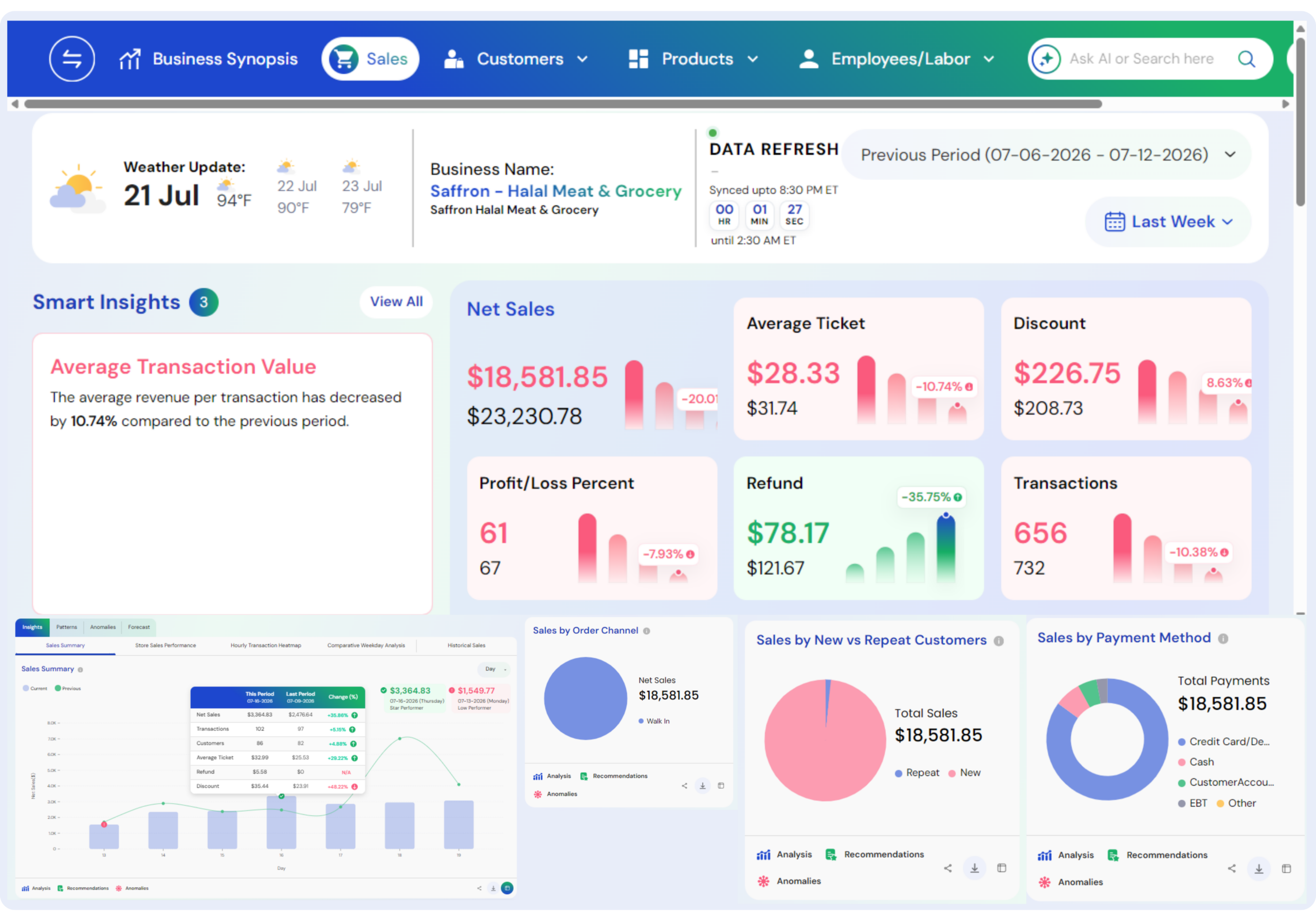
If you’re looking for a smarter, easier, and more affordable way to make sense of your business data, Livelytics is built just for you. It’s an AI-powered platform that combines Machine Learning, Predictive Intelligence, and Automation Intelligence, all in one place without the need for complex tools or technical skills.
- Easy to Learn: Livelytics is designed for simplicity. Whether you’re a business owner, manager, or analyst, the interface is intuitive and easy to navigate, no technical background needed.
- Affordable Pricing: Starting at just $299/month, Livelytics delivers powerful AI features without burning a hole in your budget. Whether you are a startup, mid-size business, or enterprise, Livelytics is affordable and scalable at the core.
- Industry-Specific Features: From retail and restaurants to salons and hospitality, Livelytics offers tailored solutions and dashboards that match your business needs, helping you drive decisions with precision.
- Built-in AI Assistant: Ask questions. Get instant insights. Livelytics comes with a conversational AI assistant that helps you understand your data in a way you want.
- Powerful Predictive & Automation Intelligence: Go beyond basic reporting. Livelytics helps you predict customer trends, automate workflows, optimize inventory, and even forecast revenue, all powered by advanced machine learning models.
- Free Trial Available: Not ready to commit? Take it for a test drive. Livelytics offers a free trial, giving you access to its full capabilities so you can explore before you invest.
- 24/7 Customer Support: Questions at midnight? We’ve got you. With round-the-clock support, you’re never left figuring things out on your own.
- Rich Documentation & Learning Resources: Every feature comes with clear, step-by-step documentation, tutorials, and onboarding guides to help your team get up and running fast and stay productive.
Final Thoughts
Machine learning is no longer just a buzzword; it’s a practical tool that’s transforming how businesses analyze data and make decisions. Throughout this blog, we explored how ML enhances business analytics by uncovering patterns, improving forecasting, personalizing customer experiences, automating tasks, and driving real-time insights.
We’ve looked at its real-world applications across industries and how it’s enabling businesses to shift from reactive to proactive strategies.
The next step? Start exploring tools that bring the power of machine learning into your daily operations. The right tool can make or break things for your business, so research your way and choose the right one that is easy to use, adaptable to your industry, and designed to grow with you.
If you would like to get started with Livelytics, then check out the free trial right away and make the decision that’s best for your business