Food waste management in restaurants has become a priority for restaurants who want to control operational expenses, achieve long-term sustainability goals, and improve overall business efficiency.
Every year, restaurants lose high amounts of money due to discarded ingredients, food overproduction, food spoilage, food preparation mistakes, and customer leftovers.
Though restaurants cannot avoid some food waste, excessive food waste directly affects restaurant profits and leads to serious environmental challenges.
Hence it has become essential for restaurants to implement effective restaurant food waste management strategies which is not just an initiative for sustainability but also a smart business decision.
Modern restaurants are highly adopting innovative solutions to reduce food waste throughout their entire operations.
From smart inventory management systems, AI-powered demand forecasting, waste tracking software, sustainable menu engineering, technology is changing the way restaurants monitor and control food waste.
These solutions help businesses to improve purchasing of ingredients, reduce food spoilage, and make better use of available ingredients.
Additionally, due to other initiatives such as food donation programs, composting, and circular economy partnerships help restaurants to reduce landfill waste and also contribute to local communities.
The advantages of reducing food waste goes beyond cost savings, When restaurants implement effective food waste reduction in restaurants can improve operations, brand reputation, customer loyalty, and environmental goals.
Today consumers are attracted to restaurants that implement sustainable operations that make food waste reduction an essential advantage in the restaurant industry.
Though the restaurant sector keeps changing, implementing innovative approaches to ensure restaurant sustainability, food waste reduction, and food waste prevention has become essential for restaurants to ensure long-term success.
This blog will walk you through the most effective and innovative ideas for food waste management in restaurants, which help operators to create more sustainable, profitable, and environmentally responsible food service businesses while delivering good dining experiences.
Also Read: Proven Solution to Food Waste in Restaurants
Understanding the Real Cost of Food Waste
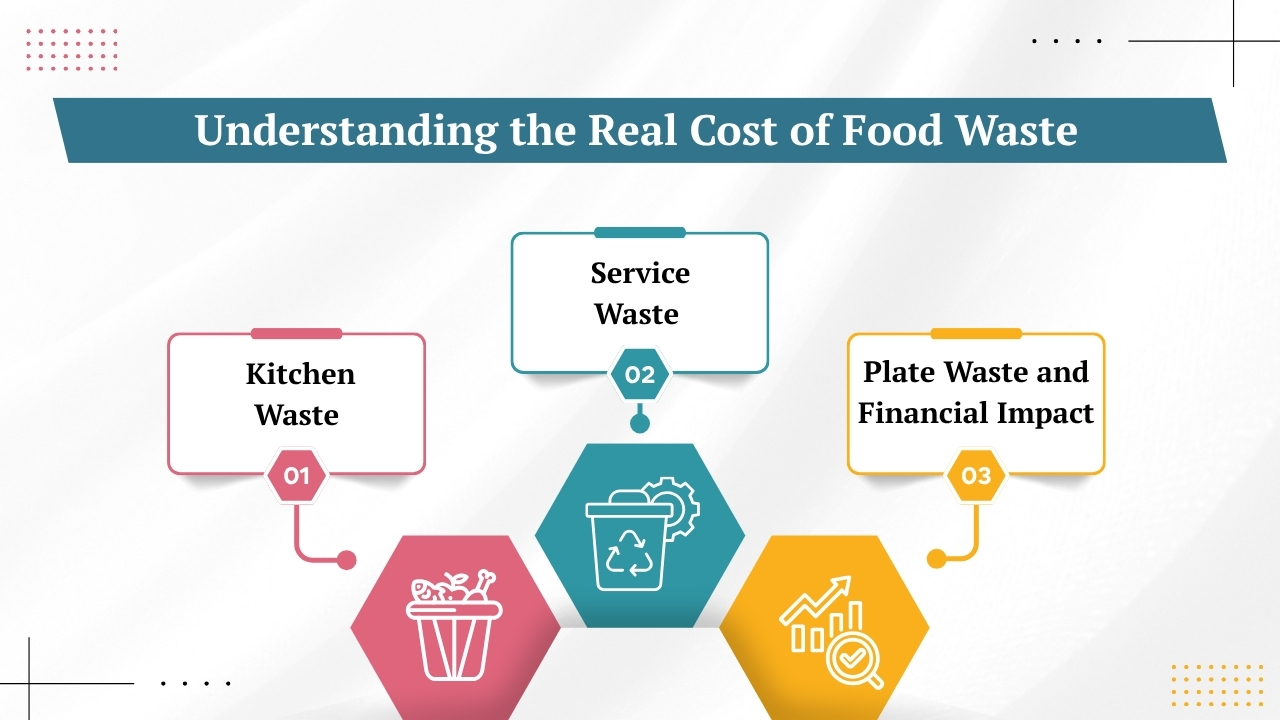
Before implementing innovative solutions, it is essential for restaurant operations to know the impact of food waste in financial, operational, and environment before implementing food waste reduction strategies.
Most food waste happens in three stages:
1. Kitchen Waste
Kitchen waste happens even before food reaches the customers. It is one of the largest causes of food loss in restaurants. This includes excess ingredient trimming, food preparation errors, spoiled inventory, expired products, and food overproduction.
Due to poor management of inventory, inaccurate forecasting of demand, and inefficient food preparation practices can cause this type of waste.
For instance, if restaurants prepare more food than necessary during slow hours can cause large quantities of unused ingredients being discarded.
Though restaurants invest crucial resources in purchasing, storing, and preparing ingredients, kitchen waste can quickly increase operational expenses.
Implementing proper inventory controls, staff training, and waste tracking systems can help reduce food losses and improve efficiency.
Also Read: Creative Ways to Reduce Food Waste in Restaurants
2. Service Waste
Service waste can happen during the food service process and include buffet leftovers, inaccurate orders, and food returned by customers.
Buffets mostly create substantial waste as food must remain available even while customer demand increases. Similarly because of communication mistakes between servers and kitchen staff can cause inaccurate meals which cannot be served to other guests.
Though meals returned by customers often cause additional food waste and unwanted operational expenses for restaurants. Reducing food waste service requires better accuracy in inventory tracking, improved communication, demand forecasting, and careful buffet management.
Reducing these problems helps restaurants to reduce food costs while maintaining higher customer satisfaction levels.
Also Read: How to Reduce Food Waste in Restaurants and Improve Profitability
3. Plate Waste and Financial Impact
Plate waste is the food left unwanted by customers because of oversized food portions, unwanted side dishes, and unfinished meals.
And if plate waste is overlooked, then it causes a crucial financial burden. Beyond the expenses of wasted food, restaurants also lose revenue due to labor expenses, storage expenses, energy consumption, waste disposal fees, and missed revenue opportunities.
Reducing plate waste at every phase of restaurant operations helps to improve operational efficiency, increase profits, and supports long-term sustainability goals.
Also Read: How Inventory Software for Restaurant Reduce Food Costs
Smart Food Waste Management Solutions for Restaurants
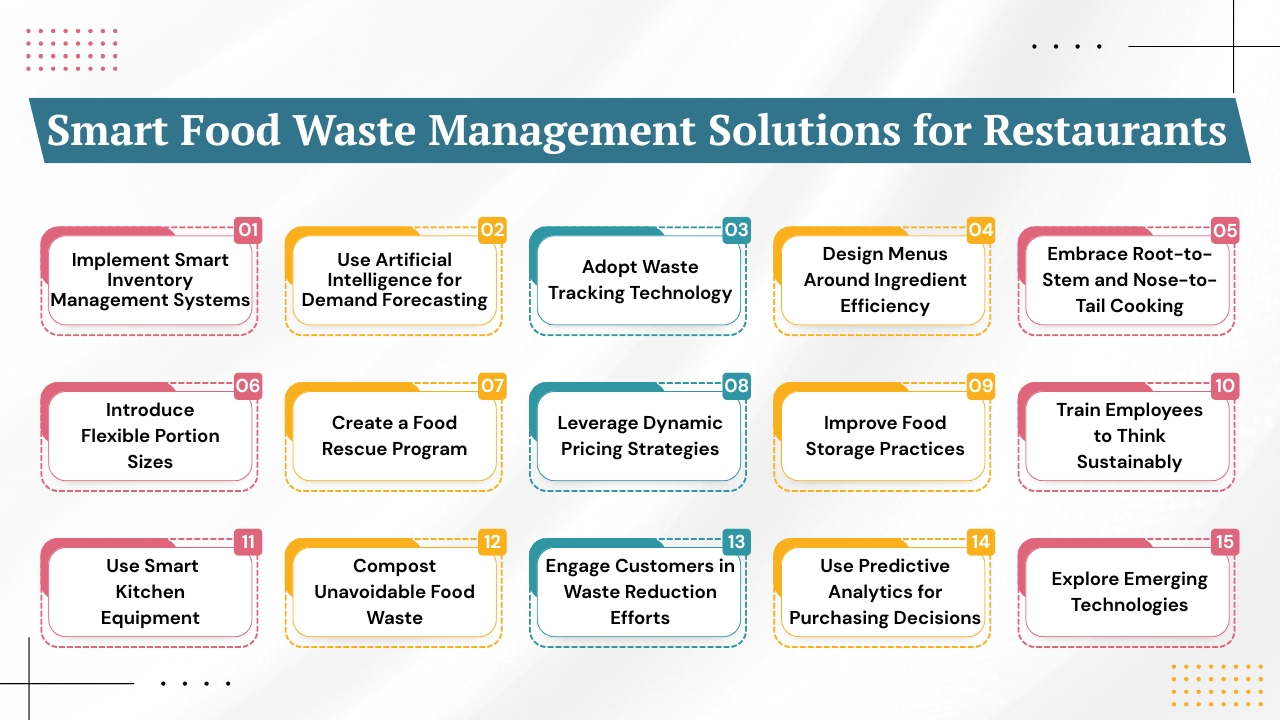
1. Implement Smart Inventory Management Systems
Smart inventory management systems are an effective strategy for restaurants to reduce food waste. Traditional inventory management involves manually counting stocks and spreadsheets, which is both time-consuming and prone to human error.
Such inefficiencies often cause over-ordering, stock shortages, expired ingredients, and unnecessary food spoilage.
Adopting modern inventory management software helps restaurants to gain visibility into stock levels in real-time, usage of ingredients, and purchasing patterns, allowing better control over operational expenses.
Key benefits of smart inventory management systems include:
- Automatic stock tracking to track inventory in real time.
- Low-stock alerts which notifies managers when items need replenishment.
- Usage forecasting to predict ingredient demand based on sales trends.
- Purchase optimization to prevent overbuying and reduce excess inventory.
- Expiration date monitoring to ensure ingredients are used before they spoil.
When restaurants know about the quantity of ingredients available and how quickly ingredients are being used, restaurant managers can make accurate ingredient purchasing decisions and highly reduce food waste.
Additionally most cloud-based inventory platforms integrate directly with POS systems which allows smooth flow of data between sales and inventory records.
Such integration improves forecasting accuracy, streamlines ordering processes, reduces food expenses, and supports more sustainable restaurant operations.
Also Read: AI for Restaurant Inventory
2. Use Artificial Intelligence for Demand Forecasting
Artificial intelligence(AI) is changing the way restaurants operate. Because AI systems help businesses to predict customer demand with more accuracy.
AI-based forecasting systems analyze high amounts of data to identify patterns and create reliable demand predictions that lets restaurants prepare the right amount of food and reduce food waste.
These advanced systems evaluate multiple factors, including:
- Historical sales data
- Seasonal demand patterns
- Local events and festivals
- Weather forecasts
- Holiday trends
- Customer purchasing behavior
For instance, if data insights indicate that sales of soup is high during rainy weather, the AI system can quickly recommend adjusting ingredient purchasing and preparation levels.
This proactive approach of managing ingredients helps restaurants to respond quickly to changing customer demand.
Accurate demand forecasting offers several important benefits:
- Reduces overproduction
- Prevents overstocking
- Reduces last-minute ingredient shortages
- Reduces emergency ingredient purchasing expenses
When restaurants accurately prepare food and align inventory with expected demand, restaurants can highly reduce food waste, improve operational efficiency, and save money every year.
AI forecasting ultimately leads to restaurant profits and sustainable restaurant management.
Also Read: Restaurant Sales Forecasting How to Predict Future Revenue
3. Adopt Waste Tracking Technology
Many restaurants often underestimate the quantity of food they waste every day, which makes it difficult for restaurants to know about kitchen inefficiencies and implement effective waste management solutions.
Waste tracking technology offers crucial insights by tracking and analyzing food waste throughout the restaurant operations. When restaurants collect accurate data, then managers can better understand areas where waste happens and take corrective action to reduce losses.
Waste tracking systems help businesses identify:
- What food is being wasted
- Why the waste is occurring
- When waste happens most frequently
- Which departments generate the highest levels of waste
Modern waste tracking solutions often incorporate advanced tools such as:
- Digital scales
- Mobile applications
- AI-powered image recognition
- Automated reporting systems
The data collected help restaurants to know about the food waste patterns and make informed decisions. For instance, if a menu item regularly causes customer leftovers, then it is needed to adjust portion sizes.
Similarly, if some ingredients regularly expire before they are being used, then it is recommended to purchase less quantities of those ingredients.
Adopting a data-driven approach helps restaurants to efficiently manage waste, reduce food costs, improve operational efficiency, and achieve measurable reductions in food waste over time.
Also Read: The Role of Data Analytics in Reducing Restaurant Waste
4. Design Menus Around Ingredient Efficiency
Menu engineering is an effective way for reducing food waste and improving restaurant profits. Successful restaurants create menus that utilizes maximum ingredients across multiple dishes that ensures that purchased ingredients are effectively used before they expire.
This approach helps to reduce food spoilage while also simplifying inventory management and purchasing decisions.
Examples of ingredient cross-utilization include:
- Roasted vegetables used in salads, sandwiches, bowls, and pasta dishes.
- Chicken used in various appetizers, entrées, and wraps.
- Herbs used in sauces, dressings, marinades, and garnishes.
Using the same ingredients in several different menu items can help restaurants to reduce food waste and improve inventory turnover.
Restaurants should also review menu performance regularly and remove food items that:
- Sell poorly
- Require unique ingredients
- Generate excessive food waste
A well-optimized menu simplifies management of inventory, increases kitchen productivity, and enables staff to focus regularly on delivering the most popular menu items.
Strategic menu planning lets restaurants utilize maximum ingredients which helps restaurants to reduce food waste, optimize food spending, and build more environmentally responsible operations.
Also Read: Optimizing a Restaurant Menu With AI Powered Data Analytics
5. Embrace Root-to-Stem and Nose-to-Tail Cooking
Most innovative restaurants are implementing sustainable cooking techniques. It involves complete use of ingredients that help to reduce food waste.
Two crucial approaches are Root-to-Stem Cooking, and Nose-to-Tail Cooking that involves using parts of ingredients which are often discarded.
Root-to-Stem Cooking encourages chefs to use the entire fruit or vegetable, including:
- Carrot-top pesto
- Beet green salads
- Broccoli stem slaw
- Watermelon rind pickles
Similarly, Nose-to-Tail Cooking aims to maximize the use of animal products by incorporating:
- Bone broth production
- Organ meat specialties
- Fat rendering
- House-made stocks and sauces
Such creative cooking techniques help restaurants to reduce food waste, reduce ingredients costs, and make better use of available resources.
Additionally it allows chefs to develop unique menu items which attract environmentally conscious and sustainability conscious customers.
When restaurants adopt these practices help restaurants to implement food waste reduction efforts and improve food creativity and operational efficiency.
Also Read: Why Restaurants Need a Food Inventory Management System
6. Introduce Flexible Portion Sizes
Large portion sizes are a common cause of plate waste in restaurants. Though customers receive more food than what they consume, a good amount of food often ends up being discarded.
Offering flexible food portion sizes is a crucial way to reduce food waste while improving the dining experience.
Restaurants can offer a lot of serving operations like:
- Small portions
- Standard portions
- Sharing plates
- Half-sized entrees
Offering several food portion sizes often creates value for customers and also helps restaurants to reduce food waste and manage food expenses more efficiently.
Guests appreciate when they get to select the food portion sizes that match their hunger, nutritional preferences, and their expenses. While at the same time, restaurants can reduce unnecessary food disposal and reduce food expenses.
This approach works well in casual dining settings where customer preferences and meal sizes can differ. When restaurants allow diners to select their food portions which are suitable to their needs, restaurants can reduce plate waste and support more sustainable operations.
Also Read: How Does Data Analytics Help Restaurant Grow
7. Create a Food Rescue Program
All excess food cannot be discarded because many surplus items can be repurposed, donated, or reused efficiently.
By creating food donation initiatives, restaurants can reduce food waste while also offering safe, surplus meals to families who are in need of food.
Hence most restaurants can partner with local organizations to ensure that surplus is distributed responsibly.
Common food rescue partners include:
- Food banks
- Community shelters
- Nonprofit organizations
- Local charities
If prepared food meets the food safety standards then it can be donated to individuals and families who are in need of food. This approach lets restaurants use surplus food to good use rather than discarding it.
Food rescue programs offer several important benefits:
- Reduced disposal costs
- Positive community impact
- Enhanced brand reputation
- Potential tax advantages
Developing strong donation partnerships helps restaurants to redirect excess food to those who are in need and create a positive impact on local communities.
Food donation programs help restaurants to reduce unnecessary waste while showing the dedication of restaurants towards the community and environment sustainability.
Also Read: AI for Restaurant Marketing
8. Leverage Dynamic Pricing Strategies
Dynamic pricing is an innovative approach which helps restaurants to reduce food waste and also generate additional food revenue.
Instead of discarding excess food, restaurants can use technology to adjust prices on the basis of inventory levels, customer demand, and product shelf life.
This strategy encourages customers to purchase items which might otherwise go unsold.
Restaurants can use dynamic pricing to:
- Discount excess inventory
- Promote end-of-day specials
- Sell near-expiration products
- Reduce unsold prepared meals
Using mobile apps and online ordering platforms restaurants can easily connect surplus food with cost-conscious customers who are searching for discounted meals.
Offering timely promotions can help restaurants to increase sales and reduce waste simultaneously.
This approach is beneficial to both businesses and consumers. This lets restaurants recover a portion of their expenses rather than throwing food away while offering customers quality meals at less prices.
Dynamic pricing ultimately supports profits, sustainability, and more efficient food inventory management.
Also Read: Retail Pricing Strategy
9. Improve Food Storage Practices
Poor food storage is one of the main causes of food spoilage in restaurants which leads to unwanted food waste and high operating costs.
By implementing effective food storage practices allows restaurants to maintain food quality, food safety, and increase the shelf life of ingredients.
Restaurants should have clear processes to ensure that food products are stored under optimal conditions to maintain its freshness.
Key food storage practices include:
- Temperature tracking systems
- Proper labeling procedures
- Date tracking protocols
- Humidity control measures
- FIFO (First-In, First-Out) inventory rotation
Using modern refrigeration systems with smart technology automatically track storage conditions and notify managers when temperatures exceed safe limits.
This allows staff to take instant corrective action even before ingredients get spoiled. By implementing food storage practices consistently not just reduce food waste but also improve inventory management and operational efficiency.
When restaurants protect ingredient quality and freshness, restaurants can reduce expenses, losses, and support more sustainable food service operations.
Also Read: Leveraging AI to Collect Customer Insights
10. Train Employees to Think Sustainably
Although technology can support waste reduction efforts, even staff have to equally participate in successful food waste management.
As staff members impact daily restaurant operations through decisions and actions. Hence, proper staff training is essential for creating sustainable restaurant practices.
Employees play a key role in:
- Portion control
- Food preparation
- Inventory management
- Waste reporting
Effective training programs should focus on:
- Waste reduction goals
- Proper food handling procedures
- Sustainability principles
- Cost awareness
When employees understand how food waste affects restaurant profits and the environment, then they are more likely to adopt responsible practices.
Organizing regular staff training sessions and clear performance expectations lets restaurants ensure food waste reduction practices.
Creating a culture of accountability encourages staff to find waste-reduction opportunities and consistently improve restaurant operations.
As a result, restaurants can reduce food waste, lower costs, and strengthen their commitment to environmental sustainability.
Also Read: How Data Analytics Improve the Measurement of Employee Performance
11. Use Smart Kitchen Equipment
Modern kitchen technology can highly reduce food waste while improving restaurant efficiency. With smart equipment, restaurants can highly reduce food waste while improving restaurant efficiency.
Smart equipment allows businesses to track their level of inventory. It also helps to maintain quality of food and ensure that ingredients are used even before food spoilage happens.
These tools provide insights that allow them to make better decisions and more consistent operations.
Restaurants can benefit from several types of smart kitchen equipment, including:
- Smart Refrigerators that track temperature levels and track inventory automatically.
- Precision Cooking Equipment that helps to maintain right cooking temperatures and reduces mistakes during food preparation.
- Automated food portioning systems that offer consistent food serving sizes and controls food expenses.
- Connected Sensors that monitor food storage conditions and alert managers when temperatures are outside safe ranges.
- Livelytics restaurant analytics tools that offer valuable data about usage of inventory, food waste patterns, and operational performance.
When restaurants implement advanced kitchen technology and use data insights from Livelytics , it helps restaurants to reduce food waste, improve food safety, reduce operating expenses, and support long-term environment sustainability goals which improves the overall experiences of customers.
Also Read: How Restaurant Business Intelligence Helps Owners to Make Faster Decisions
12. Compost Unavoidable Food Waste
Even after implementing effective food waste reduction strategies, some food waste is unavoidable in restaurant operations.
Composting provides a sustainable solution by converting organic waste into nutrient rich material which can be again used in agriculture instead of completely wasting it by sending it to landfills.
Common compostable materials include:
- Fruit peels
- Vegetable scraps
- Coffee grounds
- Eggshells
- Other organic kitchen waste
Many restaurants can partner with local farms, composting facilities to develop a consistent waste management system.
Additionally, livelytics helps restaurants to track food waste, identify compostable materials, and track sustainability practices through reporting and analytics in real time.
Implementing composting programs and using data-driven insights, allows restaurants to reduce food waste, disposal expenses, and reduce impact on the environment.
These efforts lead to long-term environment sustainability while improving relationships with local communities.
13. Engage Customers in Waste Reduction Efforts
Customers play an important role in supporting sustainability initiatives in restaurants. When awareness of customers of the environment increases, then many diners prefer to support businesses that actively work towards reducing food waste and operate responsibly.
When restaurants involve customers in waste reduction efforts, they can create a sense of commitment to environment sustainability while reducing unnecessary food disposal.
Restaurants can encourage customer participation by:
- Offering customizable side dishes
- Promoting take-home containers for leftovers
- Sharing sustainability goals and achievements
- Educating diners about food waste reduction
When restaurants add simple messages on menus, table displays, or digital platforms help restaurants to raise awareness about customers and affect customer behavior.
When customers understand how their food practices help to reduce food waste, then there are high chances that restaurants will participate in such initiatives.
Involving customers in sustainability efforts helps restaurants to reduce plate waste and also strengthens customer loyalty, brand reputations, and long-term environment goals.
14. Use Predictive Analytics for Purchasing Decisions
Predictive analytics helps restaurants to make informed ingredient purchasing decisions by using insights to predict future inventory requirements.
Unlike traditional forecasting methods which depend highly on estimates, predictive analytics uses algorithms to identify patterns and trends which influences ingredient demand. It helps restaurants to optimize ingredient purchasing and reduce unwanted food waste.
Advanced predictive analytics systems analyze:
- Purchasing trends
- Inventory turnover rates
- Menu item popularity
- Seasonal fluctuations in demand
Analyzing this data insights helps restaurant managers to find the right quantities of ingredients to order and avoid excess stocking of ingredients.
It reduces the risk of food spoilage, reduces food ingredient storage expenses, and improves efficiency of inventory. Predictive analytics help restaurants to actively respond to changing customer preferences and changing market conditions.
Reducing guessing and improving precision of operations allows restaurants to improve profits while supporting sustainable food waste management practices.
Also Read: How Predictive Intelligence Transforms Retail
15. Explore Emerging Technologies
Emerging technologies are changing the way restaurants manage food waste and improve operational efficiency.
Adopting innovative tools, businesses can get deeper insights into their operations, reduce unwanted losses, and make more informed decisions.
These technologies help restaurants to track food quality, optimize inventory management, and improve overall sustainability efforts.
Key technologies shaping the future of food waste management include:
- Computer Vision Systems – AI-based cameras can instantly find and track wasted food.
- Smart Packaging – Sensors offer real-time information about stock freshness.
- Blockchain Technology – Improves supply chain transparency and ingredient traceability.
- Internet of Things (IoT) Devices – Continuously track storage conditions and food safety.
- Robotics and Automation – Reduce food preparation mistakes and improve consistency.
Restaurants that invest in these technologies early can have a competitive advantage by reducing food waste, improving operational efficiency, reducing operating expenses, and increasing their commitment to sustainable business practices.
Conclusion
Innovative food waste management strategies are crucial for restaurants who want to improve efficiency, reduce expenses, and implement operations more sustainably.
From smarter inventory management, menu planning, food donation programs, composting initiatives, and advanced kitchen technology, every effort made by restaurants causes reducing food waste and utilizes maximum usage of resources.
These practices not just help to protect the environment but also increase profits and improve the overall customer experience. Technology has become a crucial driver of successful waste reduction efforts.
Platforms like Livelytics offer restaurants with real-time visibility into inventory levels, food consumption patterns, waste patterns, and operational performance.
By using these insights, managers can make informed decisions which reduce food spoilage, improve ingredient purchasing, and improve food portion control.
Ultimately, food waste reduction goes beyond sustainability initiative rather it is a strategic business advantage.
Restaurants that adopt innovative solutions and data-driven tools like Livelytics can help to implement efficient operations, lower expenses, support environmental goals, and build a strong reputation within their communities for more years.
If you still have any query about innovative ideas for food waste management in restaurants then you may book a free demo at Livelytics and we are more than happy to assist you.