The hospitality industry right now is navigating a tricky landscape. On one hand, we’re seeing growth in certain markets. On the other, turbulence in many others. As operators and brand executives steer through these waters, the ability to see what’s really going on, predict what’s next, and prescribe what to do is no longer nice-to-have—it’s table stakes.
What the data is telling us
Some recent headlines:
- According to a report from CoStar Group, the U.S. hotel industry for the week ending Nov 1 showed mixed performance: some cities posted gains in occupancy, ADR (average daily rate) and RevPAR (revenue per available room), others slipped.
- Global travel and tourism patterns are shifting. For example, in Thailand the hospitality sector is facing fewer international arrivals but turning to AI and flexible pricing models to adapt.
- In the broader hotel sector, recent analysis highlights that while the industry has rebounded from its pandemic lows, major growth isn’t guaranteed in 2025, many of the headwinds are in sustainability, workforce, and guest behavior.
- At the annual lodging conference, industry insiders pointed to four key trends: economic/tariff headwinds, “building while others pull back”, lifestyle-segment strength, and importantly, the growing role of artificial intelligence and tech.
Why this matters for restaurant brands & hospitality chains:
As you know, data matters, but intelligence is what separates the brands that thrive from the ones that scramble. A few implications:
1. Market volatility demands granular insight:
If some markets are gaining and others losing, you can’t treat all your locations (or your franchisees) the same. You need to segment, compare, and act based on real-time patterns.
2. Guest expectations are shifting fast:
Whether it’s longer stays, hybrid work “office-meets-vacation”, or demand for experiences over commoditized stays, brands must adapt. That means sensing shifts ahead of time, not just reacting after the fact.
3. Efficiency & workforce pressures are real:
With sustainability, labor, and cost pressures mounting, being able to optimize operations: pricing, staffing, supply chain – it all becomes more important than ever.
4. Tech is no longer optional, it’s foundational:
The adoption of AI, flexible pricing, and predictive tools is accelerating. Brands who wait risk being left behind.
Where Livelytics steps in
That’s where Livelytics is built to deliver. Here’s how we tie into the trends above:
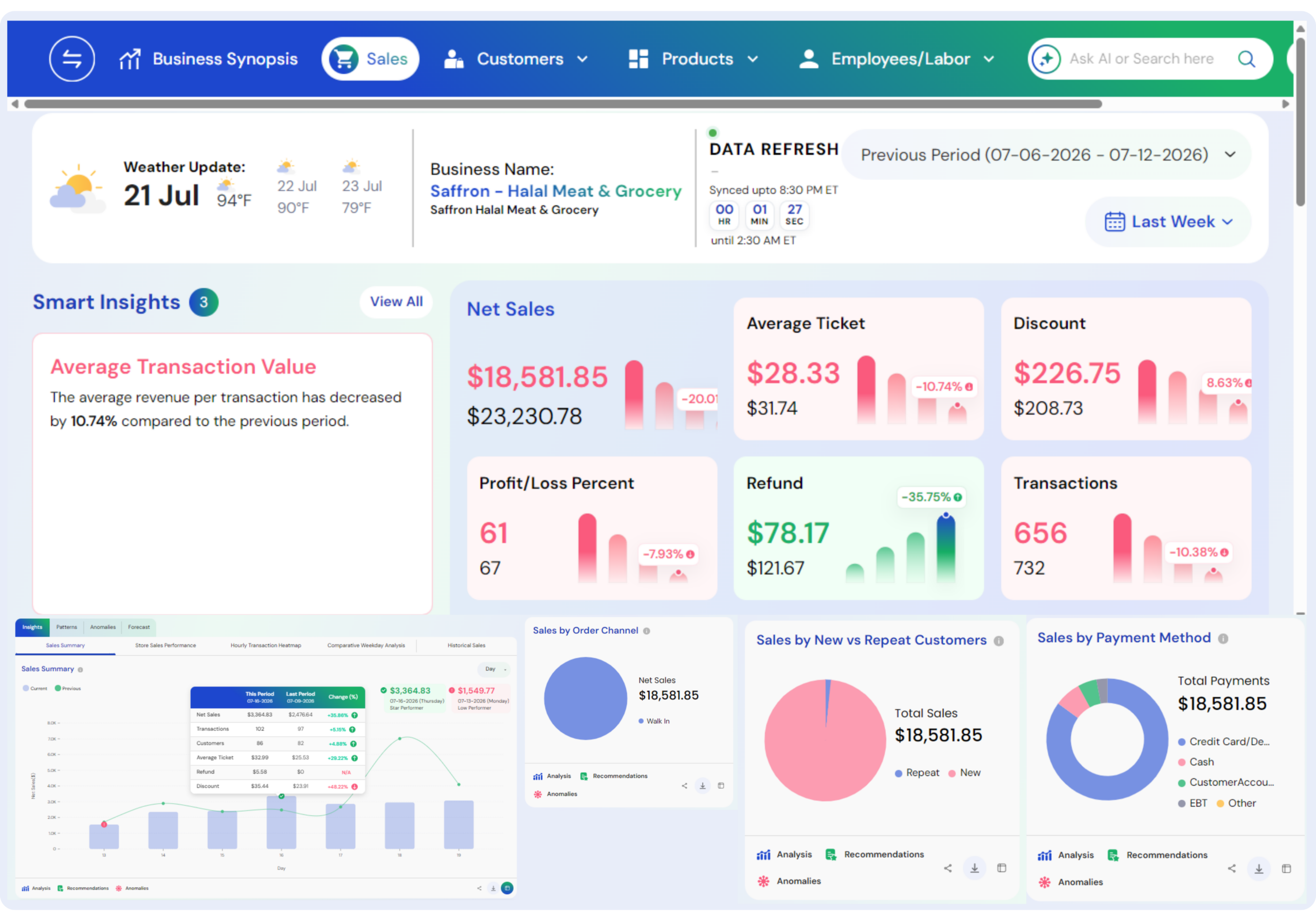
- Unified Intelligence Platform: We bring together guest data, operations, finance, and external drivers (market conditions, competitive sets) into a single view. No more silos.
- Predictive & Prescriptive Insights: We don’t just show you what happened… We indicate what’s coming and suggest what to do. So when markets start fluctuating (as we’re seeing), you’re not playing catch-up.
- Tailored for Multi-Unit / Franchise Models: Because we understand brands with many locations (including franchisees), we provide the flexibility to compare, benchmark, tailor actions by unit, region or system-wide.
- Operational & Strategic Levers: From staffing and scheduling to menu mix, to guest loyalty and revenue management, Livelytics is designed to help both the “day to day” and the “what’s next” for hospitality brands.
Real-world call to action
If I were speaking to a restaurant group or hospitality brand executive today, I’d say:
- Ask yourself: Which of our markets are under-performing right now? Why?
- Then: What data do we have to benchmark our units against local trends, competitive sets and external drivers?
- Next: How quickly can we move from insight to action: staffing changes, pricing tweaks, menu shifts, guest segmentation?
- Finally: Are we deploying tools that can not only report, but forecast and prescribe?
If any of those questions leave you with uncertainty, it’s time to make intelligence a priority because as the data shows, the hospitality landscape isn’t static. It’s complex and changing.
Wrap-up
The headlines show an industry in flux. Locations that performed last year may not this year. Guest behaviors are evolving.
External drivers are shifting. For a hospitality brand (restaurant groups with bar services, full-service restaurants, hotel restaurants, multi-unit operators), the leaders will be those who don’t just track data, but who act on it, predict what’s next, and orchestrate their businesses accordingly.
At Livelytics, we built the platform so brands can do exactly that. If you’re ready to move beyond dashboards and into proactive intelligence, let’s talk.
DEMO Book a demo with us, here.
If you like what you learned here, please see these other helpful articles from Livelytics:
- “How Restaurants Can Regain Confidence in Their Numbers” — From the Restaurants category.
- “When Macro Data Isn’t Enough: Why Restaurant-Level Answers Matter” — Also Restaurants-oriented.
- “The True Cost of Blind Spots in Multi-Unit Operations” — From the Business category, about inefficiencies in multi-unit ops.
- “From Dashboards to Decisions: Why Prescriptive Analytics Is the Next Frontier” — A Business-category post focused on moving beyond dashboards.
- “How Predictive Intelligence Transforms Retail? 10 Best Benefits!” — Though retail-focused, highly relevant to the intelligence theme.